
Nudes in the forest
Fernand Léger · Public domain · Wikimedia Commons
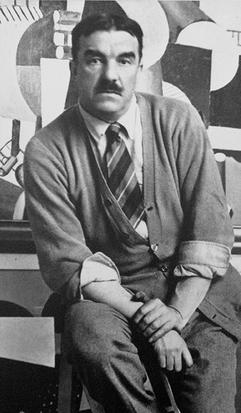
French painter, 1881 to 1955
Fernand Léger · Public domain · Wikimedia Commons

Fernand Léger · Public domain · Wikimedia Commons

Fernand Léger · Public domain · Wikimedia Commons

Aerra Carnicom · CC BY-SA 4.0 · Wikimedia Commons

Francesco Bini · CC BY-SA 4.0 · Wikimedia Commons

Fernand Léger · Public domain · Wikimedia Commons

The City is an oil on canvas painting by French painter and sculptor Fernand Léger, from 1919.
Fernand Léger · Public domain · Wikimedia Commons

The Tugboat is an oil on canvas painting by French painter Fernand Léger, from 1920. It is held at the Museum of Grenoble, which purchased it from the artist, in 1928.
Léger was impressed by the universal exhibitions of the early 20th century. Like Marcel Duchamp, he was inspired by the machines that he saw at the fourth exhibition of aerial locomotion, which took place in Paris just before the First World War. History and description →
Jérôme Villafruela · Public domain · Wikimedia Commons

Man and Woman is an oil-on-canvas painting executed in 1921 by the French artist Fernand Léger. The painting is a cubist portrait of a man and a woman locked in a passionate embrace at odds with their depersonalized, industrialized setting. The painting is held by the Indianapolis Museum of Art, United States.
Léger rejected many aspects of cubism, such as multiple simultaneous vantage points, but retained the trait of reducing figures to their most basic, geometric components. To that end, the woman in this painting consists of curves and the color orange, while the man is depicted in columns and blue. Description →
Léger's battlefront experiences during World War I instilled in him the conviction that art should reflect the new, mechanized world, and be accessible to the average person. He identified strongly with the working class. Historical information →
Man and Woman was acquired by the IMA in 1952, courtesy of the Martha Delzell Memorial Fund. It has the acquisition number 52.28. Acquisition →
Fernand Léger · Public domain · Wikimedia Commons

Still Life with Candlestick is an oil on canvas painting created in 1922 by the French artist Fernand Léger.
Fernand Léger · Public domain · Wikimedia Commons
Text: Wikipedia (CC BY-SA 4.0) · Images: Wikimedia Commons, public domain or Creative Commons (attribution with each work) · Part of The Museum at THEODORA