archaeological site on the Giza Plateau, Egypt, 2600 to 2500 BCE
The Giza pyramid complex in Egypt is home to the Great Pyramid, the pyramid of Khafre, and the pyramid of Menkaure, along with their associated pyramid complexes and the Great Sphinx. All were built during the Fourth Dynasty of the Old Kingdom of ancient Egypt, between c. 2600 to c. 2500 BC. The site also includes several temples, cemeteries, and the remains of a workers' village.
Pyramids of Ghizeh. 1893. Egypt; heliogravure after original views. Wilbour Library of Egyptology. Brooklyn Museum. The Giza pyramid complex in Egypt is home to the Great Pyramid, the pyramid of Khafre, and the pyramid of Menkaure, along with their associated pyramid complexes and the Great Sphinx. All were built during the Fourth Dynasty of the Old Kingdom of ancient Egypt, between c. 2600 to c. 2500 BC.
Prior to the division of the Giza Plateau into three institutional concessions in 1903, amateur and private excavations at the Giza Necropolis had been permitted to operate. The work of these amateur archaeologists failed to meet high scientific standards. Background →
The earliest settlement of the Giza plateau predates the pyramid complexes. Four jars from the Maadi culture were found at the foot of the Great Pyramid, likely from a disturbed earlier settlement. Maadi settlements →
The Giza pyramid complex consists of the Great Pyramid (also known as the Pyramid of Cheops or Khufu and constructed c. 2580 to c. 2560 BC), the slightly smaller Pyramid of Khafre (or Chephren) a few hundred metres to the south-west, and the relatively modest-sized Pyramid of Menkaure (or Mykerinos) a few hundred metres farther south-west. Pyramids and Sphinx →
All Giza Pyramids in one shot. The Giza pyramid complex in Egypt is home to the Great Pyramid, the pyramid of Khafre, and the pyramid of Menkaure, along with their associated pyramid complexes and the Great Sphinx. All were built during the Fourth Dynasty of the Old Kingdom of ancient Egypt, between c. 2600 to c. 2500 BC.
Prior to the division of the Giza Plateau into three institutional concessions in 1903, amateur and private excavations at the Giza Necropolis had been permitted to operate. The work of these amateur archaeologists failed to meet high scientific standards. Background →
The earliest settlement of the Giza plateau predates the pyramid complexes. Four jars from the Maadi culture were found at the foot of the Great Pyramid, likely from a disturbed earlier settlement. Maadi settlements →
The Giza pyramid complex consists of the Great Pyramid (also known as the Pyramid of Cheops or Khufu and constructed c. 2580 to c. 2560 BC), the slightly smaller Pyramid of Khafre (or Chephren) a few hundred metres to the south-west, and the relatively modest-sized Pyramid of Menkaure (or Mykerinos) a few hundred metres farther south-west. Pyramids and Sphinx →
The Great Pyramid and the Great Sphinx of Giza in 1914 (Autochrome Lumière). The Giza pyramid complex in Egypt is home to the Great Pyramid, the pyramid of Khafre, and the pyramid of Menkaure, along with their associated pyramid complexes and the Great Sphinx. All were built during the Fourth Dynasty of the Old Kingdom of ancient Egypt, between c. 2600 to c. 2500 BC.
Prior to the division of the Giza Plateau into three institutional concessions in 1903, amateur and private excavations at the Giza Necropolis had been permitted to operate. The work of these amateur archaeologists failed to meet high scientific standards. Background →
The earliest settlement of the Giza plateau predates the pyramid complexes. Four jars from the Maadi culture were found at the foot of the Great Pyramid, likely from a disturbed earlier settlement. Maadi settlements →
The Giza pyramid complex consists of the Great Pyramid (also known as the Pyramid of Cheops or Khufu and constructed c. 2580 to c. 2560 BC), the slightly smaller Pyramid of Khafre (or Chephren) a few hundred metres to the south-west, and the relatively modest-sized Pyramid of Menkaure (or Mykerinos) a few hundred metres farther south-west. Pyramids and Sphinx →
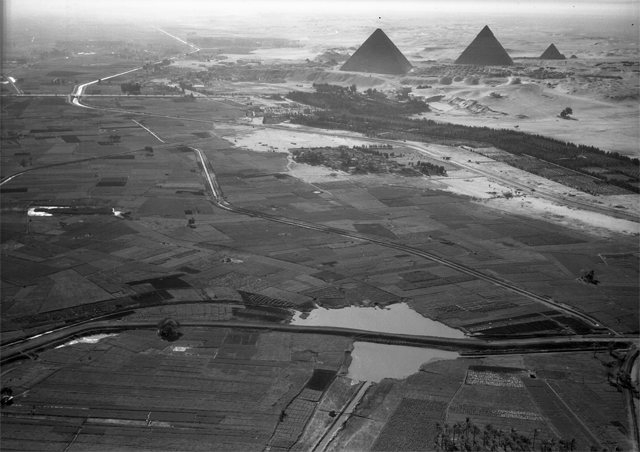
Aerial view from north of cultivated Nile valley with the pyramids in the background (1938). The Giza pyramid complex in Egypt is home to the Great Pyramid, the pyramid of Khafre, and the pyramid of Menkaure, along with their associated pyramid complexes and the Great Sphinx. All were built during the Fourth Dynasty of the Old Kingdom of ancient Egypt, between c. 2600 to c. 2500 BC.
Prior to the division of the Giza Plateau into three institutional concessions in 1903, amateur and private excavations at the Giza Necropolis had been permitted to operate. The work of these amateur archaeologists failed to meet high scientific standards. Background →
The earliest settlement of the Giza plateau predates the pyramid complexes. Four jars from the Maadi culture were found at the foot of the Great Pyramid, likely from a disturbed earlier settlement. Maadi settlements →
The Giza pyramid complex consists of the Great Pyramid (also known as the Pyramid of Cheops or Khufu and constructed c. 2580 to c. 2560 BC), the slightly smaller Pyramid of Khafre (or Chephren) a few hundred metres to the south-west, and the relatively modest-sized Pyramid of Menkaure (or Mykerinos) a few hundred metres farther south-west. Pyramids and Sphinx →
Giza pyramid complex seen from above. The Giza pyramid complex in Egypt is home to the Great Pyramid, the pyramid of Khafre, and the pyramid of Menkaure, along with their associated pyramid complexes and the Great Sphinx. All were built during the Fourth Dynasty of the Old Kingdom of ancient Egypt, between c. 2600 to c. 2500 BC.
Prior to the division of the Giza Plateau into three institutional concessions in 1903, amateur and private excavations at the Giza Necropolis had been permitted to operate. The work of these amateur archaeologists failed to meet high scientific standards. Background →
The earliest settlement of the Giza plateau predates the pyramid complexes. Four jars from the Maadi culture were found at the foot of the Great Pyramid, likely from a disturbed earlier settlement. Maadi settlements →
The Giza pyramid complex consists of the Great Pyramid (also known as the Pyramid of Cheops or Khufu and constructed c. 2580 to c. 2560 BC), the slightly smaller Pyramid of Khafre (or Chephren) a few hundred metres to the south-west, and the relatively modest-sized Pyramid of Menkaure (or Mykerinos) a few hundred metres farther south-west. Pyramids and Sphinx →
The Dream Stele between the Sphinx's front legs. The Giza pyramid complex in Egypt is home to the Great Pyramid, the pyramid of Khafre, and the pyramid of Menkaure, along with their associated pyramid complexes and the Great Sphinx. All were built during the Fourth Dynasty of the Old Kingdom of ancient Egypt, between c. 2600 to c. 2500 BC.
Prior to the division of the Giza Plateau into three institutional concessions in 1903, amateur and private excavations at the Giza Necropolis had been permitted to operate. The work of these amateur archaeologists failed to meet high scientific standards. Background →
The earliest settlement of the Giza plateau predates the pyramid complexes. Four jars from the Maadi culture were found at the foot of the Great Pyramid, likely from a disturbed earlier settlement. Maadi settlements →
The Giza pyramid complex consists of the Great Pyramid (also known as the Pyramid of Cheops or Khufu and constructed c. 2580 to c. 2560 BC), the slightly smaller Pyramid of Khafre (or Chephren) a few hundred metres to the south-west, and the relatively modest-sized Pyramid of Menkaure (or Mykerinos) a few hundred metres farther south-west. Pyramids and Sphinx →
View from top of the Great Pyramid to the Pyramid of Khafre. The Giza pyramid complex in Egypt is home to the Great Pyramid, the pyramid of Khafre, and the pyramid of Menkaure, along with their associated pyramid complexes and the Great Sphinx. All were built during the Fourth Dynasty of the Old Kingdom of ancient Egypt, between c. 2600 to c. 2500 BC.
Prior to the division of the Giza Plateau into three institutional concessions in 1903, amateur and private excavations at the Giza Necropolis had been permitted to operate. The work of these amateur archaeologists failed to meet high scientific standards. Background →
The earliest settlement of the Giza plateau predates the pyramid complexes. Four jars from the Maadi culture were found at the foot of the Great Pyramid, likely from a disturbed earlier settlement. Maadi settlements →
The Giza pyramid complex consists of the Great Pyramid (also known as the Pyramid of Cheops or Khufu and constructed c. 2580 to c. 2560 BC), the slightly smaller Pyramid of Khafre (or Chephren) a few hundred metres to the south-west, and the relatively modest-sized Pyramid of Menkaure (or Mykerinos) a few hundred metres farther south-west. Pyramids and Sphinx →
The complex in 1955. The Giza pyramid complex in Egypt is home to the Great Pyramid, the pyramid of Khafre, and the pyramid of Menkaure, along with their associated pyramid complexes and the Great Sphinx. All were built during the Fourth Dynasty of the Old Kingdom of ancient Egypt, between c. 2600 to c. 2500 BC.
Prior to the division of the Giza Plateau into three institutional concessions in 1903, amateur and private excavations at the Giza Necropolis had been permitted to operate. The work of these amateur archaeologists failed to meet high scientific standards. Background →
The earliest settlement of the Giza plateau predates the pyramid complexes. Four jars from the Maadi culture were found at the foot of the Great Pyramid, likely from a disturbed earlier settlement. Maadi settlements →
The Giza pyramid complex consists of the Great Pyramid (also known as the Pyramid of Cheops or Khufu and constructed c. 2580 to c. 2560 BC), the slightly smaller Pyramid of Khafre (or Chephren) a few hundred metres to the south-west, and the relatively modest-sized Pyramid of Menkaure (or Mykerinos) a few hundred metres farther south-west. Pyramids and Sphinx →
The Giza pyramid complex in Egypt is home to the Great Pyramid, the pyramid of Khafre, and the pyramid of Menkaure, along with their associated pyramid complexes and the Great Sphinx. All were built during the Fourth Dynasty of the Old Kingdom of ancient Egypt, between c. 2600 to c. 2500 BC. The site also includes several temples, cemeteries, and the remains of a workers' village.
Prior to the division of the Giza Plateau into three institutional concessions in 1903, amateur and private excavations at the Giza Necropolis had been permitted to operate. The work of these amateur archaeologists failed to meet high scientific standards. Background →
The earliest settlement of the Giza plateau predates the pyramid complexes. Four jars from the Maadi culture were found at the foot of the Great Pyramid, likely from a disturbed earlier settlement. Maadi settlements →
The Giza pyramid complex consists of the Great Pyramid (also known as the Pyramid of Cheops or Khufu and constructed c. 2580 to c. 2560 BC), the slightly smaller Pyramid of Khafre (or Chephren) a few hundred metres to the south-west, and the relatively modest-sized Pyramid of Menkaure (or Mykerinos) a few hundred metres farther south-west. Pyramids and Sphinx →
The Giza pyramid complex at night. The Giza pyramid complex in Egypt is home to the Great Pyramid, the pyramid of Khafre, and the pyramid of Menkaure, along with their associated pyramid complexes and the Great Sphinx. All were built during the Fourth Dynasty of the Old Kingdom of ancient Egypt, between c. 2600 to c. 2500 BC.
Prior to the division of the Giza Plateau into three institutional concessions in 1903, amateur and private excavations at the Giza Necropolis had been permitted to operate. The work of these amateur archaeologists failed to meet high scientific standards. Background →
The earliest settlement of the Giza plateau predates the pyramid complexes. Four jars from the Maadi culture were found at the foot of the Great Pyramid, likely from a disturbed earlier settlement. Maadi settlements →
The Giza pyramid complex consists of the Great Pyramid (also known as the Pyramid of Cheops or Khufu and constructed c. 2580 to c. 2560 BC), the slightly smaller Pyramid of Khafre (or Chephren) a few hundred metres to the south-west, and the relatively modest-sized Pyramid of Menkaure (or Mykerinos) a few hundred metres farther south-west. Pyramids and Sphinx →
Text: Wikipedia (CC BY-SA 4.0) ·
Images: Wikimedia Commons,
public domain or Creative Commons (attribution with each work) ·
Part of The Museum at THEODORA