How to hang pictures, and how high to hang artאיך לתלות תמונות, ובאיזה גובה לתלות אמנות
Hang a picture so its center sits 57 to 60 inches (145 to 152 cm) from the floor, a long-standing hanging convention close to a standing adult's eye height. Above a sofa or bed, leave 8 to 10 inches (20 to 25 cm) between the furniture and the frame; above a console or mantel, 6 to 10 inches. The rest of how to hang pictures is method: treat a group as one piece, and put the nail where a simple formula tells you, not where your eye guesses.תלו תמונה כך שהמרכז שלה יהיה בגובה 57 עד 60 אינץ' (145 עד 152 ס״מ) מהרצפה, מוסכמת תלייה ותיקה שקרובה לגובה העיניים של מבוגר עומד. מעל ספה או מיטה, השאירו 8 עד 10 אינץ' (20 עד 25 ס״מ) בין הרהיט למסגרת; מעל קונסולה או מדף אח, 6 עד 10 אינץ'. כל השאר בתליית תמונות הוא שיטה: להתייחס לקבוצה כאל יצירה אחת, ולשים את המסמר איפה שנוסחה פשוטה אומרת, לא איפה שהעין מנחשת.
By Stav Theodor, art curator and advisor, THEODORAמאת סתיו תאודור, אוצרת ויועצת אמנות, THEODORA
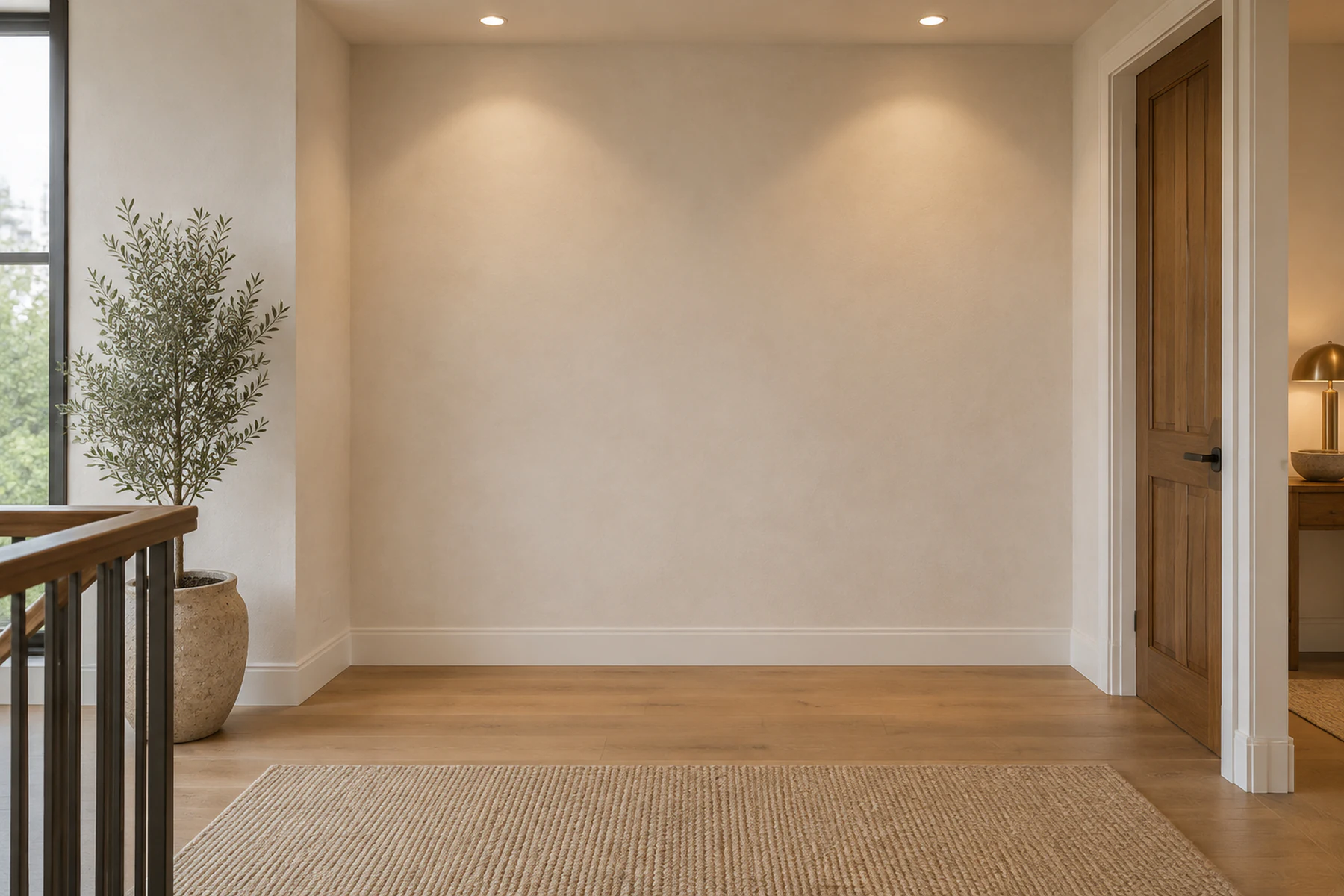
Beforeלפני
Afterאחרי
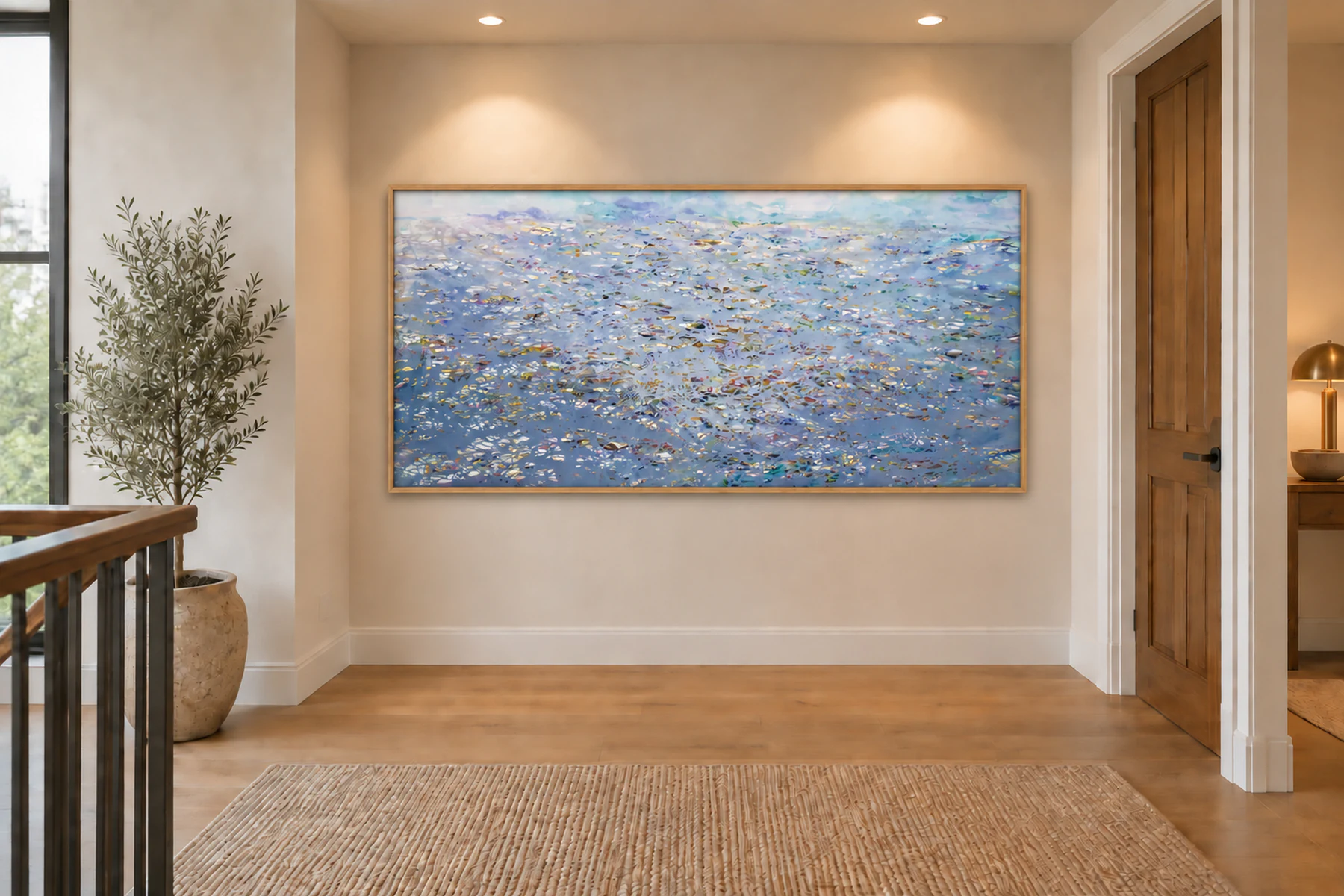
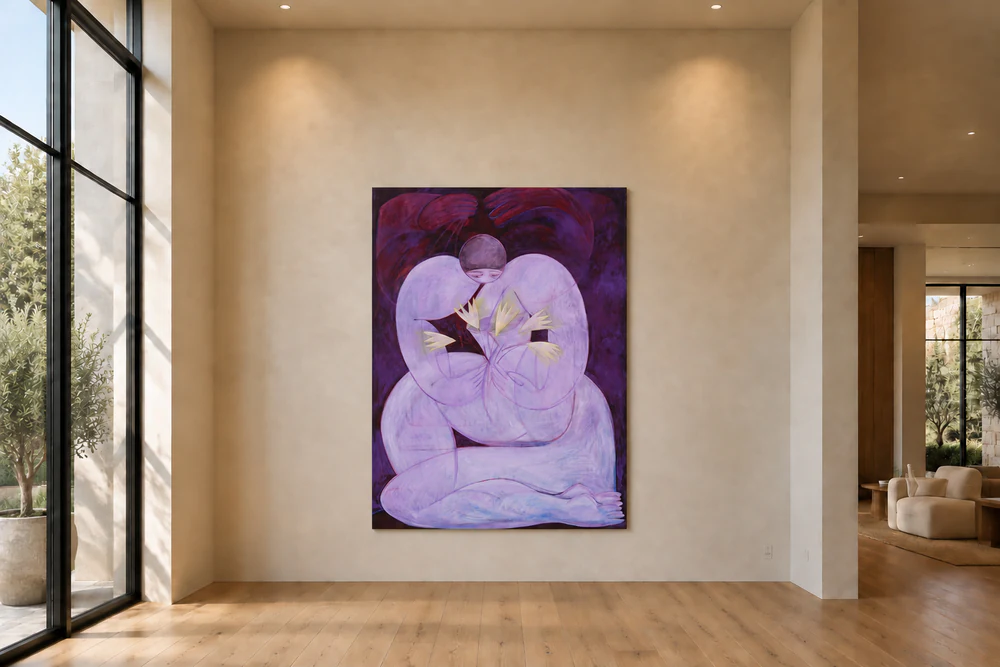
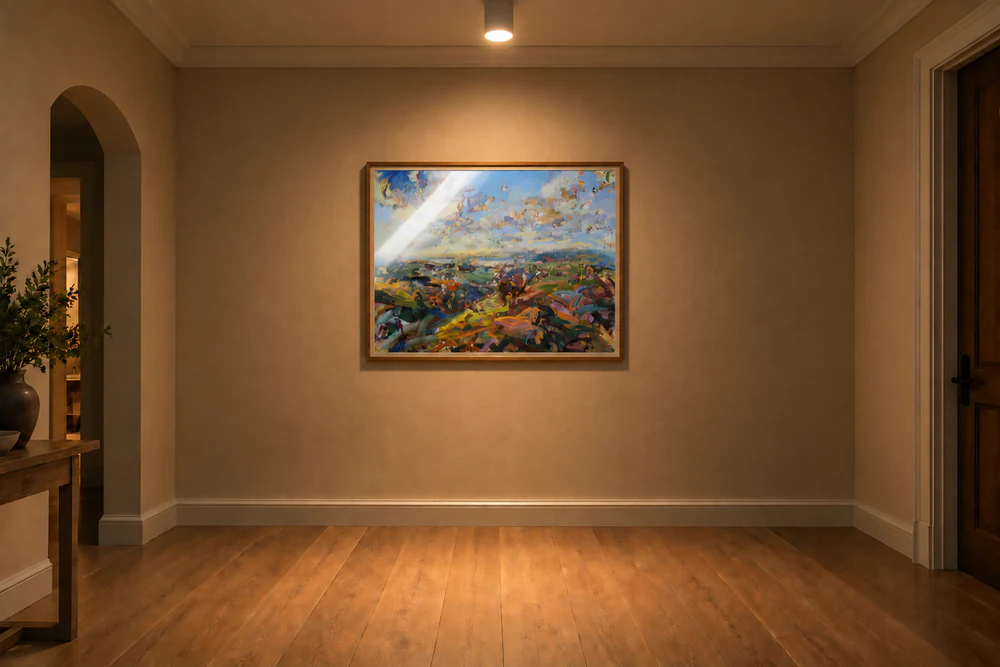
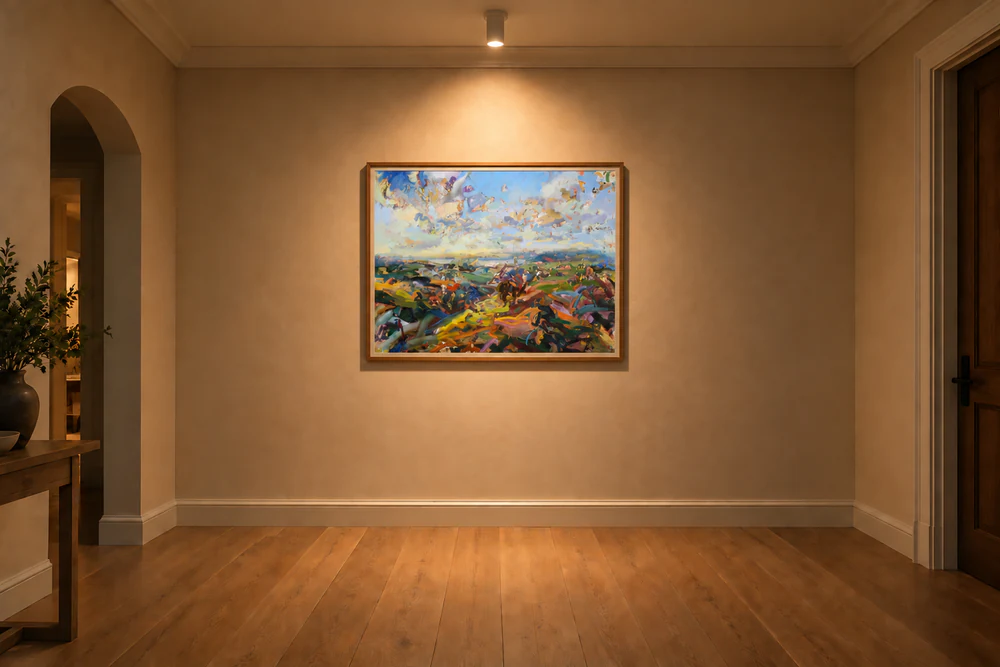
Proposal · how THEODORA would dress this spaceהצעה · כך THEODORA הייתה מלבישה את החלל הזהA landing wall, one wide painting centered at eye level.קיר במישור המדרגות, ציור רחב אחד שמרכזו בגובה העיניים.
הבעיה הנפוצה ביותר שאני פוגשת כשאני נכנסת לבית היא לא האמנות. זה הגובה. רוב התמונות תלויות גבוה מדי, כאילו צריך למלא את הקיר עד התקרה. אני רואה את זה כבר יותר מ-15 שנה בעולם האמנות, במוזיאונים, בגלריה שניהלתי בתל אביב ובבתים פרטיים. הנה הכלל שאני עובדת לפיו, נוסחת המסמר והיוצאים מן הכלל.
למה 57 עד 60 אינץ'?
כלל 57 האינץ' הוא מוסכמת תלייה ותיקה: תולים עבודה כך שהמרכז שלה יהיה בגובה 57 אינץ' (145 ס״מ) מהרצפה, קרוב לגובה העיניים של מבוגר עומד. אני עובדת בטווח של 57 עד 60 אינץ' (145 עד 152 ס״מ), ונמוך יותר במקומות שבהם יושבים. תלייה בגובה העיניים התחילה במוזיאונים של המאה התשע עשרה; מאיפה הגיע המספר 57 לא מתועד, והעצות שמתפרסמות נעות בין 55 ל-66 אינץ' (אמילי הנדרסון עובדת עם 57, סטודיו מקגי עם 60). התייחסו לזה כטווח, ושמרו על ההיגיון: המרכז הולך למקום שבו העיניים של אדם עומד נחות, ולכן ספות, מדרגות וכיסאות מזיזים אותו.
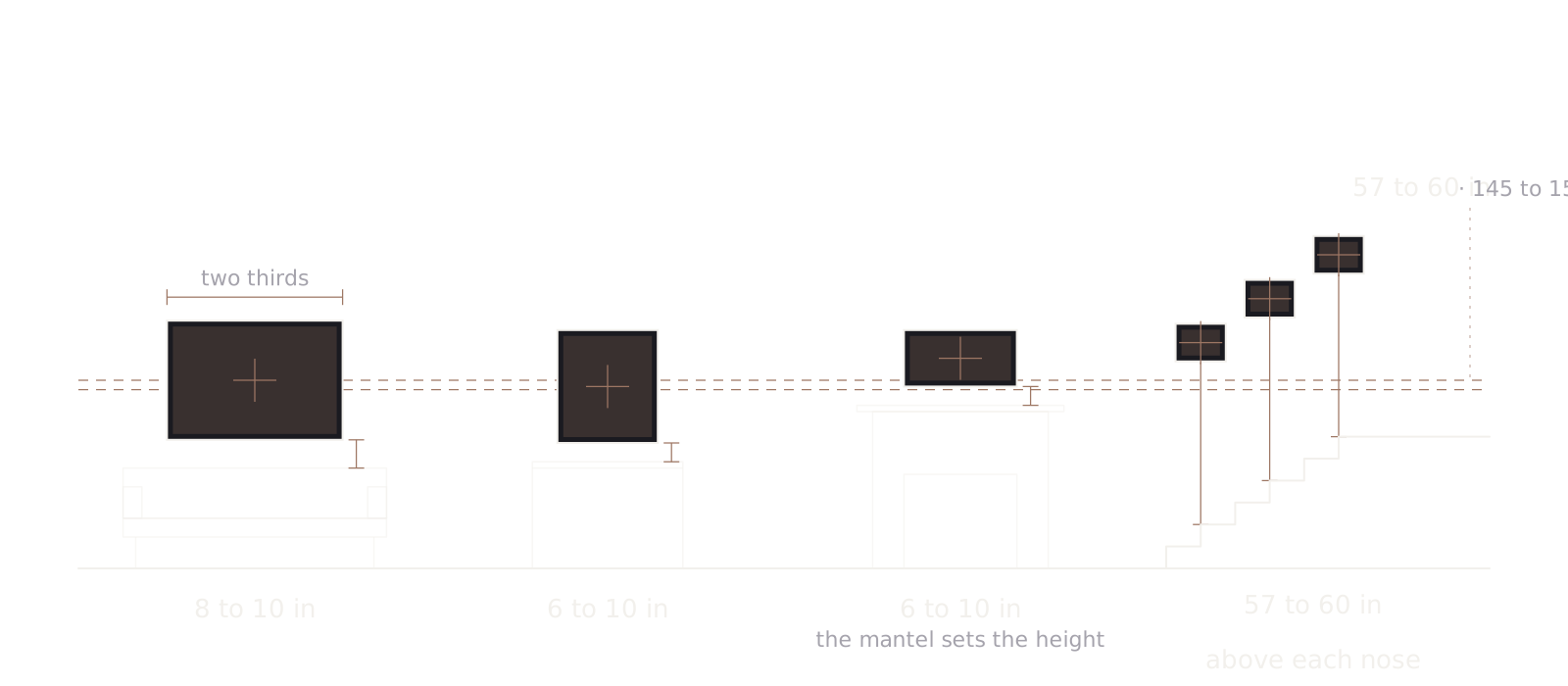
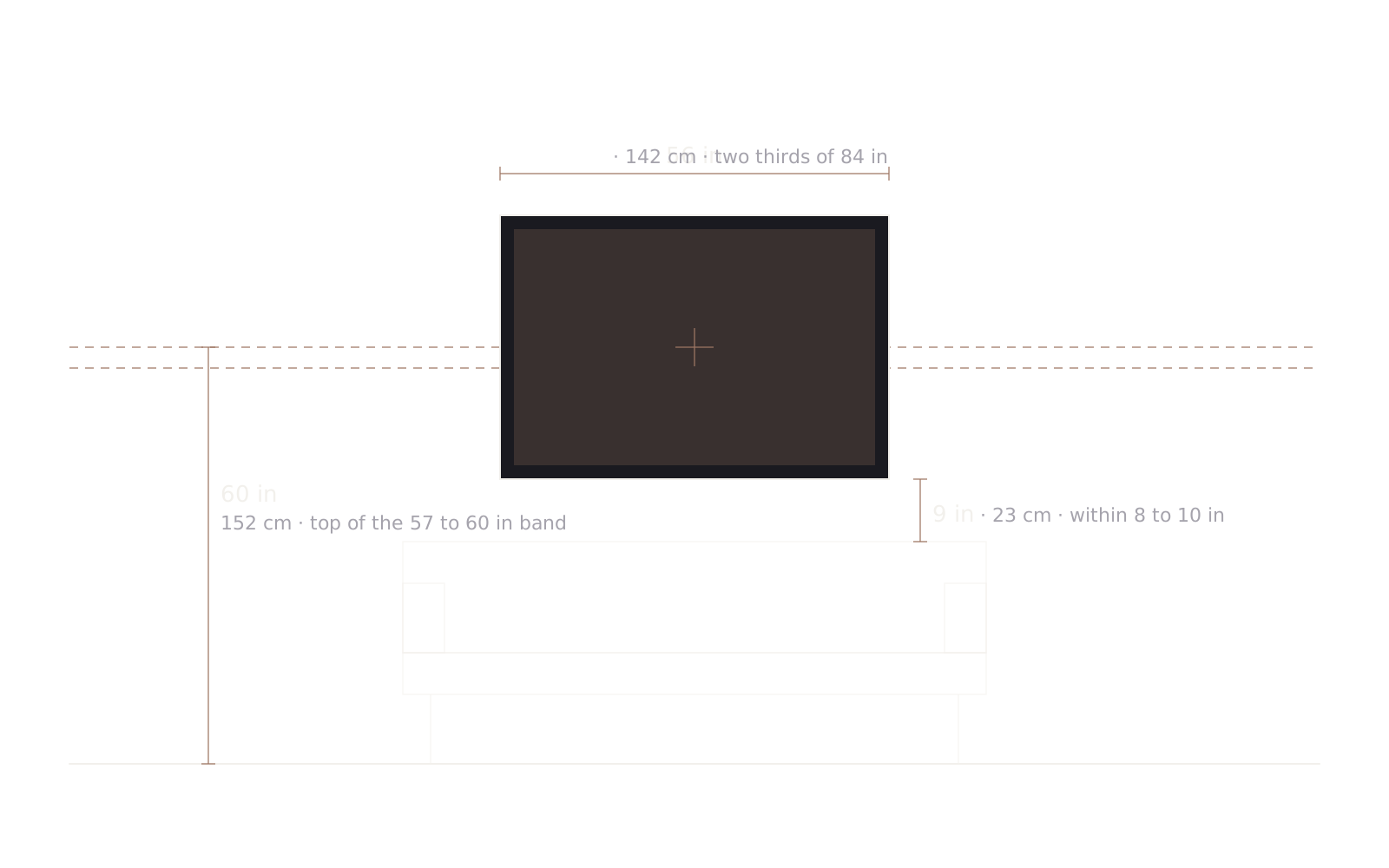
תרשים 1מרכז העבודה, לא הקצה העליון שלה, הוא שצריך לשבת על קו גובה העיניים.
57 עד 60אינץ'מרכז העבודה מהרצפה (145 עד 152 ס״מ)
8 עד 10אינץ'מעל גב הספה או ראש המיטה (20 עד 25 ס״מ)
6 עד 10אינץ'מעל קונסולה, מזנון או מדף אח (15 עד 25 ס״מ)
מדדו למרכז העבודה, לא לקצה העליון שלה ולא למסמר, ויישרו עבודות בגדלים שונים לפי המרכזים שלהן, לא לפי הקצוות העליונים.
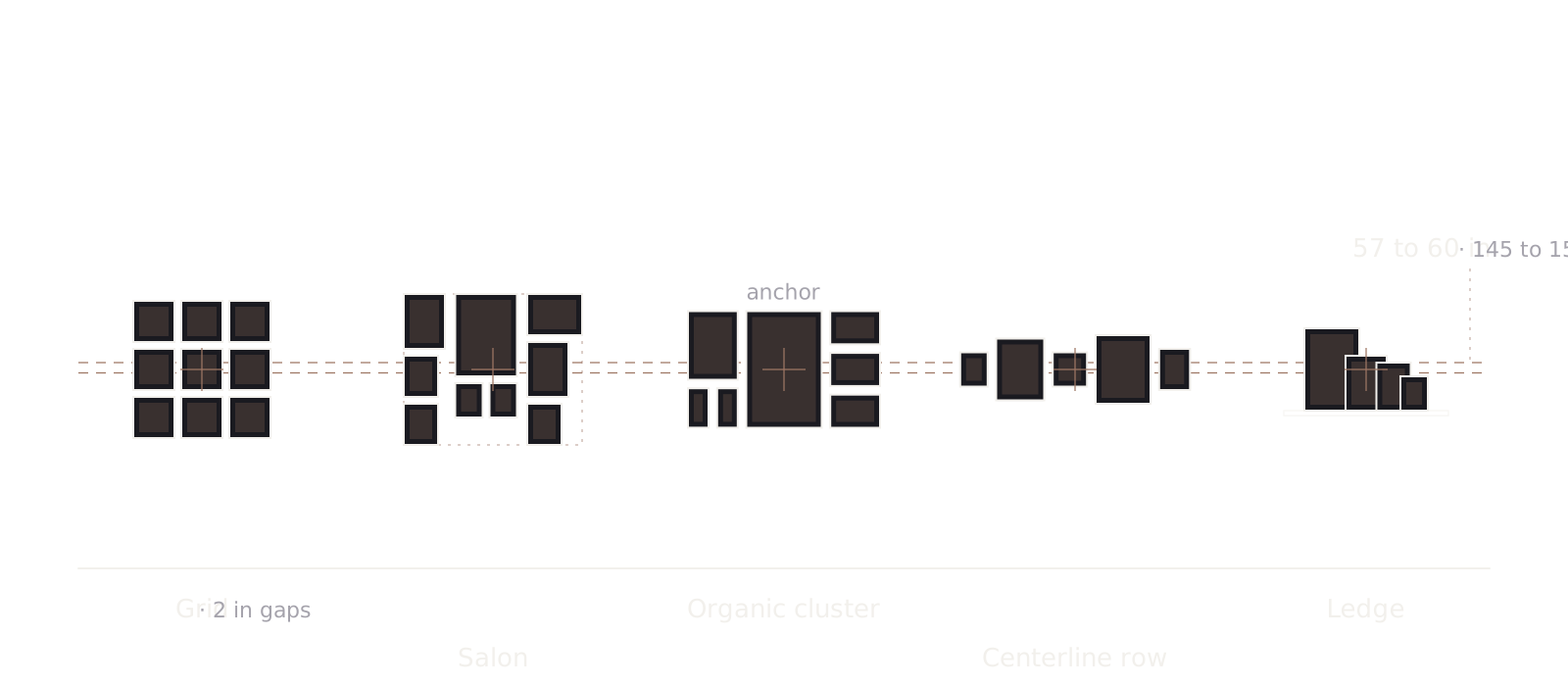
תרשים 2יישרו עבודות לפי המרכזים שלהן. קצוות עליונים מיושרים משאירים את העבודות הקטנות מרחפות.הצעה · קו מרכז אחד
איך מוצאים בדיוק איפה המסמר נכנס
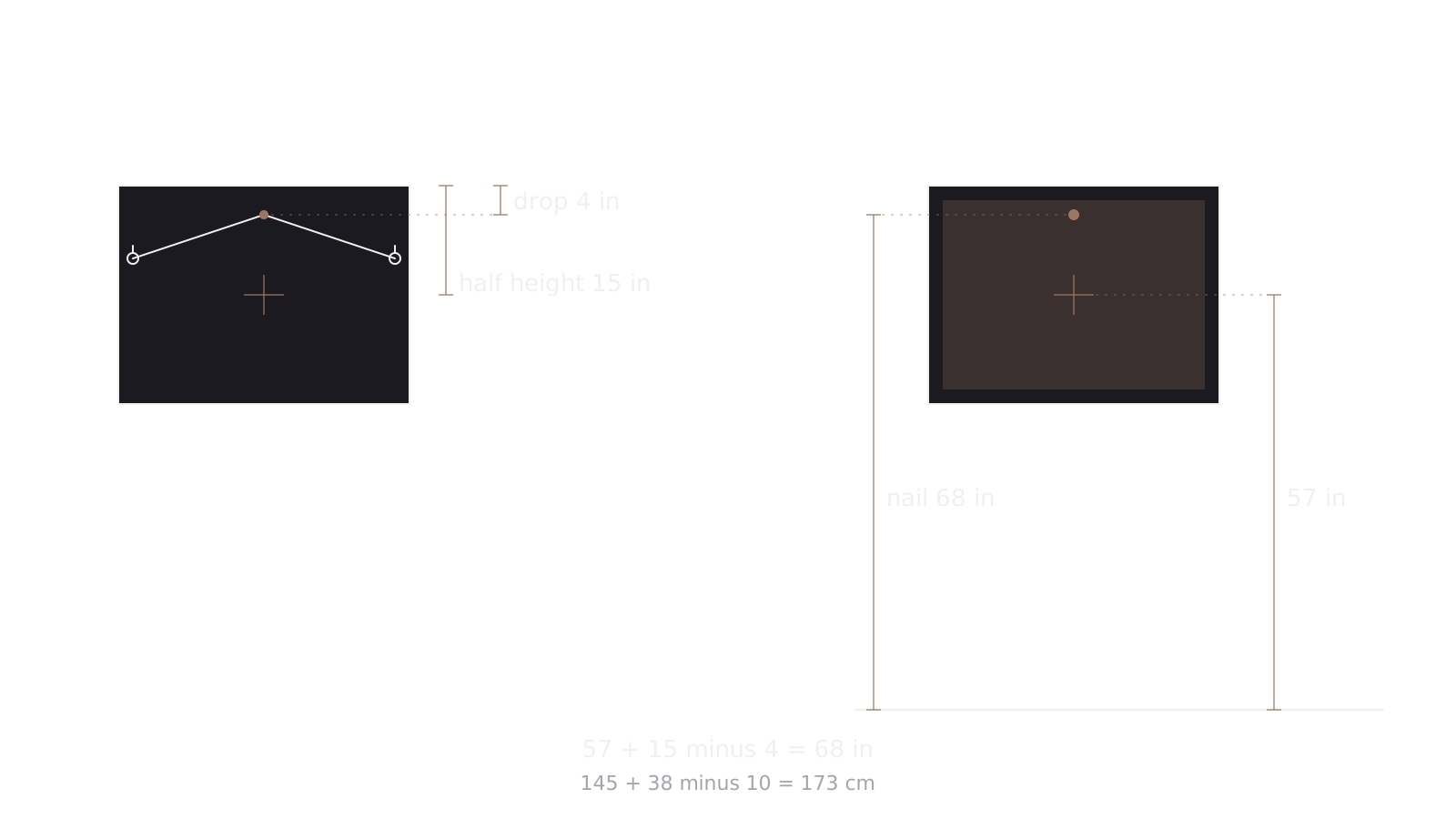
תרשים 3גובה המסמר = 57 ועוד חצי מגובה המסגרת, פחות הירידה מראש המסגרת עד המתלה.
מדדו את גובה המסגרת וחלקו בשניים.
מדדו את הירידה: משכו את החוט מתוח לכיוון ראש המסגרת ומדדו מהקצה העליון עד החוט. בטבעות תלייה או במתלה משונן, מדדו עד המתלה עצמו.
גובה המסמר = 57 אינץ' ועוד חצי מגובה המסגרת, פחות הירידה.
מסגרת בגובה 30 אינץ' עם ירידה של 4 אינץ': 57 ועוד 15 פחות 4 = מסמר בגובה 68 אינץ'. בסנטימטרים, אותה מסגרת היא 76 ס״מ עם ירידה של 10 ס״מ: 145 ועוד 38 פחות 10 = 173 ס״מ.
מתי הכלל משתנה
תרשים 4רהיטים ומדרגות מזיזים את נקודת הייחוס; מעל מדף אח המרכז עולה מעל הטווח.
הרהיט קובע את הגובה, גם אם המרכז עולה מעל 60 אינץ'
חללים שבהם יושבים
מתחת לטווח של העמידה
אף מחקר לא נותן מספר; המסגרת צריכה להיות מעל משענות הכיסאות
תקרות גבוהות
המרכז נשאר סביב 57 עד 60 אינץ'
הולכים לגודל, לא לגובה
מדרגות
57 עד 60 אינץ' מעל קו החרטומים
קו החרטומים מחבר את הקצוות הקדמיים של המדרגות
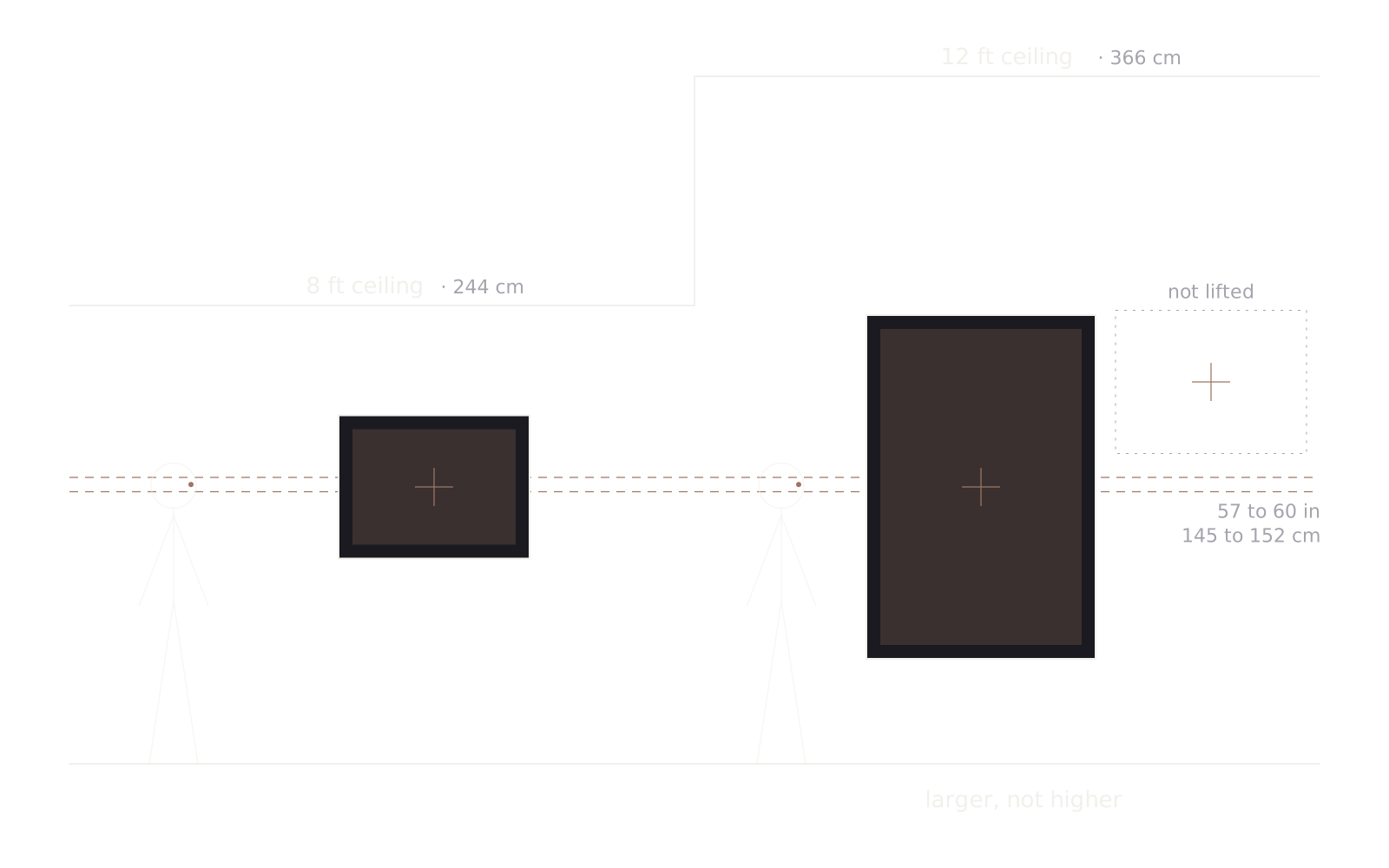
תקרות גבוהות. יש מדריכים שמעלים את המרכז מתחת לתקרות שגבוהות מ-9 רגל. אני כמעט אף פעם לא עושה את זה: העיניים לא זזות כשהתקרה זזה. קיר גבוה צריך קנה מידה במקום, עבודה גדולה יותר או קבוצה שמטפסת למעלה בזמן שהמרכז שלה נשאר סביב 60 אינץ'. בכל תקרה, אני משאירה את ראש המסגרת לפחות 12 אינץ' מתחתיה.
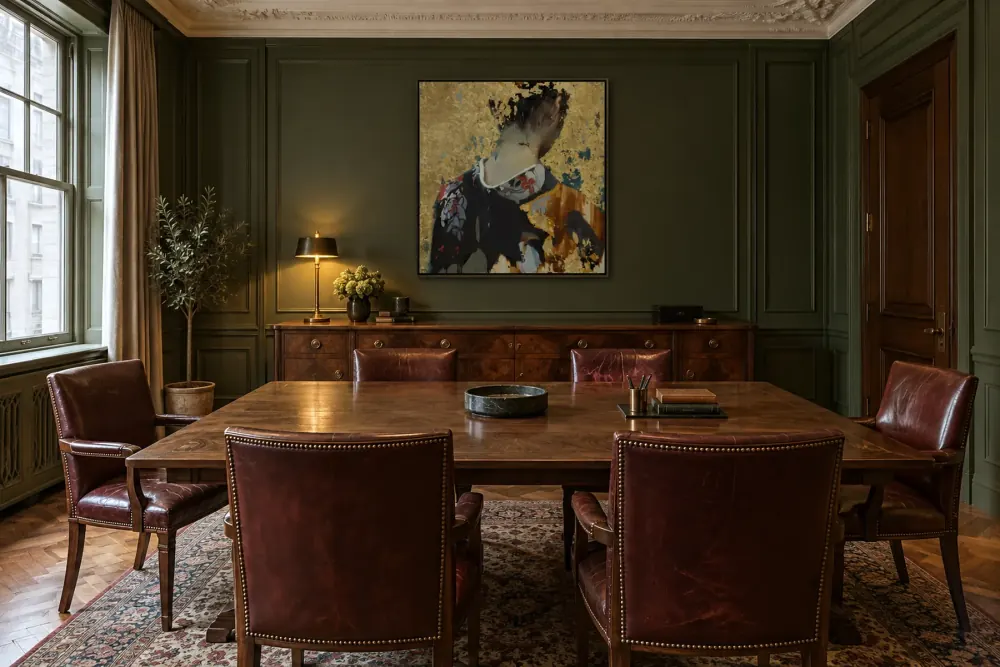
חללים שבהם יושבים. בפינת אוכל או בחדר עבודה רוב ההתבוננות קורית מכיסא, ולכן המרכז יורד, אבל אף פעם לא עד כדי כך שמשענת כיסא מגיעה למסגרת. לפינות אוכל, קמעונאית אחת, ארטפולי וולס, מציעה מרכז של כ-52 עד 57 אינץ' (132 עד 145 ס״מ); ראו אמנות לפינת האוכל.
זוגות וטורים. שתיים או שלוש עבודות שנתלות יחד הן קומפוזיציה אחת. לשלוש תמונות בטור אנכי, השאירו 2 עד 3 אינץ' (5 עד 8 ס״מ) בין המסגרות ומקמו את מרכז המסגרת האמצעית בגובה 57 עד 60 אינץ'. קבוצות גדולות יותר מופיעות ברעיונות לקיר גלריה.
תרשים 5תקרה גבוהה מקבלת עבודה גדולה יותר, לא עבודה שתלויה גבוה יותר.הצעה · גדול יותר, לא גבוה יותר
איך לתלות תמונה, שלב אחר שלב
החליטו על המקום כשהמסגרת ביד. בקשו ממישהו להחזיק אותה צמוד לקיר בזמן שאתם עומדים במקום שממנו תראו אותה בדרך כלל.
סמנו את קו המרכז בעיפרון, בקלילות, ואחר כך את נקודת המסמר לפי הנוסחה.
בדקו מה יש מאחורי הקיר. גלאי קורות מאתר את קורות השלד, שבבתים אמריקאיים עומדות בדרך כלל במרווח של 16 אינץ' (41 ס״מ), ומזהיר מפני צנרת וחיווט.
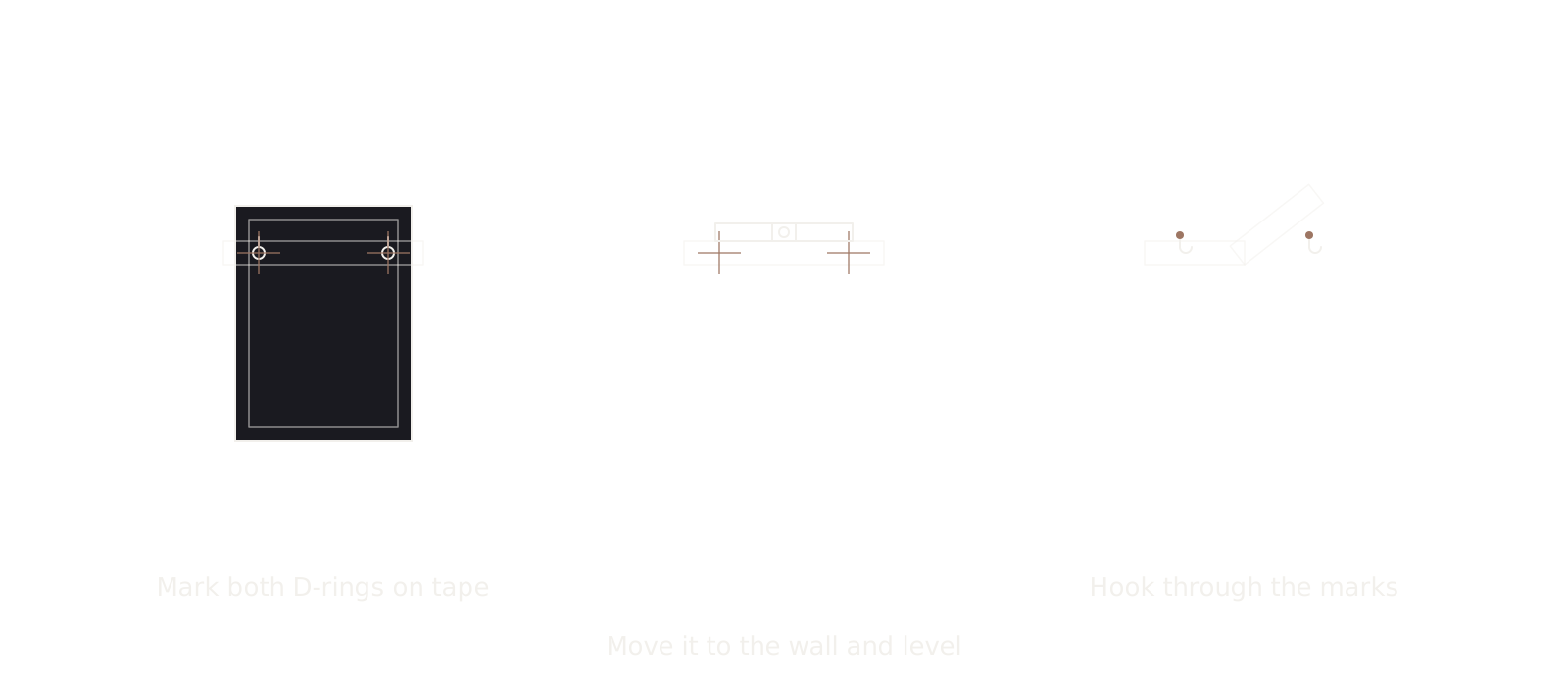
השתמשו במסקינג טייפ למתלים של שתי נקודות. הדביקו סרט לרוחב גב המסגרת, סמנו עליו את שתי טבעות התלייה, העבירו את הסרט לקיר, יישרו אותו, והכניסו את הווים דרך הסימונים.
תלו, יישרו וקבעו. מגן סיליקון שקוף או נקודה של דבק מוזיאון בשתי הפינות התחתונות מונעים מהמסגרת לזוז.
תרשים 6מסקינג טייפ מעביר את המיקום של שתי טבעות התלייה לקיר, מיושר, בצעד אחד.
חומרי תלייה לפי משקל וגודל
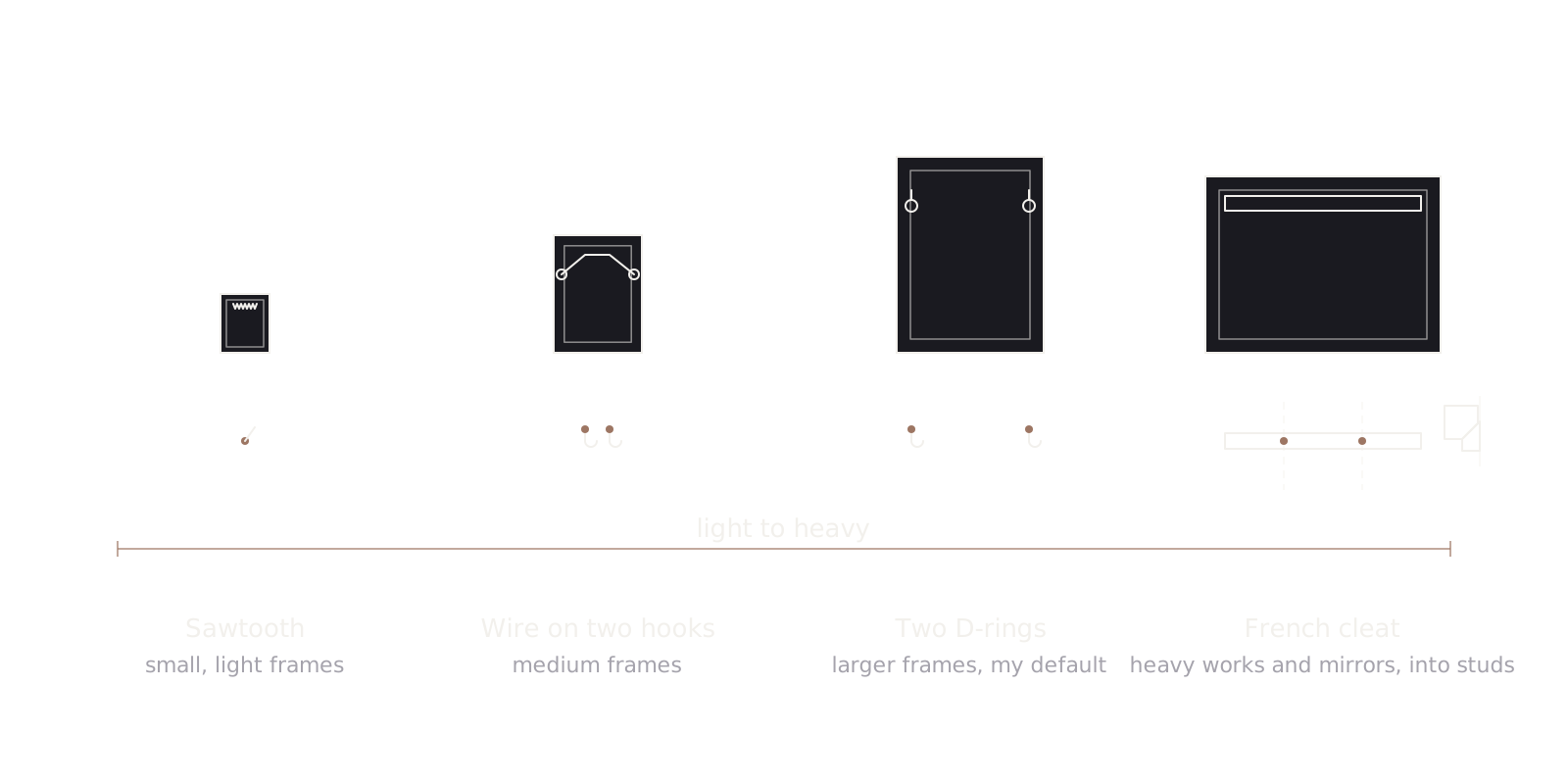
תרשים 7ככל שהעבודה כבדה ורחבה יותר, היא צריכה יותר נקודות תמיכה.
טבלה 2חומרי תלייה לתמונות, מהקל לכבד
חומר תלייה
מתאים ל
איך הוא נתלה
מתלה משונן
מסגרות קטנות וקלות בלבד
על מסמר אחד
חוט
מסגרות בינוניות
על שני ווים במרחק של כמה אינצ'ים זה מזה, כשהחוט נשאר קצר
שתי טבעות תלייה
מסגרות גדולות יותר; ברירת המחדל שלי
על שני ווים, כך שהמסגרת נצמדת לקיר ולא יכולה להתנדנד
מתלה צרפתי (או פרופיל זד)
עבודות כבדות ומראות
שני פסים משופעים שננעלים זה בזה, והפס שעל הקיר מוברג לקורות השלד
בחרו ווים ודיבלים שמדורגים לפחות לפי שניים ממשקל העבודה, והבריגו לקורת שלד בכל פעם שאפשר. כשאין קורה במקום שבו אתם צריכים אותה, פזרו עבודה כבדה על כמה דיבלים מדורגים בעזרת מתלה צרפתי. על טיח, קדחו קודם חור הכנה קטן; מסמר שנדפק בפטיש עלול לסדוק אותו. על לבנים, השתמשו בדיבלים לבנייה.
איך לתלות אמנות בלי מסמרים
רצועות וווים דביקים מתאימים לפוסטרים ולתצלומים קלים בדירה שכורה. הקפידו בדיוק על דירוג המשקל. אני אף פעם לא משתמשת בהם לעבודות מקוריות, למסגרות עם זכוכית בכל גודל, או בחדר רחצה, שבו הלחות מחלישה את ההדבקה.
מדפי תמונות דורשים כמה ברגים פעם אחת, ואחר כך מאפשרים להשעין ולהחליף מסגרות בלי חורים חדשים.
להשעין עבודה גדולה על קונסולה, על מדף עמוק או על הרצפה זו בחירה של תצוגה, לא פשרה.
מערכות מסילת תלייה תולות עבודות על חוטים או מוטות ממסילה שקרובה לתקרה, כך שאפשר להזיז את העבודות לאורכה.
קודם תאורה, אחר כך בדיקת סנוור
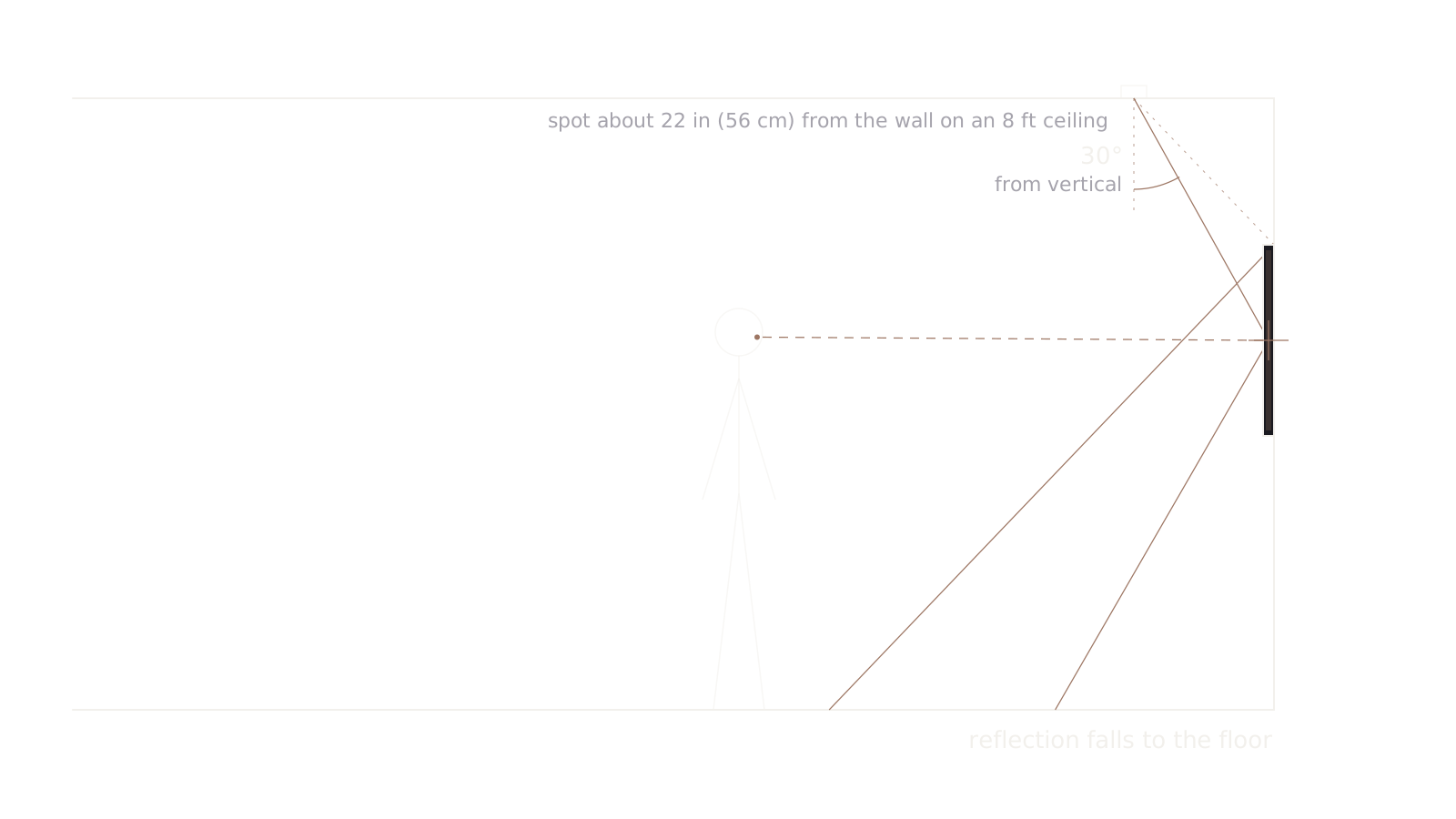
תרשים 8בזווית של כ-30 מעלות, ההשתקפויות נופלות לרצפה ולא לעיניים שלכם.הצעה · בוהק, ואז בערך 30 מעלות
ספוט תקרה או תאורת מסילה שמכוונים בזווית של כ-30 מעלות מהאנך מאירים את העבודה באופן אחיד ומפילים את ההשתקפויות למטה, לכיוון הרצפה. מרכז שימור המסמכים של צפון מזרח ארצות הברית ממליץ להרחיק תצלומים צבעוניים ממוסגרים וצבעי מים מאור שמש ישיר ומספוטים, מאחורי זכוכית או אקריליק שמסננים קרינה אולטרה סגולה; כשעבודה פונה לחלון, בקשו מהממסגר גרסה נגד השתקפות.
הטעויות שאני רואה הכי הרבה
גבוה מדי. הורידו את המרכז ל-57 עד 60 אינץ'.
קטן מדי לקיר. צרפו את העבודה לקבוצה, או בחרו עבודה שמסוגלת להחזיק את הקיר.
מסמר אחד למסגרת רחבה. היא נוטה הצידה בכל פעם שדלת נסגרת.
לנחש את נקודת המסמר. השתמשו בנוסחה.
מתי כדאי לפנות לאוצרת?
אם העבודה יקרת ערך, כבדה, גדולה מאוד או עם זכוכית בגודל גדול, או שהקיר מטיח, מאבן או מעל מדרגות, אנשי מקצוע צריכים להתקין אותה. ההתקנה היא חלק מהאופן שבו אני עובדת, לא שירות נפרד: אני מתכננת ומפקחת על מסגור והתקנה של העבודות שאני מציבה, ואני עוזרת למעצבי פנים עם האמנות בפרויקטים שלהם. במשרד, הגובה הוא שלב אחד מתוך שישה; העבודה עם יועצת אמנות לחברות כוללת גם בחירה, תכנון, קנייה, תאורה והתקנה. אני אוצרת אמנות שפועלת מטנפליי, ניו ג'רזי, ועובדת ברחבי מחוז ברגן, ניו ג'רזי, העיר ניו יורק וקליפורניה, ואונליין עם לקוחות בכל מקום. כדי לשאול על קיר, כתבו לי דרך דף יצירת הקשר.
The most common problem I walk into is not the art. It is the height. Most pictures hang too high, as if the wall had to be filled to the ceiling. I have seen it for more than 15 years in the art world, in museums, a gallery I managed in Tel Aviv and private homes. Here is the rule I use, the nail formula and the exceptions.
Why 57 to 60 inches?
The 57 inch rule is a long-standing hanging convention: hang a work so its center sits 57 inches (145 cm) from the floor, close to a standing adult's eye height. I work in a band of 57 to 60 inches (145 to 152 cm), and lower where people sit. Eye-level hanging goes back to nineteenth century museums; where the figure 57 came from is undocumented, and published advice spreads from 55 to 66 inches (Emily Henderson uses 57, Studio McGee 60). Treat it as a range, and keep the reason: the center goes where standing eyes rest, so sofas, stairs and chairs move it.
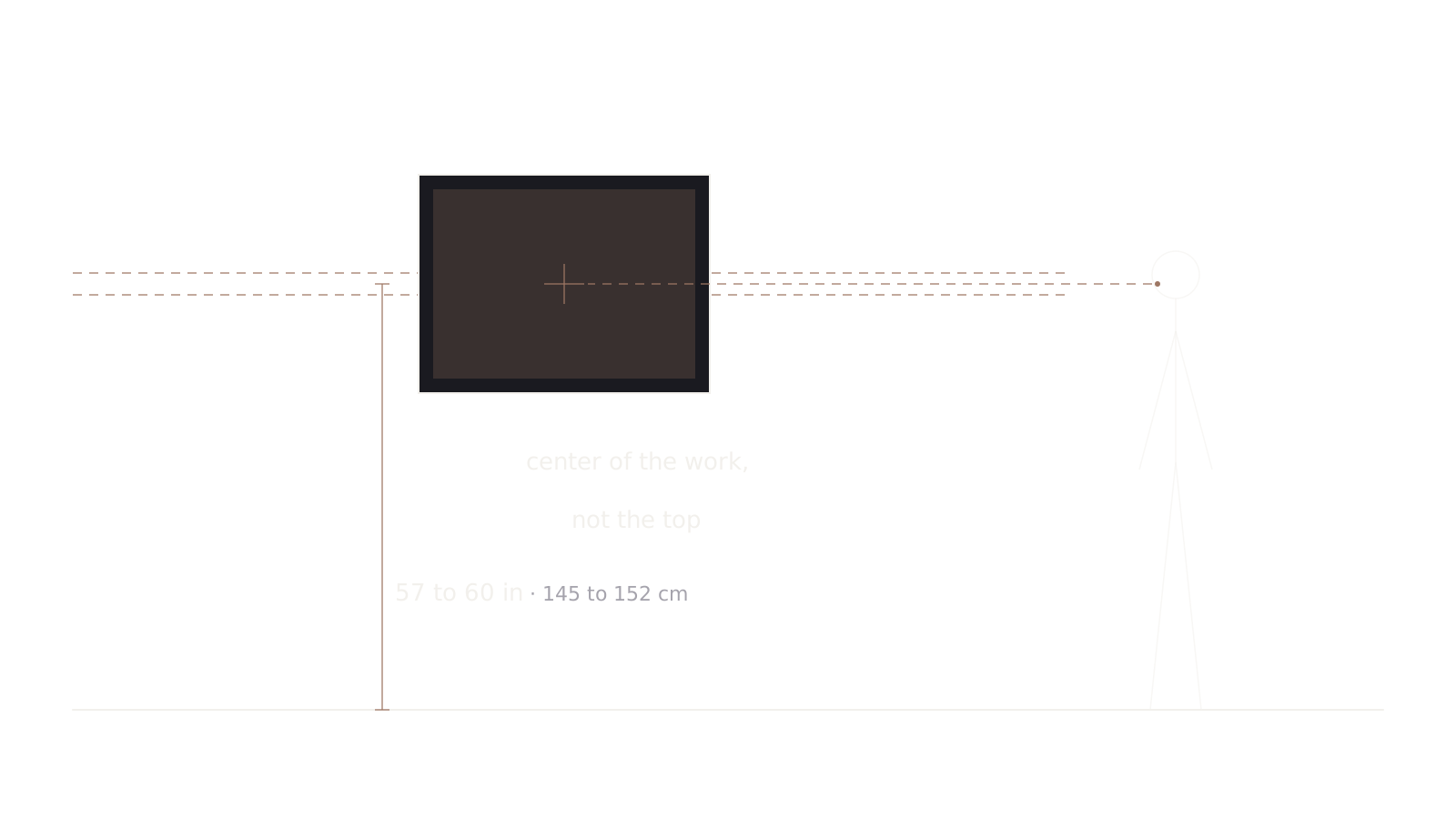
Figure 1The center of the work, not its top, belongs on the eye-level line.
57 to 60incenter of the work from the floor (145 to 152 cm)
8 to 10inabove a sofa back or headboard (20 to 25 cm)
6 to 10inabove a console, sideboard or mantel (15 to 25 cm)
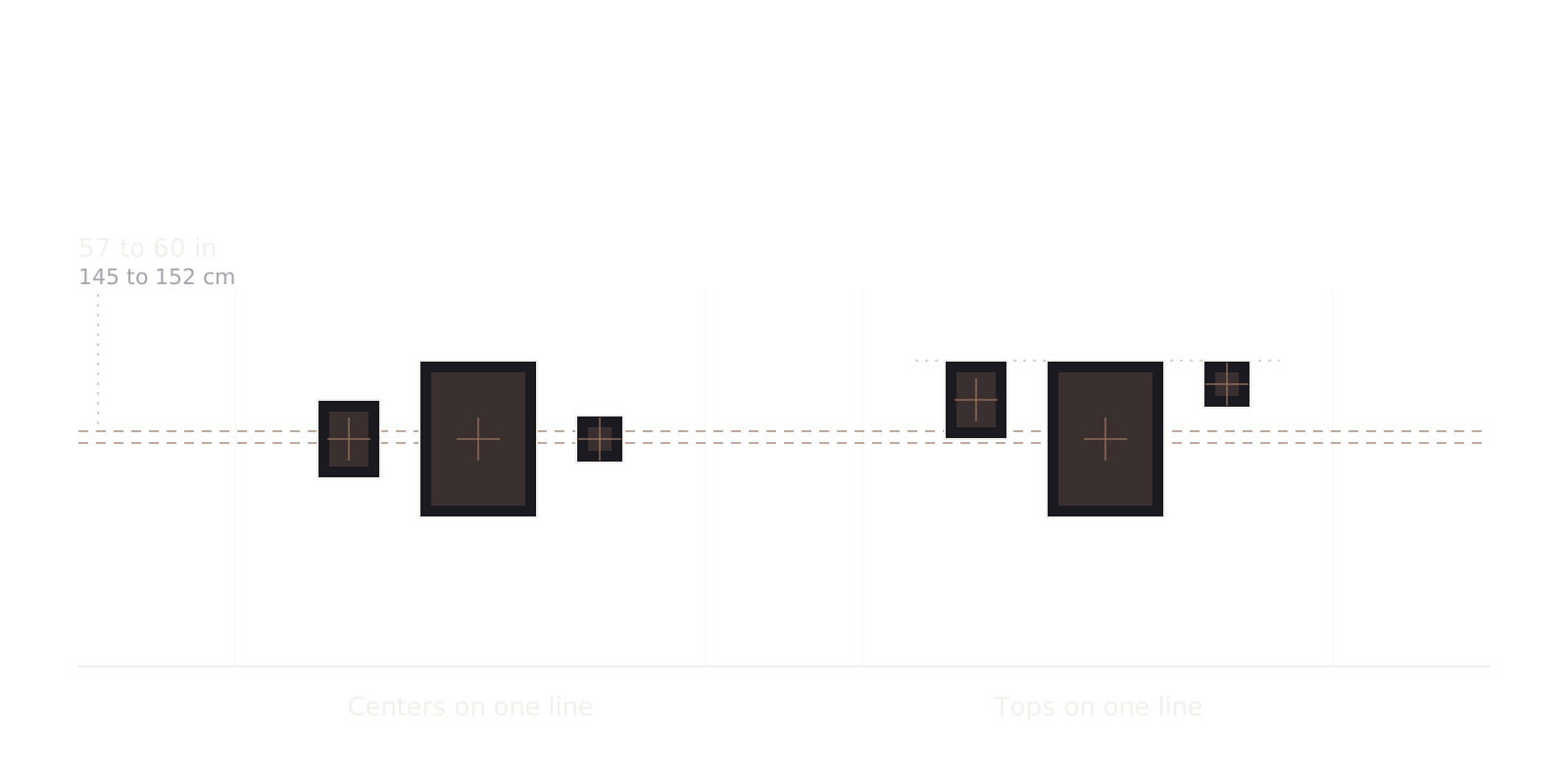
Measure to the center of the work, not its top edge or the nail, and line up works of different sizes by their centers, not their tops.
Figure 2Line works up by their centers. Aligned tops leave the smaller works floating.Proposal · one center line
How to find exactly where the nail goes
Figure 3Nail height = 57 + half the frame height, minus the drop from the top of the frame to the hanger.
Measure the height of the frame and halve it.
Measure the drop: pull the wire taut toward the top of the frame and measure from the top edge to the wire. For D-rings or a sawtooth, measure to the hanger itself.
Nail height = 57 inches + half the frame height, minus the drop.
A 30 inch frame with a 4 inch drop: 57 + 15 minus 4 = a nail at 68 inches. In centimeters, the same frame is 76 cm with a 10 cm drop: 145 + 38 minus 10 = 173 cm.
When the rule changes
Figure 4Furniture and stairs move the reference point; above a mantel the center rises above the band.
Table 1Where the center or the gap goes
Situation
Center or gap
Note
A standing wall
Center at 57 to 60 in (145 to 152 cm)
Measure to the center of the work or group
Above a sofa or bed
8 to 10 in (20 to 25 cm) above the back or headboard
The furniture sets the height, even if the center rises above 60 in
Seated spaces
Below the standing band
No study gives a number; clear the chair backs
Tall ceilings
Center stays near 57 to 60 in
Go larger, not higher
Stairs
57 to 60 in above the nosing line
The nosing line joins the front edges of the treads
Tall ceilings. Some guides raise the center under ceilings higher than 9 feet. I rarely do: eyes do not move when the ceiling does. A tall wall needs scale instead, a larger work or a group that climbs while its center stays near 60 inches. On any ceiling, I keep the top of a frame at least 12 inches below it.
Seated spaces. In a dining room or a study, most of the looking happens from a chair, so the center comes down, never so low that a chair back reaches the frame. For dining rooms, one retailer, Artfully Walls, suggests a center of about 52 to 57 inches (132 to 145 cm); see dining room art.
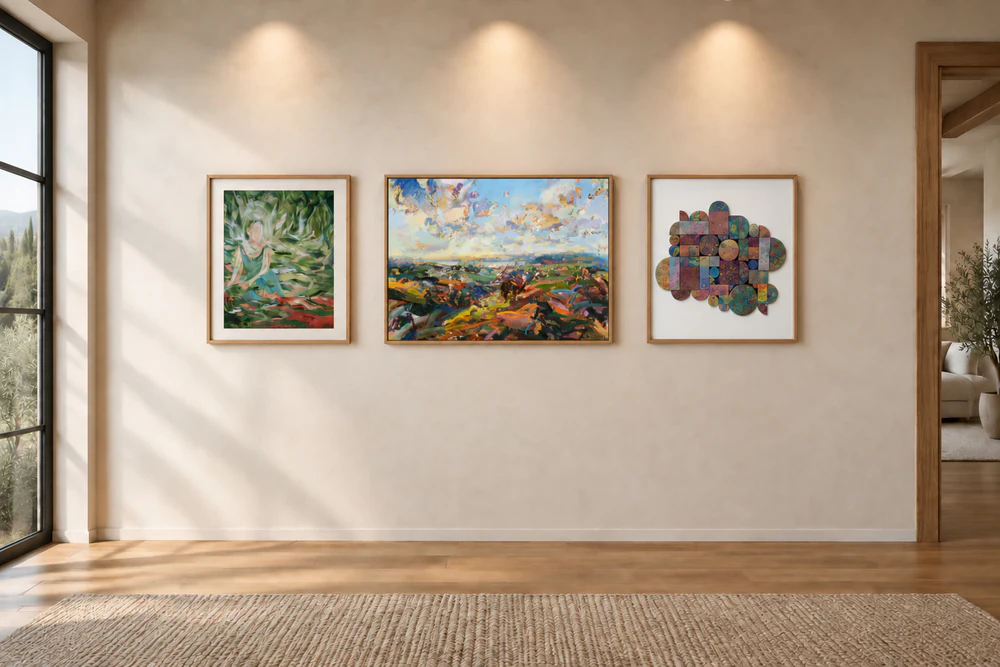
Pairs and stacks. Two or three works hung together are one composition. For three pictures stacked vertically, keep 2 to 3 inches (5 to 8 cm) between frames and put the center of the middle frame at 57 to 60 inches. Larger groups are covered in gallery wall ideas.
Figure 5A tall ceiling takes a larger work, not a higher one.Proposal · larger, not higher
How to hang a picture, step by step
Decide the spot with the frame in hand. Have someone hold it against the wall while you stand where you will usually see it.
Mark the center line lightly in pencil, then the nail point from the formula.
Find what is behind the wall. A stud finder locates studs, usually 16 inches (41 cm) apart in American houses, and warns you about pipes and wiring.
Use painter's tape for two-point hangers. Stick tape across the back of the frame, mark both D-rings on it, move the tape to the wall, level it, and drive the hooks through the marks.
Hang, level and fix. A clear bumper or a dot of museum putty on the two lower corners keeps the frame from shifting.
Figure 6Painter's tape carries both D-ring positions to the wall, level, in one step.
Hardware by weight and size
Figure 7The heavier and wider the work, the more points of support it needs.
Table 2Picture hanging hardware, light to heavy
Hardware
Use it for
How it hangs
Sawtooth hanger
Small, light frames only
On one nail
Wire
Medium frames
On two hooks a few inches apart, the wire kept short
Two D-rings
Larger frames; my default
On two hooks, so the frame hangs flat and cannot swing
French cleat (or Z-bar)
Heavy works and mirrors
Two interlocking angled strips, the wall strip screwed into studs
Choose hooks and anchors rated for at least twice the weight of the work, and screw into a stud whenever you can. With no stud where you need one, spread a heavy work across several rated anchors on a French cleat. On plaster, drill a small pilot hole first; a hammered nail can crack it. On brick, use masonry anchors.
How to hang art without nails
Adhesive strips and hooks are fine for light posters and photographs in a rental. Follow the weight rating exactly. I never use them for original works, glazed frames of any size, or in a bathroom, where humidity weakens the bond.
Picture ledges take a few screws once, then let you lean and swap frames without new holes.
Leaning a large work on a console, a deep shelf or the floor is a display choice, not a compromise.
Picture rail systems hang works on cords or rods from a rail near the ceiling, so works slide along it.
Light it, then check the glare
Figure 8At about 30 degrees, reflections fall to the floor, not into your eyes.Proposal · glare, then about 30 degrees
A ceiling spot or track light aimed at about 30 degrees from vertical lights the work evenly and throws reflections down toward the floor. The Northeast Document Conservation Center advises keeping framed color photographs and watercolors out of direct sun and spotlights, behind UV-filtering glass or acrylic; ask your framer for an anti-reflective version when a work faces a window.
The mistakes I see most often
Too high. Bring the center down to 57 to 60 inches.
Too small for the wall. Group it, or choose a work that can hold the wall.
One nail for a wide frame. It tilts every time a door closes.
Guessing the nail point. Use the formula.
When is it worth calling a curator?
If the work is valuable, heavy, very large or glazed at a large size, or the wall is plaster, stone or over a stair, it should be installed by professionals. Installation is part of how I work, not a separate service: I plan and supervise framing and installation for the works I place, and I help interior designers with the art on their projects. For an office, height is one step of six; working with a corporate art consultant covers choosing, planning, buying, lighting and installing too. I am an art curator based in Tenafly, New Jersey, working across Bergen County, New Jersey, New York City and California, and online with clients anywhere. To ask about a wall, write to me through the contact page.
Questionsשאלות
Questions people askשאלות נפוצות
What is the 57 inch rule for hanging pictures?מהו כלל 57 האינץ' לתליית תמונות?
The 57 inch rule is a long-standing hanging convention: hang a work so its center sits 57 inches (145 cm) from the floor, close to the eye height of a standing adult. I use a range of 57 to 60 inches (145 to 152 cm). The rule applies to the center of the work, or the center of a group, not to the top edge or the nail.כלל 57 האינץ' הוא מוסכמת תלייה ותיקה: תולים עבודה כך שהמרכז שלה יהיה בגובה 57 אינץ' (145 ס״מ) מהרצפה, קרוב לגובה העיניים של מבוגר עומד. אני עובדת בטווח של 57 עד 60 אינץ' (145 עד 152 ס״מ). הכלל חל על מרכז העבודה, או על מרכז הקבוצה, לא על הקצה העליון ולא על המסמר.
What is the 60 inch rule for hanging pictures?מהו כלל 60 האינץ' לתליית תמונות?
The 60 inch rule is the 57 inch rule at the top of the range: the center of the work at 60 inches (152 cm), for spaces where people mostly stand. Very large works often sit lower, not higher; one retailer, Artfully Walls, centers them at about 54 to 57 inches. For the nail, add half the frame height to 60 and subtract the drop to the hanger.כלל 60 האינץ' הוא כלל 57 האינץ' בקצה העליון של הטווח: מרכז העבודה בגובה 60 אינץ' (152 ס״מ), לחללים שבהם אנשים בעיקר עומדים. עבודות גדולות מאוד יושבות לעיתים קרובות נמוך יותר, לא גבוה יותר; קמעונאית אחת, ארטפולי וולס, ממרכזת אותן בגובה של כ-54 עד 57 אינץ'. לגובה המסמר, הוסיפו ל-60 חצי מגובה המסגרת והפחיתו את הירידה עד המתלה.
How high do you hang pictures with 9 foot ceilings?באיזה גובה תולים תמונות כשהתקרה בגובה 9 רגל?
Pictures under a 9 foot ceiling hang at the same height as under an 8 foot ceiling: the center at 57 to 60 inches. A higher ceiling does not raise your eyes. What changes is scale. A tall wall can take a larger work, a vertical pair or a salon group that climbs upward while its center stays near 60 inches.תמונות מתחת לתקרה של 9 רגל נתלות באותו גובה כמו מתחת לתקרה של 8 רגל: המרכז בגובה 57 עד 60 אינץ'. תקרה גבוהה יותר לא מרימה את העיניים שלכם. מה שמשתנה הוא קנה המידה. קיר גבוה יכול לקבל עבודה גדולה יותר, זוג אנכי או קבוצת סלון שמטפסת למעלה בזמן שהמרכז שלה נשאר סביב 60 אינץ'.
What is the 2/3 rule for hanging pictures?מהו כלל ה-2/3 לתליית תמונות?
The 2/3 rule for hanging pictures says art hung above furniture should span about two thirds of the furniture's width. Above a 72 inch sideboard, aim for a work or group about 48 inches wide. Leave 8 to 10 inches above a sofa or bed, and 6 to 10 inches above a console, sideboard or mantel.כלל ה-2/3 לתליית תמונות אומר שאמנות שנתלית מעל רהיט צריכה לפרוש על כשני שלישים מרוחב הרהיט. מעל מזנון של 72 אינץ', כוונו לעבודה או לקבוצה ברוחב של כ-48 אינץ'. השאירו 8 עד 10 אינץ' מעל ספה או מיטה, ו-6 עד 10 אינץ' מעל קונסולה, מזנון או מדף אח.
How high to hang 3 pictures vertically?באיזה גובה תולים 3 תמונות בטור אנכי?
Three pictures hung vertically are treated as one work. Keep the same gap between them, 2 to 3 inches (5 to 8 cm), and center the middle picture at 57 to 60 inches from the floor, so the stack is centered on eye level. If the bottom frame ends up below the top of nearby furniture, the stack is too tall for the spot.שלוש תמונות שנתלות בטור אנכי מטופלות כעבודה אחת. שמרו על אותו מרווח ביניהן, 2 עד 3 אינץ' (5 עד 8 ס״מ), ומרכזו את התמונה האמצעית בגובה 57 עד 60 אינץ' מהרצפה, כך שהטור כולו ממורכז על גובה העיניים. אם המסגרת התחתונה יורדת מתחת לגובה הרהיט הסמוך, הטור גבוה מדי למקום הזה.
What is the toothpaste trick for hanging pictures?מה טריק משחת השיניים לתליית תמונות?
The toothpaste trick marks the nail point: you dab a little toothpaste on the hanger on the back of the frame, press the frame against the wall where you want it, and the dab leaves a mark where the nail goes. It works, but I prefer painter's tape across the back of the frame: it gives the same marks, handles two D-rings, and puts nothing on the wall.טריק משחת השיניים מסמן את נקודת המסמר: מורחים מעט משחת שיניים על המתלה שבגב המסגרת, מצמידים את המסגרת לקיר במקום הרצוי, והכתם משאיר סימון במקום שבו המסמר צריך להיכנס. זה עובד, אבל אני מעדיפה מסקינג טייפ לרוחב גב המסגרת: הוא נותן את אותם סימונים, מתאים גם לשתי טבעות תלייה, ולא משאיר כלום על הקיר.
Send me one photo of the wall, and a line about the space. I will tell you what I see.שלחו לי תמונה אחת של הקיר ושורה על החלל. אספר לכם מה אני רואה.
This browser has no email app set up, so nothing opened. Copy the address, or open it in your webmail.בדפדפן הזה לא מוגדרת תוכנת דואר, ולכן לא נפתח כלום. העתיקו את הכתובת, או פתחו אותה בדואר האינטרנטי שלכם.
 Beforeלפני