October in New York, Part Two: Art Galleriesאוקטובר בניו יורק: חלק שני, גלריות האמנות
היי כולם ✨
אתמול יצאתי לצ׳לסי לסיבוב גלריות, להרגיש קצת את הסתיו הניו־יורקי ולראות מה חדש בעיר.
כיף במיוחד להסתובב עכשיו בניו יורק ולראות איך היא מתחילה להתקשט לקראת האלווין 🎃
ביקרתי בשבע גלריות, ומתוכן בחרתי שלוש תערוכות מאוד מיוחדות ששווה לראות בסוף השבוע הקרוב או עד סוף החודש: כולן במרחק הליכה קצר זו מזו.
התחנה הראשונה שלנו היא Petzel Gallery, שם מוצגת תערוכת היחיד Transit of Venus של האמנית אמילי מיי סמית׳.
סמית׳ נולדה בשנת 1979 באוסטין, טקסס, וכיום חיה ועובדת בצפון מדינת ניו יורק. זו תערוכת היחיד השנייה שלה בגלריה, והיא מגיעה לאחר תערוכה מקיפה שהוצגה בשנת 2024 במוזיאון מגריט בבריסל, שם הוצגו ציוריה לצד עבודותיו של מגריט.
הייתי מאוד רוצה לראות את התערוכה הזו, כי ההשפעה של מגריט על עבודותיה של סמית׳ ניכרת בהן היטב. אבל בניגוד למגריט, שאצלו המוזרות נשארת חידה פתוחה ללא פרשנות, סמית׳ מפנה את הסוריאליזם לטענה פמיניסטית חדה: מאחורי הצבעוניות הקלילה והחן הגרפי של ציוריה מסתתרים כוח, מיניות ואלימות, וההומור שלה שנון ומטריד גם יחד, ולדעתי זה מה שהופך אותה לייחודית.
סמית׳ מחוברת מאוד לתולדות האמנות, לא רק דרך ההשפעות שהיא מצטטת, אלא גם דרך דמויות שהיא חוזרת אליהן שוב ושוב, כמעין מיתולוגיה אישית שהיא בונה לאורך השנים.
המטאטא הוא אחת הדמויות המזוהות ביותר איתה, והוא לקוח מ"שוליית הקוסם" של דיסני. זהו כלי עבודה ביתי שהעבודה איתו נקשרה באופן מסורתי לנשים, וצורתו מזכירה מכחול, ולכן אפשר לקרוא אותו כמייצג גם את העובדת וגם את האמנית.
יש כאן גם היבט מעמדי וחומרי. סיבי המטאטא הם חומר פשוט וזול, אבל אצל סמית׳ הוא הופך לדמות בעלת נוכחות, אישיות וסיפור.
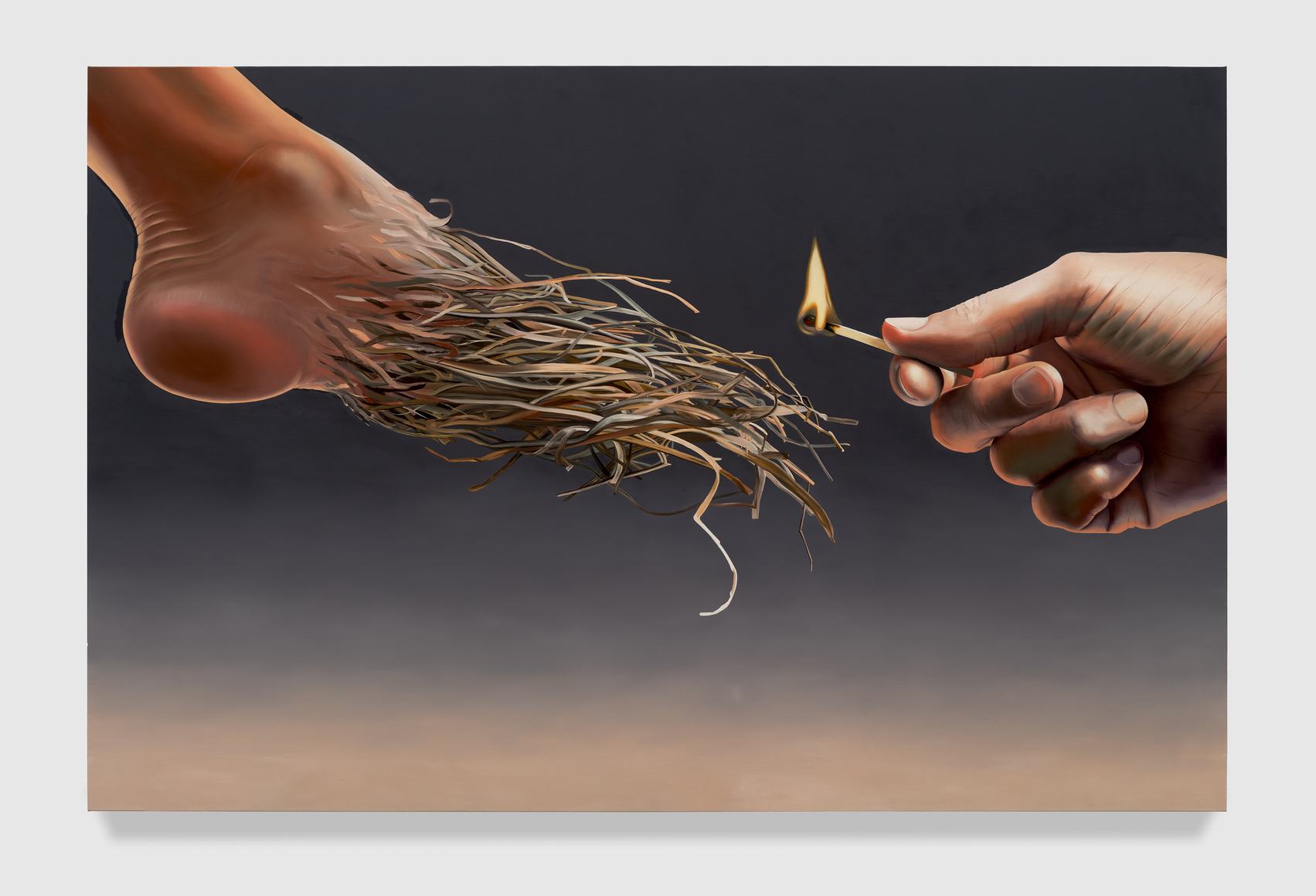
באחת העבודות בתערוכה מופיעה כף רגל נשית שחציה אנושית וחציה עשויה מסיבי מטאטא. היא נמתחת אל עבר גפרור שעומד לשרוף אותה ולכלות אותה. יש בדימוי הזה משהו מאוד מטריד: הגוף הנשי הופך לכלי עבודה, ובו בזמן גם לדבר פגיע, חשוף וחד־פעמי.
Emily Mae Smith, from Transit of Venus, Petzel Gallery.
מה שמדהים בעבודות של סמית׳ הוא המתח בין הדימויים הסוריאליסטיים והמשעשעים לבין רמת הביצוע יוצאת הדופן שלהן. היא עובדת בטכניקה מסורתית של גלזורות, שכבות דקות ושקופות של צבע שנבנות זו על גבי זו.
זו טכניקה קלאסית בתולדות האמנות, שמאפשרת ליצור תחושה נטורליסטית מאוד ולהעניק לאור תחושה שהוא מגיע מתוך הציור עצמו. ככל שמתקרבים, אפשר לראות את השכבות, את הזמן ואת כמות העבודה שהושקעה בכל משטח.
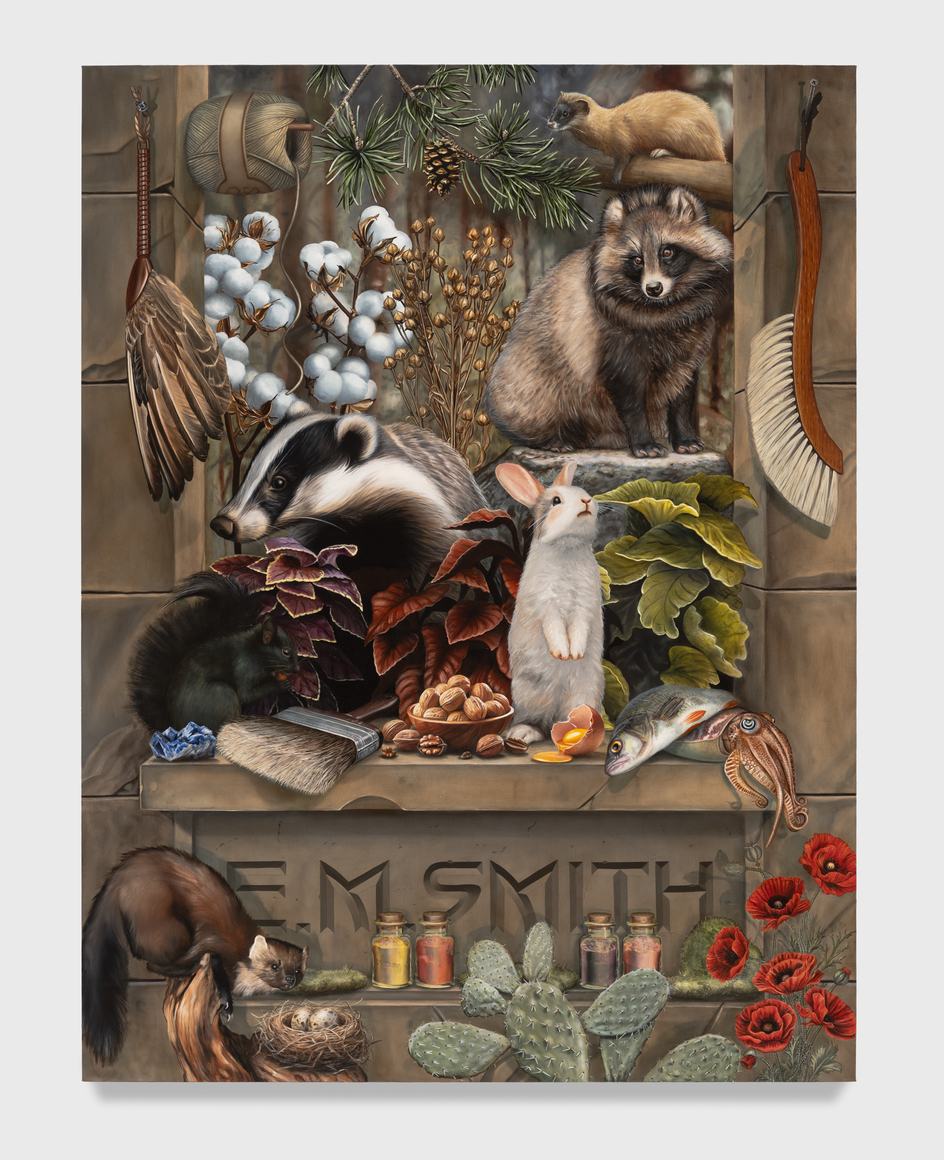
בתערוכה יש גם עבודה שנראית כמו טבע דומם מודרני, אבל קרובה מאוד לרעיון של memento mori, "זכור שתמות" בלטינית, שהיה מרכזי בציור האירופי של המאה ה-17, במיוחד בז'אנר ה-vanitas. בציורי טבע דומם כאלה רואים פרחים בשיא פריחתם שכבר מתחילים לנבול, ופירות בשלים כל כך שעוד רגע יתחילו להירקב. גם בשיא החיים, המוות נמצא מעבר לפינה.
סמית׳ יוצרת גרסה עכשווית לרעיון הזה מאוסף של חפצים וחומרים מעולם הציור: על רקע של מבנה דמוי קבר מתוארים חלמון ביצה שמשמש להכנת צבע טמפרה, אגוזים שמהם מפיקים שמן לצבעי שמן ובעלי חיים שמהפרווה שלהם מכינים מברשות ציור ומכחולים. כך העבודה עוסקת בו בזמן בחיים, במוות ובחומריות של האמנות עצמה, ומזכירה שגם ציור נוצר מחומרים שהיו חיים, משתנה עם הזמן ובסופו של דבר מתיישן ומתבלה.
Emily Mae Smith, from Transit of Venus, Petzel Gallery.
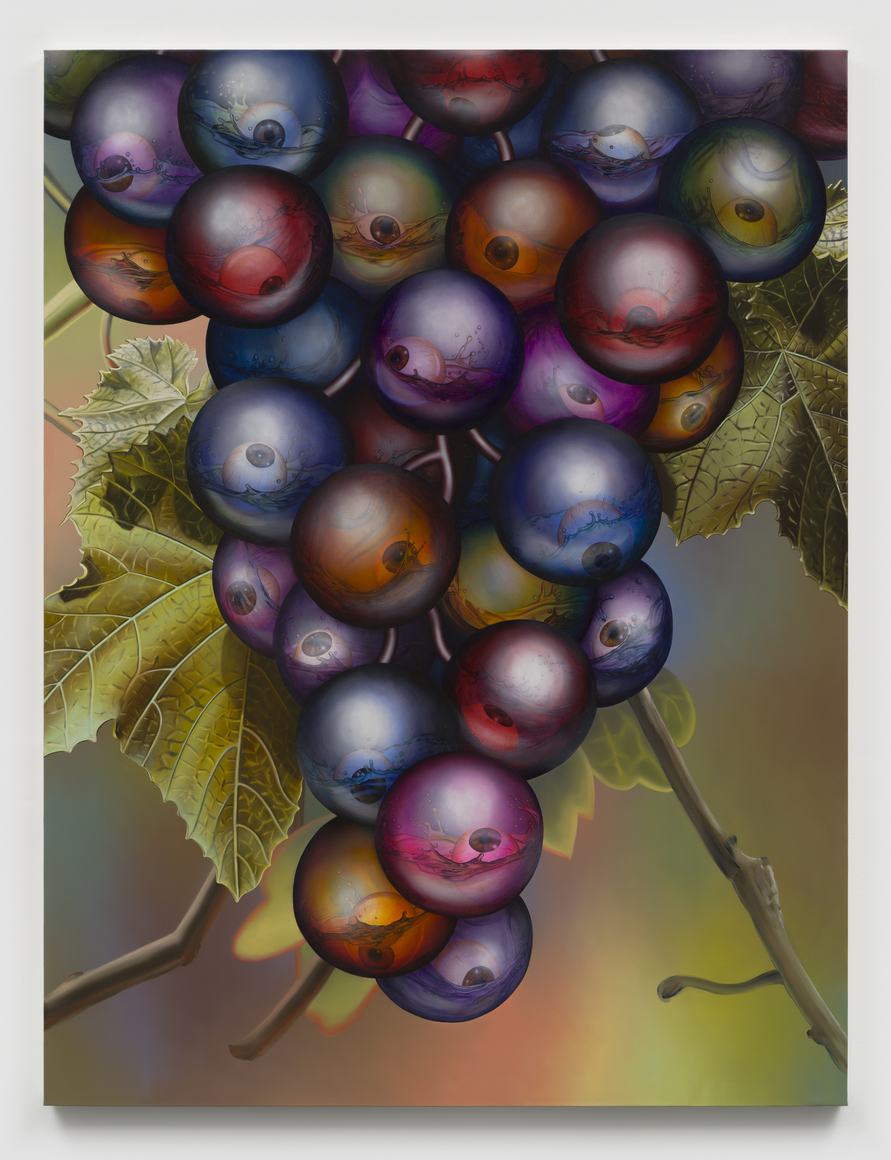
עבודה נוספת שתפסה אותי במיוחד היא אשכול ענבים מלא בעיניים. סמית׳ משתמשת כאן בדימוי מוכר מהאמנות, ענבים, שמסמלים שפע, טבע וחומריות, ומחברת אליו עיניים, שמזוהות היום עם מבט, מעקב וחשיפה בעולם הדיגיטלי.
Emily Mae Smith, from Transit of Venus, Petzel Gallery.
אפשר לקרוא כאן ביקורת על האופן שבו מסכים ורשתות חברתיות מפזרים את תשומת הלב שלנו. אנחנו מוצפים בדימויים ובמידע ללא הפסקה, ודווקא בגלל זה מתקשים להתמקד באמת במשהו אחד. אפשר לקרוא את זה גם בכיוון ההפוך: אנחנו לא רק מסתכלים, אלא גם נצפים.
זה מה שאני אוהבת בעבודות של אמילי מיי סמית׳: הן נראות צבעוניות, מצחיקות ואפילו שובבות, אבל מתחת לפני השטח הן עוסקות בשאלות כבדות, כמו עבודה, מגדר, מעמד, כוח, פגיעות וזהות, והאופן שבו אנחנו מנסים להחזיק מעמד בעולם שהופך מורכב ומאיים יותר.
היא לוקחת דימויים שנראים כמעט תמימים והופכת אותם למשהו שממשיך להטריד גם אחרי שמתרחקים מהציור.
זו תערוכה מאוד מיוחדת, ובעיניי כדאי להספיק לראות אותה לפני שתרד מהקירות.
Emily Mae Smith | Transit of Venus | Petzel Gallery 📅 עד 31 באוקטובר
התחנה הבאה שלנו היא Lisson Gallery, שם מוצגת תערוכת היחיד Unnatural Habitat של הירושי סוגימוטו.
סוגימוטו נולד בשנת 1948 בטוקיו, ועבר לניו יורק לפני יותר מחמישים שנה. כיום הוא מחלק את זמנו בין שתי הערים.
זו תערוכת היחיד השלישית שלו בגלריה, והיא חוזרת ממש להתחלה: לסדרת ה-Diorama, שהייתה סדרת העבודות הראשונה שסוגימוטו יצר כאמן.
הסיפור מתחיל באמצע שנות ה-70. זמן קצר אחרי שעבר לניו יורק, ביקר סוגימוטו במוזיאון האמריקאי לתולדות הטבע והוקסם מהדיורמות: בעלי חיים מפוחלצים שהוצבו בתנוחות משכנעות על רקע שמיים מצוירים.
הוא התחיל לצלם אותם, והמצלמה השלימה את האשליה. כשהביט בדיורמות בעין אחת, הפרספקטיבה נעלמה והן נראו אמיתיות, וכך הבין שהמצלמה רואה את העולם באותה דרך. דוב קוטב מפוחלץ על רקע ארקטי מצויר נראה לפתע אמיתי לחלוטין.
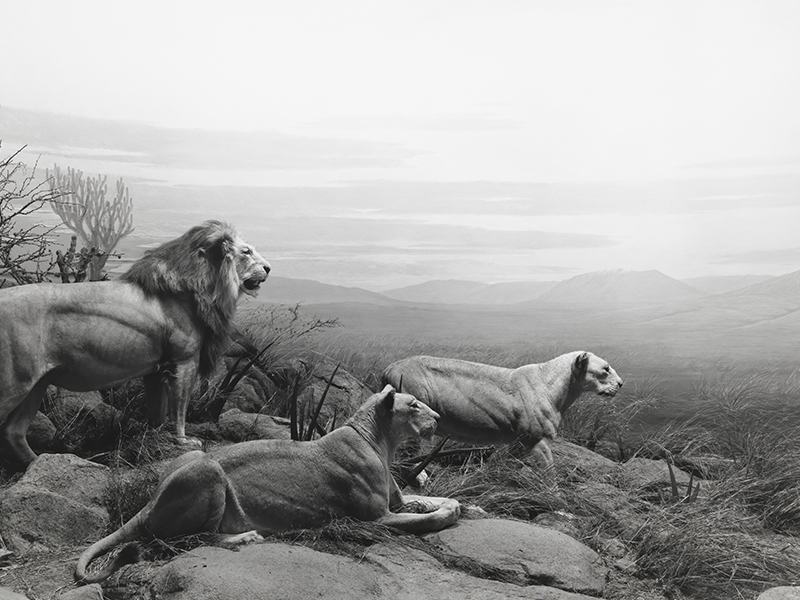
Hiroshi Sugimoto, from the Diorama series, Lisson Gallery.
הצילום הזה, Polar Bear, מוצג גם בתערוכה הנוכחית, והוא הדימוי הראשון שסוגימוטו יצר כאמן. מאז הוא חזר שוב ושוב לסדרה הזו.
בשנת 2025, חמישים שנה אחרי הביקור הראשון, סוגימוטו חזר למוזיאון וצילם שם שוב. התערוכה מציגה עבודות מכל התקופות, מאריות וקונדורים ועד הרי הרוקי.
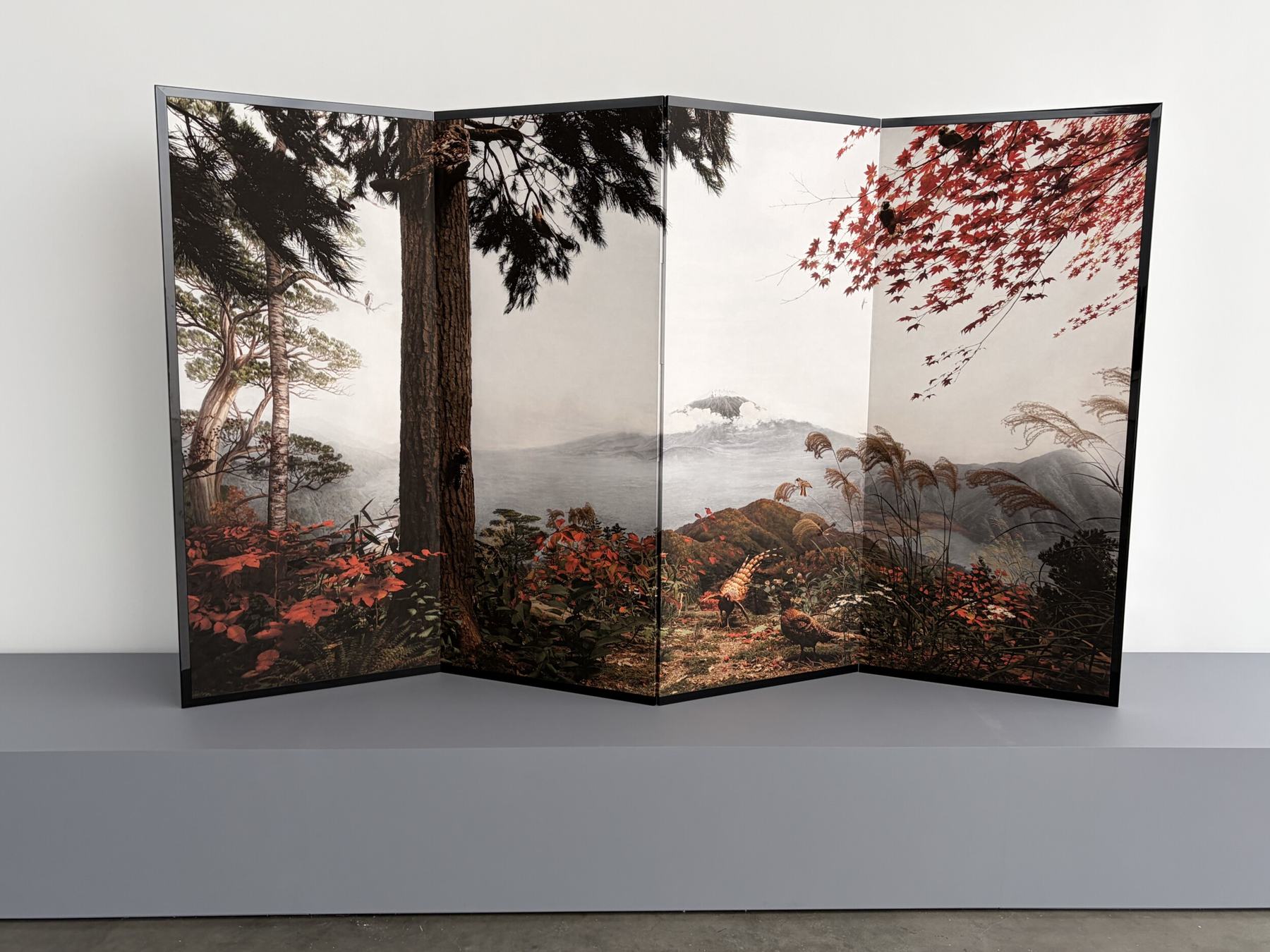
יש בתערוכה גם משהו חדש: ארבעה מהתצלומים מודפסים בצבע, דבר נדיר מאוד אצל סוגימוטו. הם מודפסים על נייר וושי יפני ומוצגים על גבי ביובו, מסכי קיפול מסורתיים שיוצרו בידי בעלי מלאכה בקיוטו. הם עומדים בחלל כמעט כמו פסלים, והקיפולים שלהם מהדהדים את הרקעים המעוגלים והמצוירים של הדיורמות עצמן.
Hiroshi Sugimoto, color photograph on a byobu folding screen, Unnatural Habitat, Lisson Gallery.
שם התערוכה מנסח את הפרדוקס שנמצא במרכזה: בעלי החיים האלה מתו לפני זמן רב. הנופים מצוירים. השמיים מוארים באמצעות מנורות מוזיאון. ובכל זאת, התמונות מרגישות לפעמים חיות יותר מצילומי טבע. זו השאלה שסוגימוטו חוזר אליה לאורך כל הקריירה שלו: כמה ממה שאנחנו מכנים ״אמיתי״ הוא למעשה בנייה משכנעת? האם המצלמה חושפת את האמת או ממציאה אותה?
הוא שאל את השאלה הזו כבר בשנות ה-70, ובעידן של פילטרים, תמונות שנוצרות בבינה מלאכותית ודימויים שקשה לדעת מה מקורם, היא הפכה לרלוונטית מתמיד.
מתחת לכל זה נמצא הנושא שסוגימוטו חוזר אליו שוב ושוב: הזמן.
כל אחד מהתצלומים האלה מחזיק בתוכו כמה רגעים בו זמנית: צילום שנעשה לפני שנה של דיורמה שנבנתה לפני דורות, ובה בעל חיים שמת זמן רב לפני כן. דיורמה מוזיאלית היא כבר ניסיון לעצור את השעון. סוגימוטו עוצר אותו פעם נוספת.
וכשרואים יחד חמישים שנה של תצלומים, הם הופכים לתיעוד של אמן שחזר שוב ושוב לאותם חללים לאורך חייו, ומצא בהם בעלי חיים שכמעט לא הזדקנו, בזמן שכל מה שנמצא מעבר לזכוכית השתנה.
📍 Lisson Gallery 📅 עד 24 באוקטובר
התחנה השלישית שלנו היא Gladstone Gallery, שם מוצגת התערוכה waterfall של אוגו רונדינונה.
כפי שמרמז השם, הפסלים בתערוכה שואבים השראה ממפלי מים, תופעה שמעניינת את רונדינונה משום שהיא נמצאת בתנועה מתמדת ולעולם אינה נראית בדיוק אותו הדבר פעמיים.
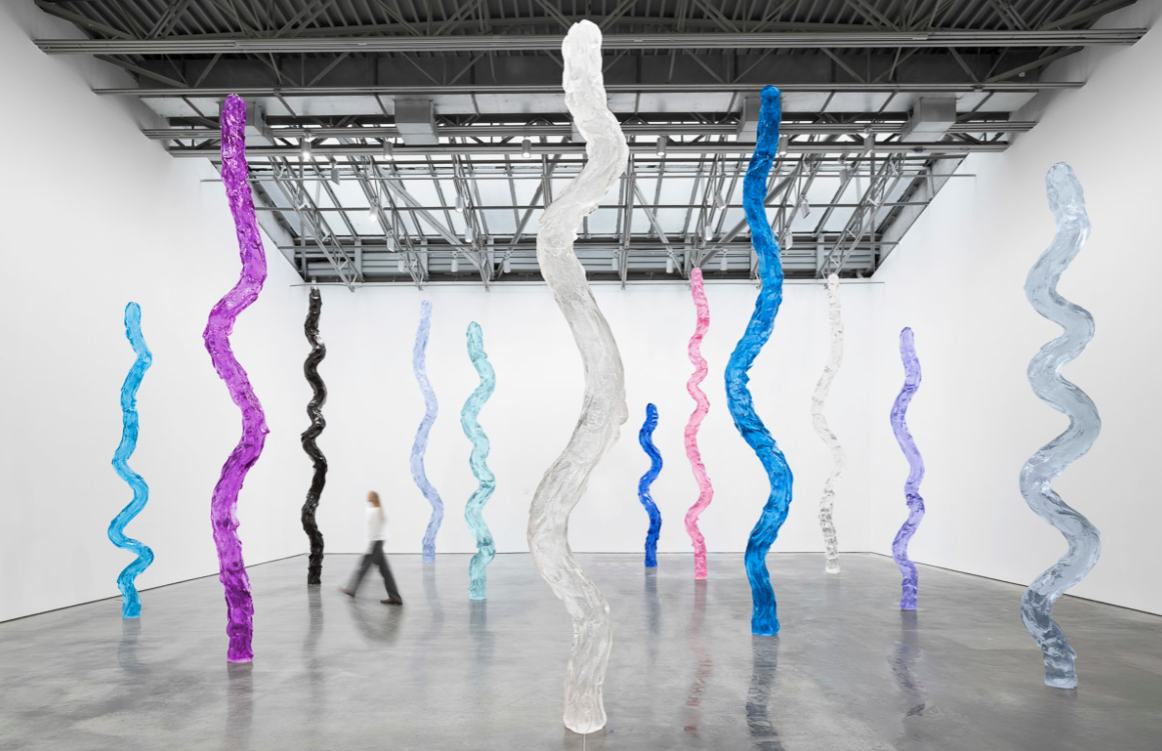
בגלריה מוצבים 12 פסלים, שכל אחד מהם מתנשא לגובה של בין 11 ל-20 רגל. אלה עמודים שקופים למחצה, שנדמים כאילו הם זוהרים מבפנים.
יש משהו פשוט נעים ומשמח להסתובב בין הפסלים של רונדינונה. הם נראים כמו תולעי גומי או סוכריות ענקיות. אבל, כמובן שלא מדובר בסוכריות; כל פסל עשוי משלושה מרכיבים: גוף משרף סינתטי שקוף; צבע שנוצר מפיגמנטים שנטחנו מאבני חן, אבנים שלקח להן מיליוני שנים להיווצר; ובתוך כל פסל שולבו גם אפר משיערו ומציפורניו של האמן.
כך הופך כל פסל לעקבות של חיים אנושיים, המושהים בתוך זמן עמוק בהרבה.
יש משהו יפה מאוד בחיבור הזה בין חומר שנוצר במשך מיליוני שנים לבין שריד קטן ואישי מגופו של האמן, ובין מפל מים שנמצא בתנועה מתמדת לבין ניסיון ללכוד רגע, חומר וזמן בתוך אובייקט אחד.
📍 Gladstone Gallery 📅 עד 31 באוקטובר
Hi everyone ✨
Yesterday I went to Chelsea for a gallery round, to feel a little of the New York fall and see what's new in the city.
It is especially fun to wander around New York right now and watch it start dressing up for Halloween 🎃
I visited seven galleries, and from them I chose three very special exhibitions that are worth seeing this coming weekend or by the end of the month: all within a short walk of one another.
Our first stop is Petzel Gallery, where Transit of Venus, a solo exhibition by the artist Emily Mae Smith, is on view.
Smith was born in 1979 in Austin, Texas, and today lives and works in upstate New York. This is her second solo exhibition at the gallery, and it comes after a comprehensive exhibition shown in 2024 at the Magritte Museum in Brussels, where her paintings were shown alongside Magritte's works.
I would very much have liked to see that exhibition, because Magritte's influence on Smith's work is clearly visible. But unlike Magritte, in whose work the strangeness remains an open riddle with no interpretation, Smith turns Surrealism toward a sharp feminist claim: behind the light color and the graphic grace of her paintings lie power, sexuality and violence, and her humor is witty and disturbing at once, which in my view is what makes her unique.
Smith is deeply connected to art history, not only through the influences she cites, but also through figures she returns to again and again, a kind of personal mythology that she builds over the years.
The broom is one of the figures most identified with her, and it is taken from Disney's “The Sorcerer's Apprentice.” It is a household work tool whose use has traditionally been tied to women, and its shape resembles a paintbrush, so it can be read as representing both the working woman and the woman artist.
There is also a class and material aspect here. Broom fibers are a simple, cheap material, but in Smith's hands it becomes a figure with presence, personality and a story.
In one of the works in the exhibition appears a woman's foot that is half human and half made of broom fibers. It stretches toward a match that is about to burn it and consume it. There is something very disturbing in this image: the female body becomes a work tool, and at the same time also something vulnerable, exposed and single-use.
Emily Mae Smith, from Transit of Venus, Petzel Gallery.
What is astonishing about Smith's works is the tension between the surreal, amusing images and their exceptional level of execution. She works in the traditional technique of glazes, thin, transparent layers of paint built one on top of another.
This is a classic technique in art history, which makes it possible to create a very naturalistic feeling and to give the light a sense that it comes from within the painting itself. The closer you get, the more you can see the layers, the time and the amount of work invested in every surface.
The exhibition also includes a work that looks like a modern still life, but is very close to the idea of memento mori, Latin for “remember that you will die,” which was central to European painting of the 17th century, especially in the vanitas genre. In still life paintings like these you see flowers at the peak of their bloom that are already beginning to wilt, and fruit so ripe that in a moment it will begin to rot. Even at the height of life, death is around the corner.
Smith creates a contemporary version of this idea from a collection of objects and materials from the world of painting: against the background of a tomb-like structure are depicted an egg yolk used to make tempera paint, nuts from which oil for oil paints is extracted, and animals whose fur is used to make paintbrushes and brushes. In this way the work deals at once with life, death and the materiality of art itself, and reminds us that a painting too is made of materials that were once alive, changes over time and in the end ages and wears away.
Emily Mae Smith, from Transit of Venus, Petzel Gallery.
Another work that caught me especially is a cluster of grapes full of eyes. Smith uses here a familiar image from art, grapes, which symbolize abundance, nature and materiality, and connects eyes to it, which are today identified with gaze, surveillance and exposure in the digital world.
Emily Mae Smith, from Transit of Venus, Petzel Gallery.
One can read here a critique of the way screens and social networks scatter our attention. We are flooded with images and information without pause, and precisely because of that we struggle to truly focus on one thing. One can also read it in the opposite direction: we do not only look, we are also being watched.
This is what I love about Emily Mae Smith's works: they look colorful, funny and even playful, but beneath the surface they deal with heavy questions, such as work, gender, class, power, vulnerability and identity, and the way we try to hold on in a world that becomes more complex and more threatening.
She takes images that look almost innocent and turns them into something that keeps disturbing even after you step away from the painting.
This is a very special exhibition, and in my view it is worth catching it before it comes down from the walls.
Emily Mae Smith | Transit of Venus | Petzel Gallery 📅 Through October 31
Our next stop is Lisson Gallery, where Unnatural Habitat, a solo exhibition by Hiroshi Sugimoto, is on view.
Sugimoto was born in 1948 in Tokyo and moved to New York more than fifty years ago. Today he divides his time between the two cities.
This is his third solo exhibition at the gallery, and it goes back to the very beginning: to the Diorama series, the first body of work Sugimoto made as an artist.
The story begins in the mid 1970s. Shortly after moving to New York, Sugimoto visited the American Museum of Natural History and was enchanted by the dioramas: stuffed animals placed in convincing poses against painted skies.
He began to photograph them, and the camera completed the illusion. When he looked at the dioramas with one eye, the perspective disappeared and they looked real, and so he understood that the camera sees the world the same way. A stuffed polar bear against a painted Arctic backdrop suddenly looked completely real.
Hiroshi Sugimoto, from the Diorama series, Lisson Gallery.
That photograph, Polar Bear, is also on view in the current exhibition, and it is the first image Sugimoto made as an artist. Since then he has returned to this series again and again.
In 2025, fifty years after the first visit, Sugimoto returned to the museum and photographed there again. The exhibition shows works from all periods, from lions and condors to the Rocky Mountains.
There is also something new in the exhibition: four of the photographs are printed in color, something very rare for Sugimoto. They are printed on Japanese washi paper and shown on byobu, traditional folding screens made by craftsmen in Kyoto. They stand in the space almost like sculptures, and their folds echo the curved, painted backdrops of the dioramas themselves.
Hiroshi Sugimoto, color photograph on a byobu folding screen, Unnatural Habitat, Lisson Gallery.
The title of the exhibition frames the paradox at its center: these animals died a long time ago. The landscapes are painted. The sky is lit by museum lamps. And still, the pictures sometimes feel more alive than nature photographs. This is the question Sugimoto returns to throughout his career: how much of what we call “real” is actually a convincing construction? Does the camera reveal the truth or invent it?
He asked this question already in the 1970s, and in an age of filters, AI generated images and images whose origin is hard to know, it has become more relevant than ever.
Beneath all of this lies the subject Sugimoto returns to again and again: time.
Each of these photographs holds several moments at once: a photograph taken a year ago of a diorama built generations ago, featuring an animal that died long before that. A museum diorama is already an attempt to stop the clock. Sugimoto stops it once more.
And when you see fifty years of photographs together, they become a record of an artist who returned again and again to the same spaces throughout his life, and found in them animals that hardly aged, while everything beyond the glass changed.
📍 Lisson Gallery 📅 Through October 24
Our third stop is Gladstone Gallery, where waterfall, an exhibition by Ugo Rondinone, is on view.
As the name hints, the sculptures in the exhibition draw inspiration from waterfalls, a phenomenon that interests Rondinone because it is in constant motion and never looks exactly the same twice.
Twelve sculptures stand in the gallery, each rising to a height of between 11 and 20 feet. These are semi-transparent columns that seem to glow from within.
There is something simply pleasant and joyful about walking among Rondinone's sculptures. They look like gummy worms or giant candies. But of course they are not candies; each sculpture is made of three components: a body of clear synthetic resin; color made from pigments ground from gemstones, stones that took millions of years to form; and, integrated into each sculpture, ash from the artist's hair and fingernails.
In this way each sculpture becomes a trace of a human life, held within a much deeper time.
There is something very beautiful in this connection between a material formed over millions of years and a small, personal remnant of the artist's body, and between a waterfall that is in constant motion and an attempt to capture a moment, material and time inside a single object.
📍 Gladstone Gallery 📅 Through October 31
Working with Stavעבודה עם סתיו
Art curator and advisor in Tenafly, New Jersey, for New York, Bergen County and Tel Aviv.אוצרת ויועצת אמנות בטנפליי, ניו ג'רזי, לניו יורק, למחוז ברגן ולתל אביב.
This browser has no email app set up, so nothing opened. Copy the address, or open it in your webmail.בדפדפן הזה לא מוגדרת תוכנת דואר, ולכן לא נפתח כלום. העתיקו את הכתובת, או פתחו אותה בדואר האינטרנטי שלכם.