A September Gallery Walk in Tribeca: Four Shows to Seeיום גלריות בטרייבקה: ארבע תערוכות לספטמבר
הקיץ נגמר, ספטמבר הגיע, ועולם האמנות של ניו יורק חוזר לחיים ✨
אחרי הקצב האיטי יותר של הקיץ, ספטמבר הוא הרגע שבו הכול מתחיל מחדש: תערוכות חדשות נפתחות, אמנים בעלי שם חוזרים לגלריות, ופתאום יש שוב יותר מדי דברים ששווה לראות. אז במקום לשלוח אתכם לרוץ בכל העיר, בניתי לכם הפעם מסלול קליל עם המלצות לארבע תערוכות סופר שוות בטרייבקה, כולן במרחק של כמה דקות הליכה אחת מהשנייה.
אפשר להגיע החל מהשעה 11:00 בבוקר, להתחיל ב־Broadway, ולהתקדם ברגל בין כולן. המסלול רלוונטי החל מ־10 בספטמבר.
1. Tony Cragg | Marian Goodman Gallery | 385 Broadway 📅 10 בספטמבר עד 24 באוקטובר 2026
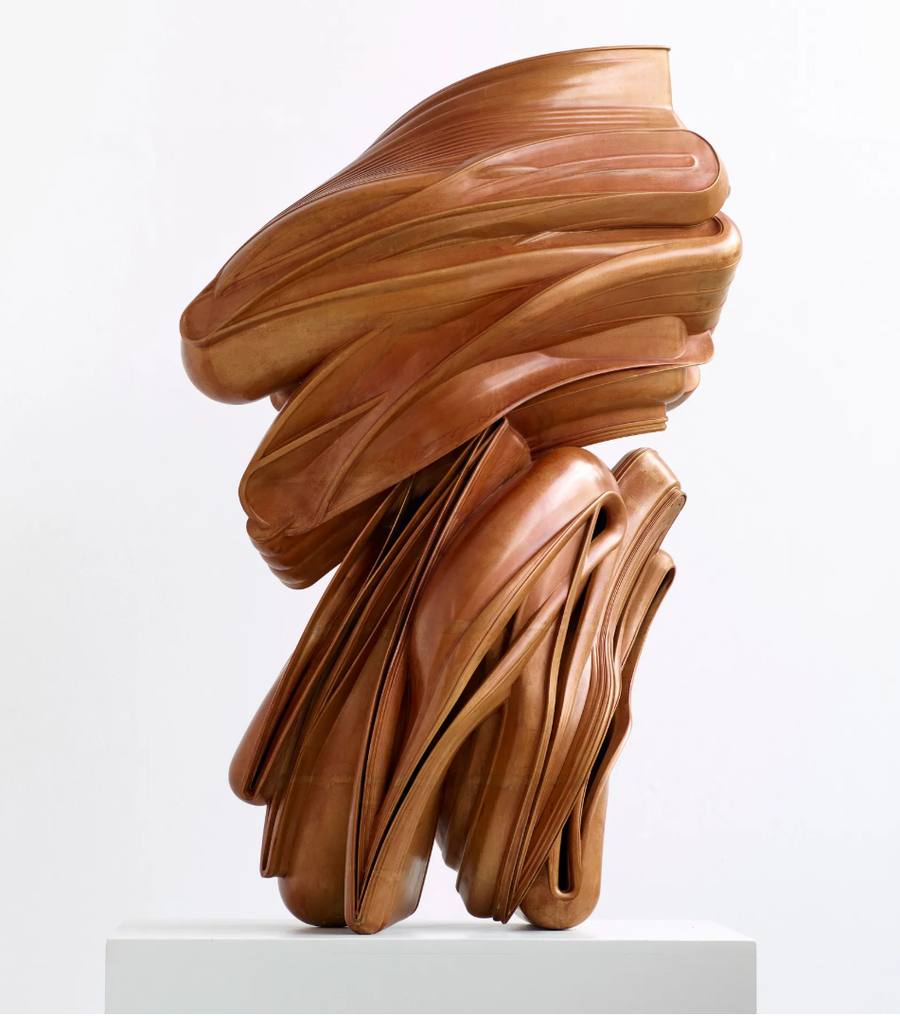
Tony Cragg הוא אחד הפסלים הבריטים החשובים של דורו. כבר חמישה עשורים הוא בוחן את מה שחומר יכול לעשות: מסה, נפח ותנועה. קראג עובד עם ברונזה, עץ, אבן, זכוכית ופלדה, ומתוך החומרים הכבדים והתעשייתיים האלה הוא יוצר צורות גדולות, מתפתלות וזורמות, שנעות בין הפשטה גמורה לבין רמזים לגוף האנושי ולטבע. התוצאה נראית כמעט נוזלית, כאילו החומר עצמו עדיין נמצא בתהליך של שינוי ותנועה.
Tony Cragg, bronze sculpture, at Marian Goodman Gallery.
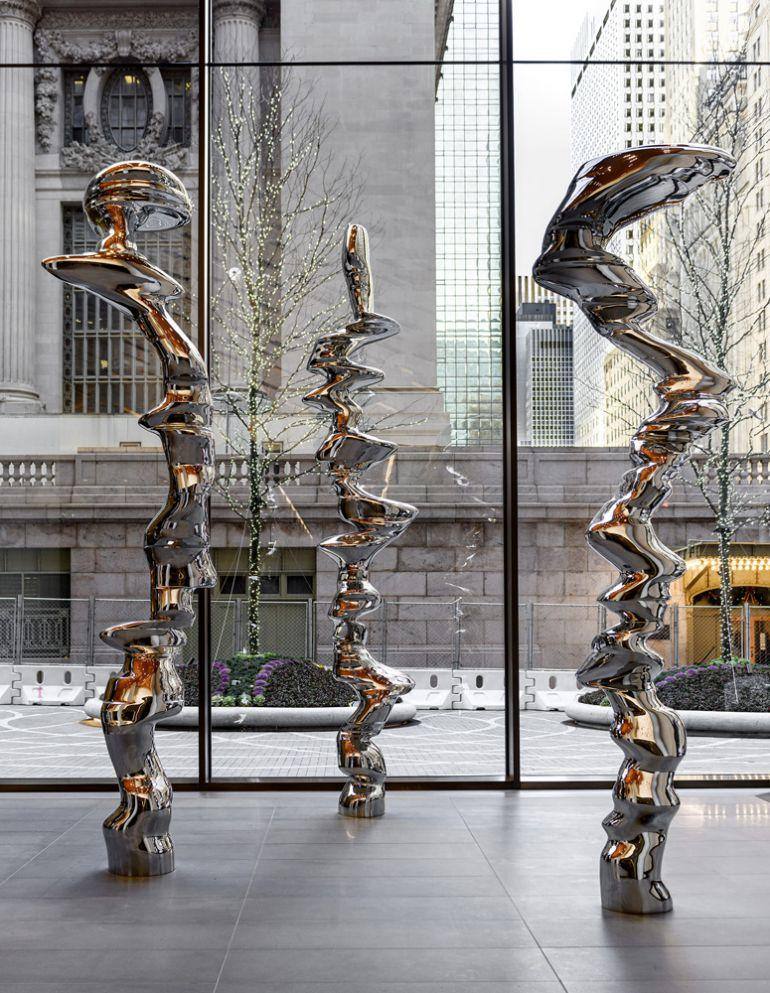
ואם הצורות האלה נראות לכם מוכרות, יכול להיות שכבר ראיתם עבודה שלו בניו יורק: Points of View, מיצב קבוע של שלושה פסלי נירוסטה מונומנטליים בלובי של One Vanderbilt, ממש מול Grand Central Terminal. כל אחד מהפסלים שוקל יותר מ־2,000 פאונד, והעבודה תוכננה במיוחד עבור החלל והקשר שלו ל־Grand Central. זוהי גם העבודה הציבורית הקבועה הראשונה של Cragg בניו יורק.
Tony Cragg, Points of View, the permanent installation in the lobby of One Vanderbilt, opposite Grand Central Terminal.
2. Hew Locke | The Wanderers | P·P·O·W | 390 Broadway 📅 9 בספטמבר עד 24 באוקטובר 2026
כמה צעדים משם נמצאת התערוכה של Hew Locke. יו לוק נולד באדינבורו אבל גדל בגיאנה, בתקופה שבה המדינה עברה מהשלטון הקולוניאלי הבריטי לעצמאות. הרקע הזה עומד בלב הפרקטיקה שלו כבר יותר משלושה עשורים: דרך פסלים עשירים ומעוטרים, סירות, דמויות היסטוריות ומסמכים שעברו התערבות, הוא בוחן אימפריה, קולוניאליזם ומה נשאר מהם הרבה אחרי שהשלטון עצמו נגמר.
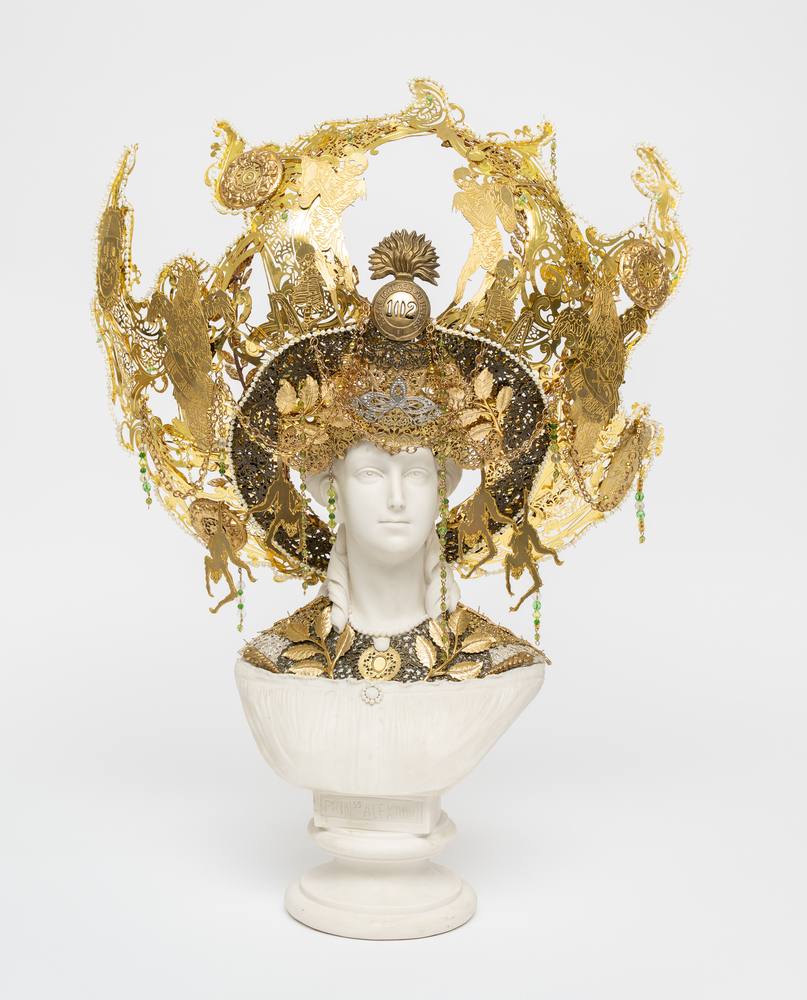
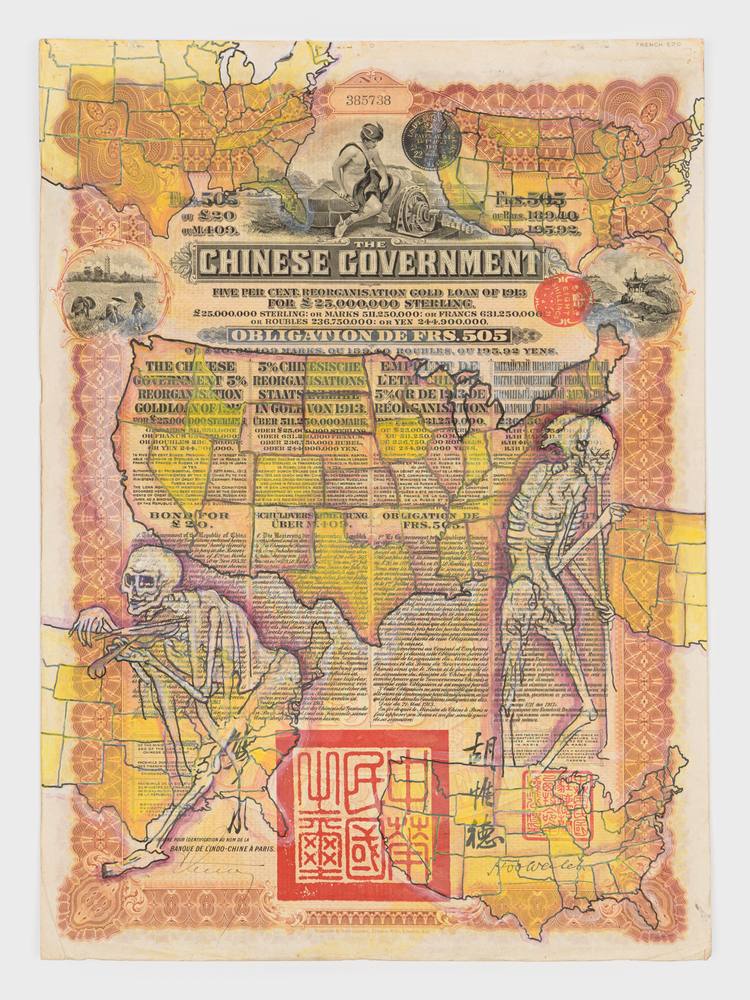
בתערוכה החדשה מופיעים בין היתר צי של סירות עמוסות בחרוזים, מדליות, מטבעות ודגלים, פסלים של דמויות כמו המלכה ויקטוריה, וגם תעודות מניה מקוריות של חברות רכבות ומסחר מהתקופה הקולוניאלית. וזה אולי החלק הכי חזק: הניירת שבאמצעותה ממש מומנו מנגנוני המסחר והאימפריה הופכת בעצמה למשטח שעליו לוק מצייר, חוקר ומפרש את ההיסטוריה הזאת מחדש.
Hew Locke, from the Souvenirs, a nineteenth century Parian ware bust reworked with gold ornament and beadwork.Hew Locke, an altered share certificate: a 1913 government gold bond painted over.
התוצאה יפה, עמוסה וכמעט חגיגית במבט ראשון, אבל מתחת לפני השטח נמצאות שאלות על כוח, כסף, הגירה, זיכרון והאופן שבו ההיסטוריה ממשיכה לעצב את ההווה.
3. Melissa Joseph | Casserole Culture | Charles Moffett | 394 Broadway 📅 9 בספטמבר עד 17 באוקטובר 2026
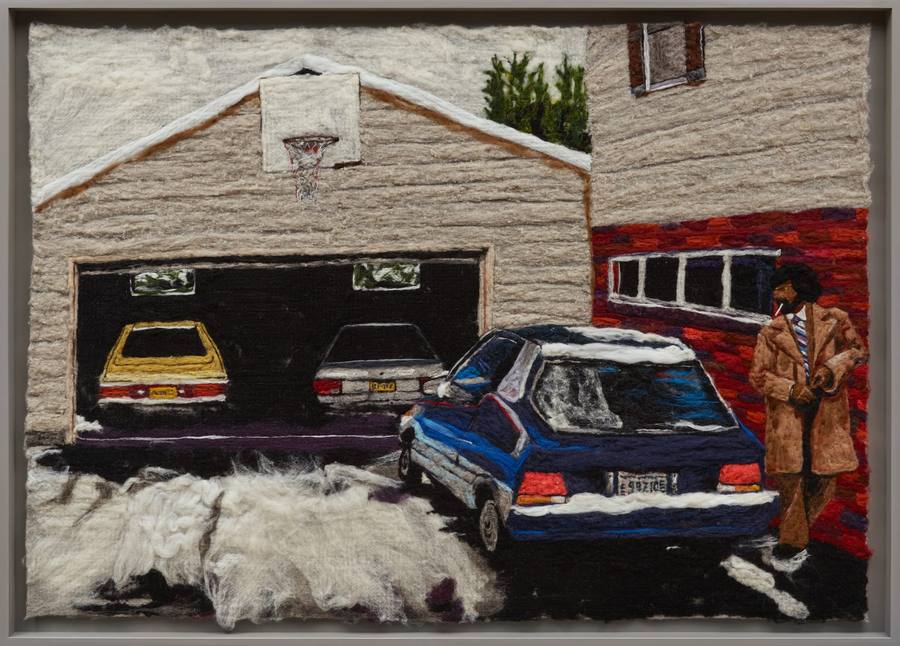
עוד כמה צעדים, ומגיעים ל־Melissa Joseph. מליסה ג'וזף יוצרת עבודות דו־ממד בטכניקה ייחודית שנקראת ליבוד במחט. היא מתרגמת תצלומי משפחה, זיכרונות ילדות ורגעים יומיומיים לסצנות עדינות שנבנות באמצעות נעיצת סיבי צמר במחט. החומר הרך מעניק לעבודות תחושה אינטימית ונוסטלגית, שמתחזקת בזכות האפקט החזותי המטושטש שנוצר מטכניקת הליבוד.
Melissa Joseph, a needle felted scene from Casserole Culture, at Charles Moffett.
לבחירה שלה במדיום הזה יש גם הקשר רחב יותר בתולדות האמנות. במשך שנים, מלאכות טקסטיל ועבודות יד נחשבו נחותות ביחס ל"אמנות גבוהה", בין היתר משום שהיו מזוהות עם עבודה ביתית ועם נשים. אצל ג'וזף, החומר שבעבר נשאר מחוץ לקאנון נכנס למרכז הבמה והופך לשפה ציורית עכשווית בפני עצמה.
4. Ilana Savdie + Chaïm Soutine | Savdie / Soutine | James Cohan | 48 Walker Street 📅 10 בספטמבר עד 24 באוקטובר 2026
ולסיום, תערוכה שמחברת בין שני ציירים שמפרידות ביניהם כמעט מאה שנים.
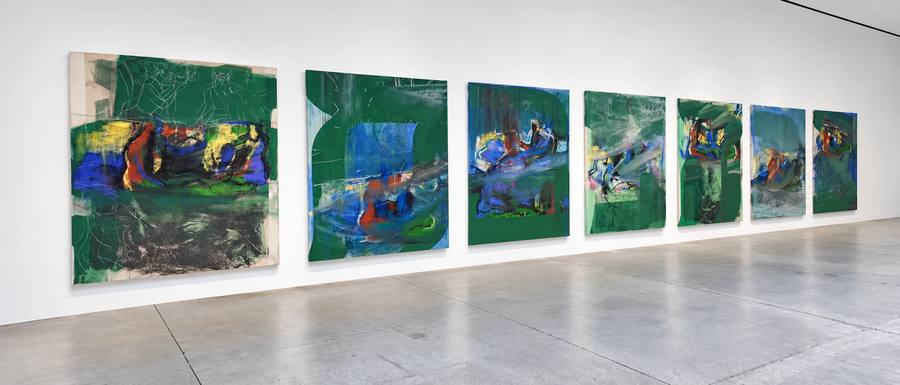
התערוכה מפגישה בין חיים סוטין לאילנה סבדי, שני ציירים שמשתמשים בצבע, עיוות ומרקם כדי לפרק את הגוף ואת הדימוי.
חיים סוטין, מהדמויות החשובות של אסכולת פריז ותחילת המודרניזם, העדיף עוצמה רגשית וחומריות של צבע על פני תיאור מדויק של המציאות.
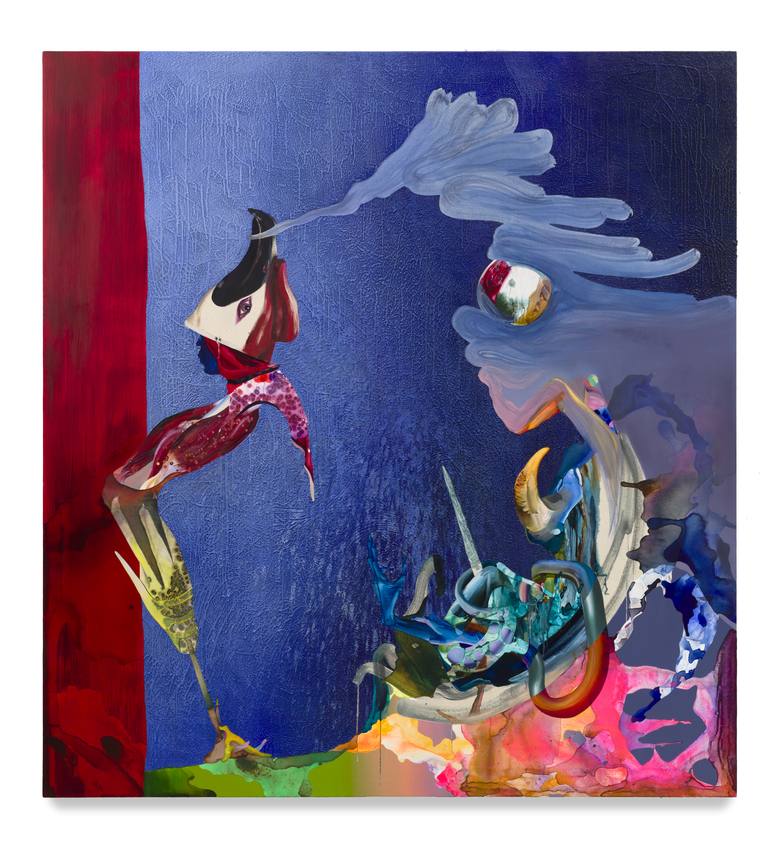
סבדי, אמנית קולומביאנית שפועלת היום בברוקלין, מציירת גופים שמתמוססים לתוך צבעים חומציים, עזים וכמעט ניאוניים. הדמויות שלה מתפרקות לתוך שכבות צבע, שקיפויות וטקסטורות שמושפעות מרוח הסוריאליזם של סלבדור דאלי ומהשפה הדיגיטלית.
Ilana Savdie, painting, in Savdie / Soutine at James Cohan.
אצל שניהם הגוף אף פעם לא יציב או שלם, אלא נמצא כל הזמן בתהליך של שינוי, פירוק והתהוות מחדש.
ואם כבר עשיתם יום גלריות ב־Tribeca, אפשר לסיים ב־Frenchette על West Broadway, לשבת על כוס יין ומשהו לאכול ולעכל את כל מה שראיתם.
שמרו את הפוסט לפעם הבאה שאתם מחפשים מה לעשות בניו יורק בספטמבר. ✦
Summer is over, September is here, and New York's art world is coming back to life ✨
After the slower pace of summer, September is the moment when everything starts again: new shows open, well known artists return to the galleries, and suddenly there is once more too much worth seeing. So instead of sending you running across the whole city, this time I built you a light route with four excellent shows in Tribeca, all a few minutes' walk from one another.
You can arrive from 11:00 in the morning, start on Broadway, and walk between all of them. The route is relevant from September 10.
1. Tony Cragg | Marian Goodman Gallery | 385 Broadway 📅 September 10 to October 24, 2026
Tony Cragg is one of the most important British sculptors of his generation. For five decades he has been exploring what material can do: mass, volume, and movement. Cragg works with bronze, wood, stone, glass, and steel, and out of these heavy, industrial materials he creates large, twisting, flowing forms that move between total abstraction and hints of the human body and of nature. The result looks almost liquid, as if the material itself is still in a process of change and motion.
Tony Cragg, bronze sculpture, at Marian Goodman Gallery.
And if these forms look familiar to you, you may have already seen a work of his in New York: Points of View, a permanent installation of three monumental stainless steel sculptures in the lobby of One Vanderbilt, right across from Grand Central Terminal. Each of the sculptures weighs more than 2,000 pounds, and the work was designed especially for the space and its relationship to Grand Central. It is also Cragg's first permanent public work in New York.
Tony Cragg, Points of View, the permanent installation in the lobby of One Vanderbilt, opposite Grand Central Terminal.
2. Hew Locke | The Wanderers | P·P·O·W | 390 Broadway 📅 September 9 to October 24, 2026
A few steps away is the exhibition of Hew Locke. Locke was born in Edinburgh but raised in Guyana, during the period when the country moved from British colonial rule to independence. That background sits at the heart of his practice for more than three decades: through richly ornamented sculptures, boats, historical figures, and documents he has intervened on, he examines empire, colonialism, and what remains of them long after the rule itself has ended.
The exhibition includes, among other things, a fleet of boats loaded with beads, medals, coins, and flags; sculptures of figures such as Queen Victoria; and original share certificates of railway and trading companies from the colonial era. And this may be the strongest part: the paperwork that literally financed commerce and empire becomes, itself, the surface on which Locke paints, investigates, and reinterprets that history.
Hew Locke, from the Souvenirs, a nineteenth century Parian ware bust reworked with gold ornament and beadwork.Hew Locke, an altered share certificate: a 1913 government gold bond painted over.
The result is beautiful, dense, and almost festive at first glance, but beneath the surface lie questions about power, money, migration, memory, and the way history keeps shaping the present.
3. Melissa Joseph | Casserole Culture | Charles Moffett | 394 Broadway 📅 September 9 to October 17, 2026
A few more steps, and we reach Melissa Joseph. Joseph creates two-dimensional works in a distinctive technique called needle felting. She translates family photographs, childhood memories, and everyday moments into tender scenes built by pressing wool fibers with a needle. The soft material gives the works an intimate, nostalgic feeling, heightened by the hazy visual effect the felting technique creates.
Melissa Joseph, a needle felted scene from Casserole Culture, at Charles Moffett.
Her choice of this medium also carries a wider context in art history. For years, textile crafts and handwork were considered lesser next to "high art," in part because they were associated with domestic labor and with women. With Joseph, the material that was once left outside the canon steps into the center of the stage and becomes a contemporary painterly language in its own right.
4. Ilana Savdie + Chaïm Soutine | Savdie / Soutine | James Cohan | 48 Walker Street 📅 September 10 to October 24, 2026
And to close, an exhibition that connects two painters separated by almost a hundred years.
The show brings together Chaïm Soutine and Ilana Savdie, two painters who use color, distortion, and texture to break down the body and the image.
Chaïm Soutine, one of the important figures of the School of Paris and of early modernism, preferred emotional intensity and the materiality of paint over an accurate depiction of reality.
Savdie, a Colombian artist who works today in Brooklyn, paints bodies that dissolve into acidic, intense, almost neon colors. Her figures come apart into layers of paint, transparencies, and textures influenced by the surrealist spirit of Salvador Dalí and by digital language.
Ilana Savdie, painting, in Savdie / Soutine at James Cohan.
For both of them the body is never stable or whole, but is always in a process of change, dissolution, and coming into being again.
And if you have already made a gallery day in Tribeca, you can end at Frenchette on West Broadway, sit over a glass of wine and something to eat, and digest everything you saw.
Save this post for the next time you are looking for something to do in New York in September. ✦
Working with Stavעבודה עם סתיו
Art curator and advisor in Tenafly, New Jersey, for New York, Bergen County and Tel Aviv.אוצרת ויועצת אמנות בטנפליי, ניו ג'רזי, לניו יורק, למחוז ברגן ולתל אביב.
This browser has no email app set up, so nothing opened. Copy the address, or open it in your webmail.בדפדפן הזה לא מוגדרת תוכנת דואר, ולכן לא נפתח כלום. העתיקו את הכתובת, או פתחו אותה בדואר האינטרנטי שלכם.