Art for the living room: how to choose it, what size, and where it goesאמנות לסלון: איך לבחור, באיזה גודל, ואיפה היא הולכת
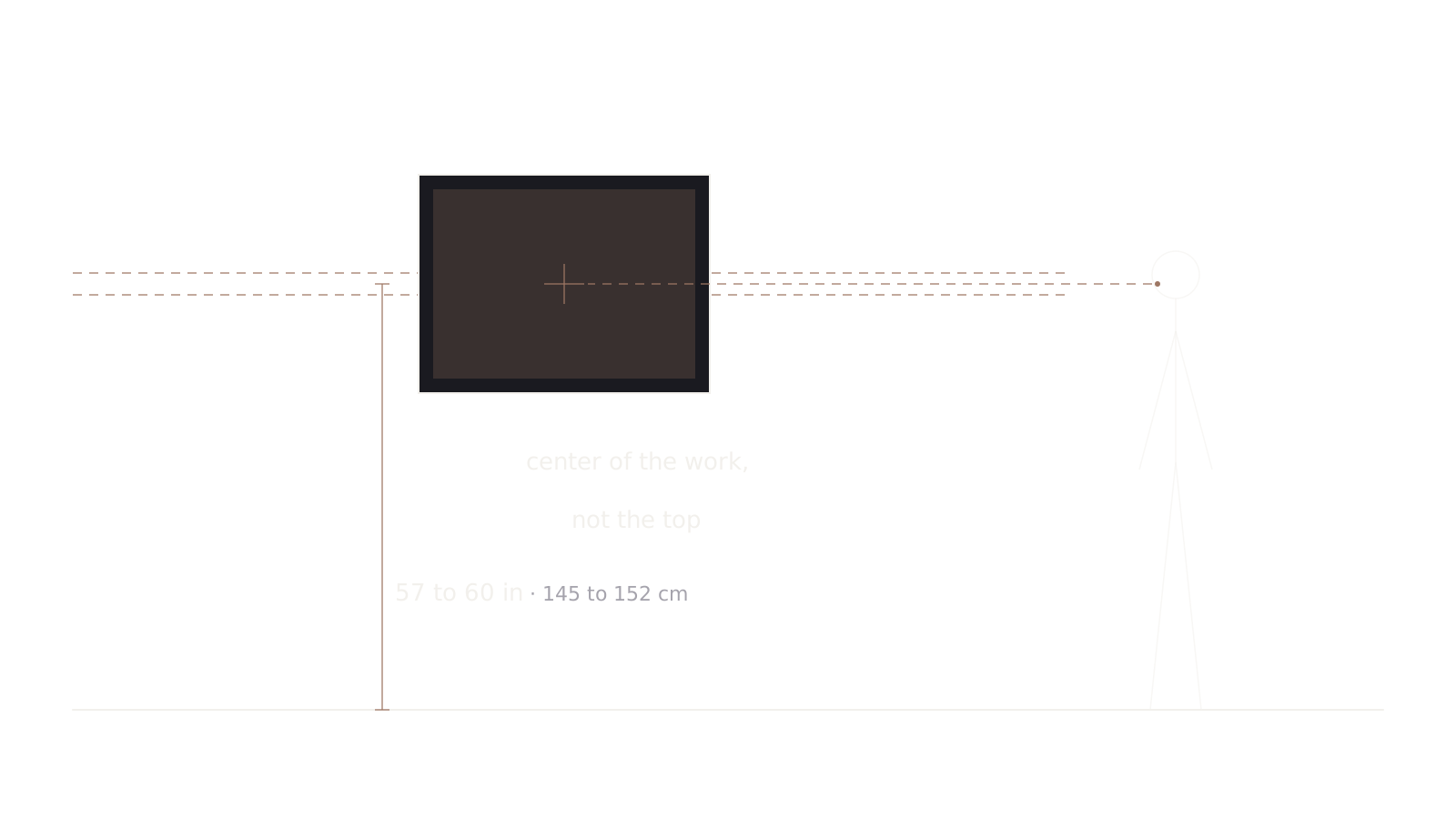
Art for the living room starts with the one wall the space already turns toward. Give that wall the strongest work you can find, about two thirds the width of the furniture below it and centered 57 to 60 inches (145 to 152 cm) from the floor, then let the other walls support it. Choose what you love first, and let the wall decide the size.אמנות לסלון מתחילה בקיר האחד שהחלל כבר פונה אליו. תנו לקיר הזה את העבודה החזקה ביותר שתמצאו, ברוחב של כשני שלישים מהרהיט שמתחתיה ועם מרכז בגובה 57 עד 60 אינץ' (145 עד 152 ס״מ) מהרצפה, ואז תנו לשאר הקירות לתמוך בה. בחרו קודם את מה שאתם אוהבים, ותנו לקיר להחליט על הגודל.
By Stav Theodor, art curator and advisor, THEODORAמאת סתיו תאודור, אוצרת ויועצת אמנות, THEODORA
Beforeלפני
Afterאחרי
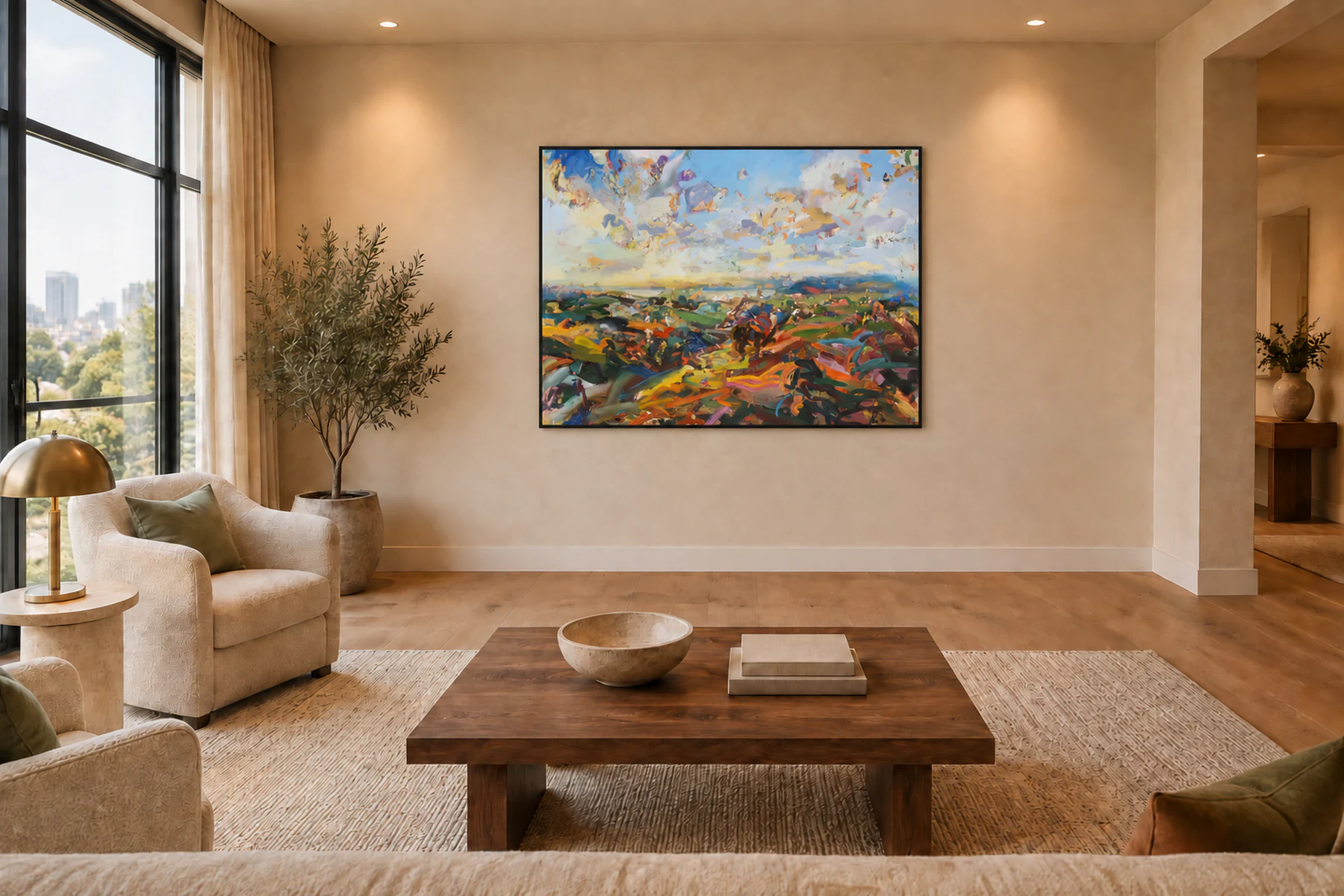
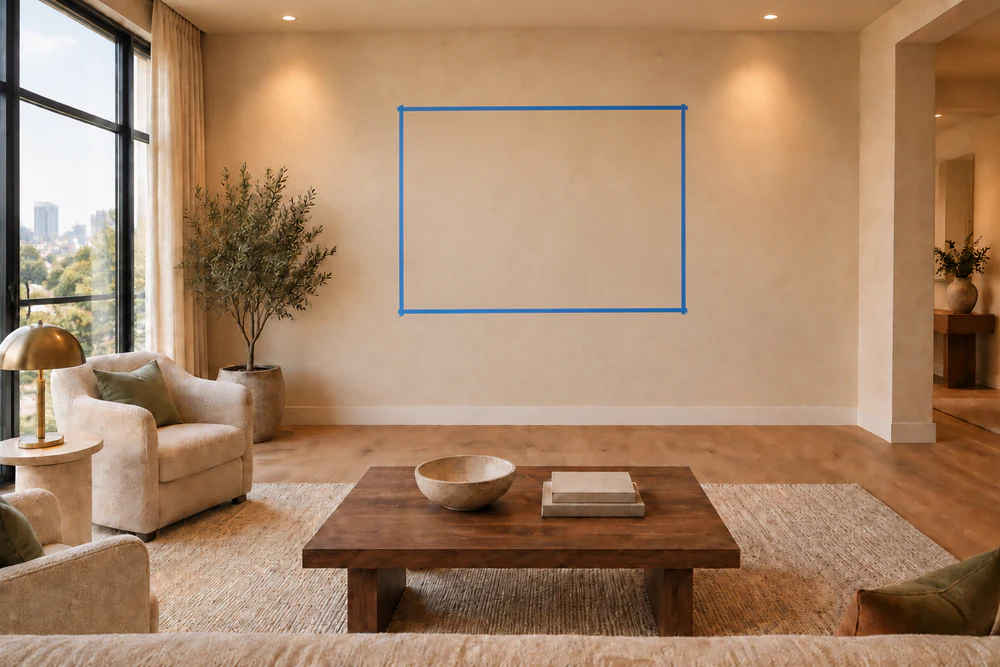
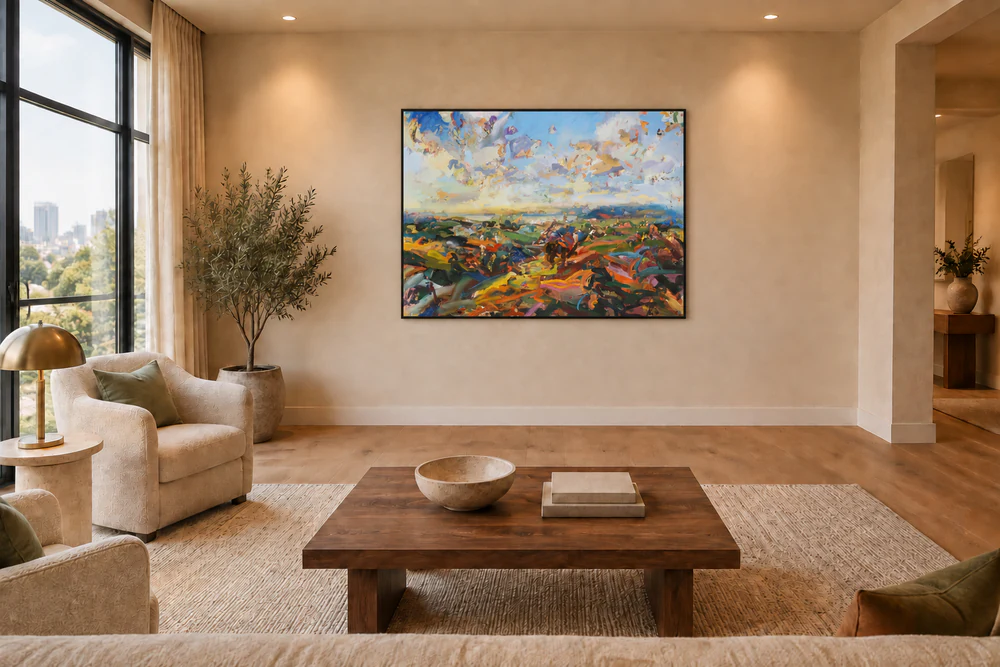
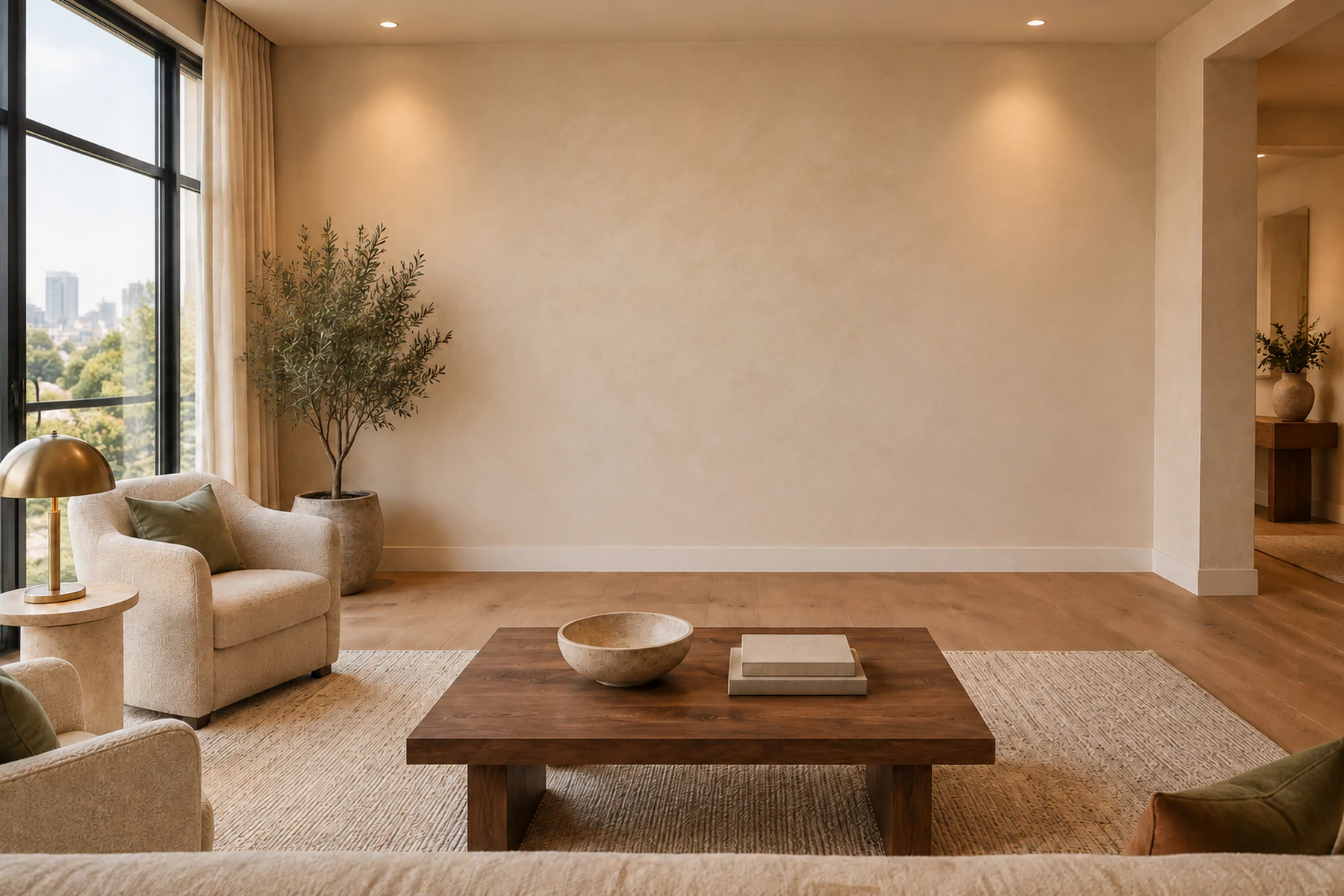
Proposal · how THEODORA would dress this spaceהצעה · כך THEODORA הייתה מלבישה את החלל הזהA living space from the doorway, the main wall dressed.חלל מגורים מהפתח, הקיר המרכזי מולבש.
סלון שנתלה היטב עובד כמו שיחה טובה בארוחת ערב: קול אחד מוביל, אחרים עונים, ומישהו נשאר שקט. זה החדר שהאורחים רואים, החדר שבו אתם מבלים את הערבים, ולעיתים קרובות החדר עם הכי הרבה תחרות: חלונות, נוף, טלוויזיה, אח. אחרי יותר מ-15 שנה בעולם האמנות, במוזיאונים, בגלריה ובבתים, זה הסדר שבו אני עובדת.
איזה קיר צריך לקבל את העבודה המרכזית?
בכל סלון יש קיר אחד שהחלל כבר פונה אליו, והקיר הזה מקבל את העבודה החזקה ביותר. עמדו בפתח, ואז שבו במקומות שבהם אתם יושבים ברוב הערבים: הקיר שהמבטים האלה נוחתים עליו הוא הקיר המרכזי. לעיתים קרובות זה הקיר שמעל הספה, שהפתח והכורסאות מביטים אליו, אבל לא תמיד; מהספה עצמה רואים את הקיר שממול. בבית ברמת גן זה היה הקיר שבין שני רצפים של ארונות אלון במרכז חלל המגורים, ועכשיו תלוי שם צילום בפורמט גדול, ומתחתיו מדף האלון וכלי הטרקוטה. בווילה בהוד השרון זה היה קיר הבטון שליד הספה, מתחת לפסי התאורה.
תרשים 1הקיר המרכזי הוא המקום שבו נפגשים קווי המבט מהדלת וממקומות הישיבה.
מרכז אחד, ואז קירות תומכים
תרשים 2מרכז אחד, קיר תומך אחד או שניים, ולפחות קיר שקט אחד.
הטעות הנפוצה ביותר בסלון היא להתייחס לכל הקירות באותה מידה. אני סוקרת את החלל ואת כיווני המבט, ולפיהם מגדירה את הקיר המרכזי; שאר הקירות נגזרים ממנו:
הקיר המרכזי מקבל את העבודה החזקה ביותר, ובדרך כלל הגדולה ביותר.
קיר תומך אחד או שניים מקבלים עבודות קטנות יותר שעונות לה: זוג, עבודה על נייר, פסל על קונסולה.
לפחות קיר שקט אחד מקבל מעט מאוד, או כלום. העין צריכה מקום לנוח.
זו גם התשובה לשאלה כמה אמנות סלון צריך: עבודה מרכזית אחת, קיר תומך אחד או שניים, וקיר אחד שנשאר שקט.
טבלה 1הקירות של הסלון ומה כל אחד מהם מקבל
קיר
תפקיד
גודל
גובה
הקיר המרכזי מעל הספה
העבודה המרכזית
כשני שלישים מהספה
8 עד 10 אינץ' (20 עד 25 ס״מ) מעל הגב
מעל מדף אח
מרכזי או תומך
כשני שלישים ממדף האח
6 עד 10 אינץ' (15 עד 25 ס״מ) מעל המדף; מדף האח קובע את הגובה
ליד טלוויזיה
תומך
לפי החלק שלו בקיר
מרכז בגובה 57 עד 60 אינץ' (145 עד 152 ס״מ), אף פעם לא מעל המסך
קירות צדדיים
תומך
זוג קטן יותר או עבודה על נייר
מרכז בגובה 57 עד 60 אינץ'
פינות וקירות צרים
שקט
עבודה קטנה, או כלום
מרכז בגובה 57 עד 60 אינץ'
איזה גודל לקנות
מעל רהיט, העבודה, או הקבוצה, צריכה לפרוש על כשני שלישים מרוחב הרהיט: כ-56 אינץ' (142 ס״מ) מעל ספה של 84 אינץ' (213 ס״מ). רשימת המידות המלאה נמצאת באמנות מעל ספה. על קיר פתוח בלי רהיט, השאירו לפחות 12 אינץ' (30 ס״מ) של קיר חשוף בכל צד.
כמעט כולם קונים קטן מדי לסלון, כי הם שופטים את הגודל כשהם עומדים קרוב לקיר, או על מסך. סמנו בסרט הדבקה את קו המתאר של העבודה על הקיר והסתכלו עליו מהפתח לפני שאתם קונים.
תרשים 3מהפתח, אותה עבודה ממלאת הרבה פחות משדה הראייה. שפטו אותה משם.הצעה · קווי המתאר, נבחנים מהפתח
באיזה גובה לתלות
מרכזו את העבודה בגובה 57 עד 60 אינץ' (145 עד 152 ס״מ) מהרצפה. מעל ספה, השאירו 8 עד 10 אינץ' (20 עד 25 ס״מ) בין גב הספה למסגרת; מעל מדף אח או קונסולה, 6 עד 10 אינץ'. מעל אח, מדף האח קובע את הגובה, ולכן המרכז נוחת בדרך כלל מעל 60 אינץ', וזה בסדר. תקרות גבוהות לא משנות את הגובה, רק את קנה המידה. נוסחת המסמר והיוצאים מן הכלל נמצאים באיך לתלות תמונות.
לבחור את העבודה עצמה
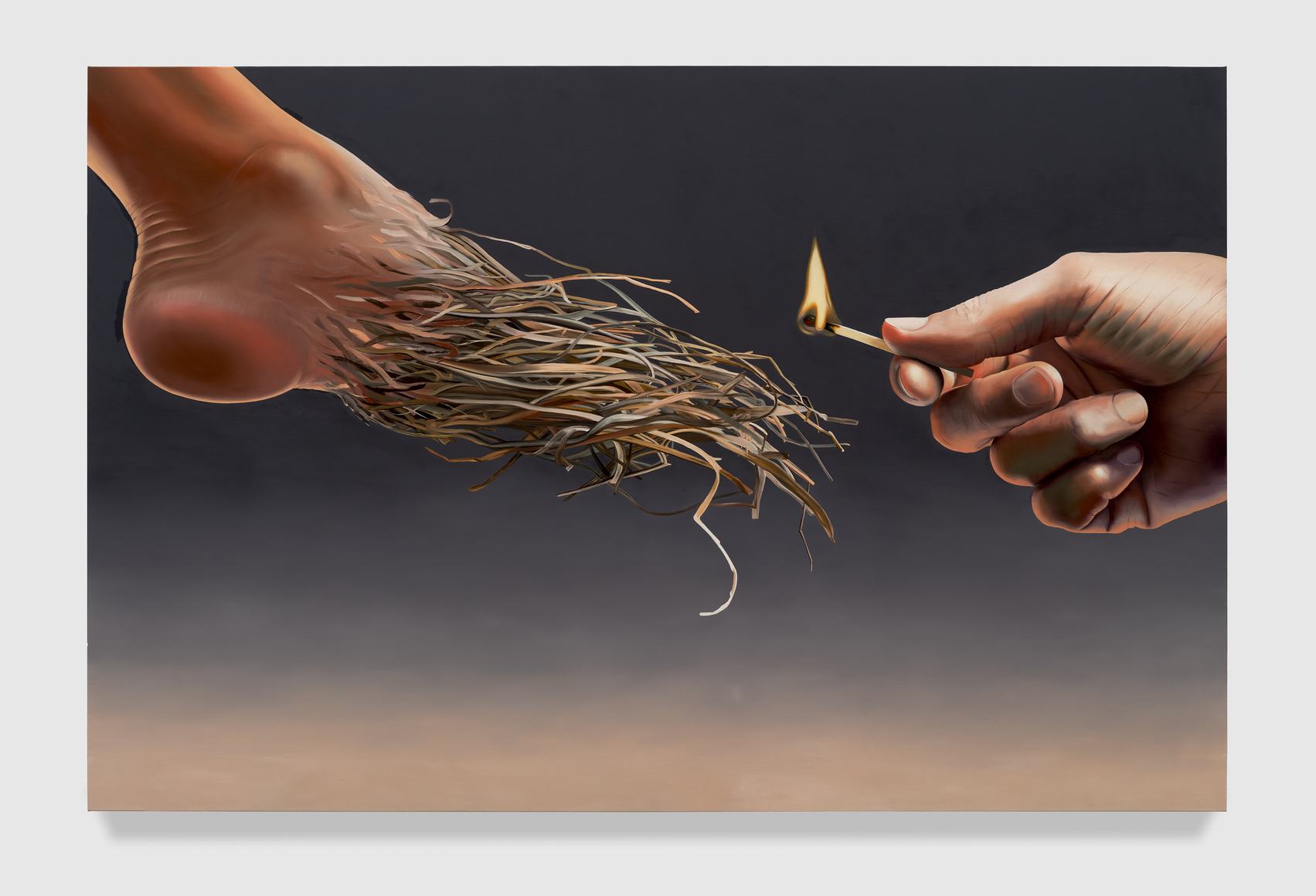
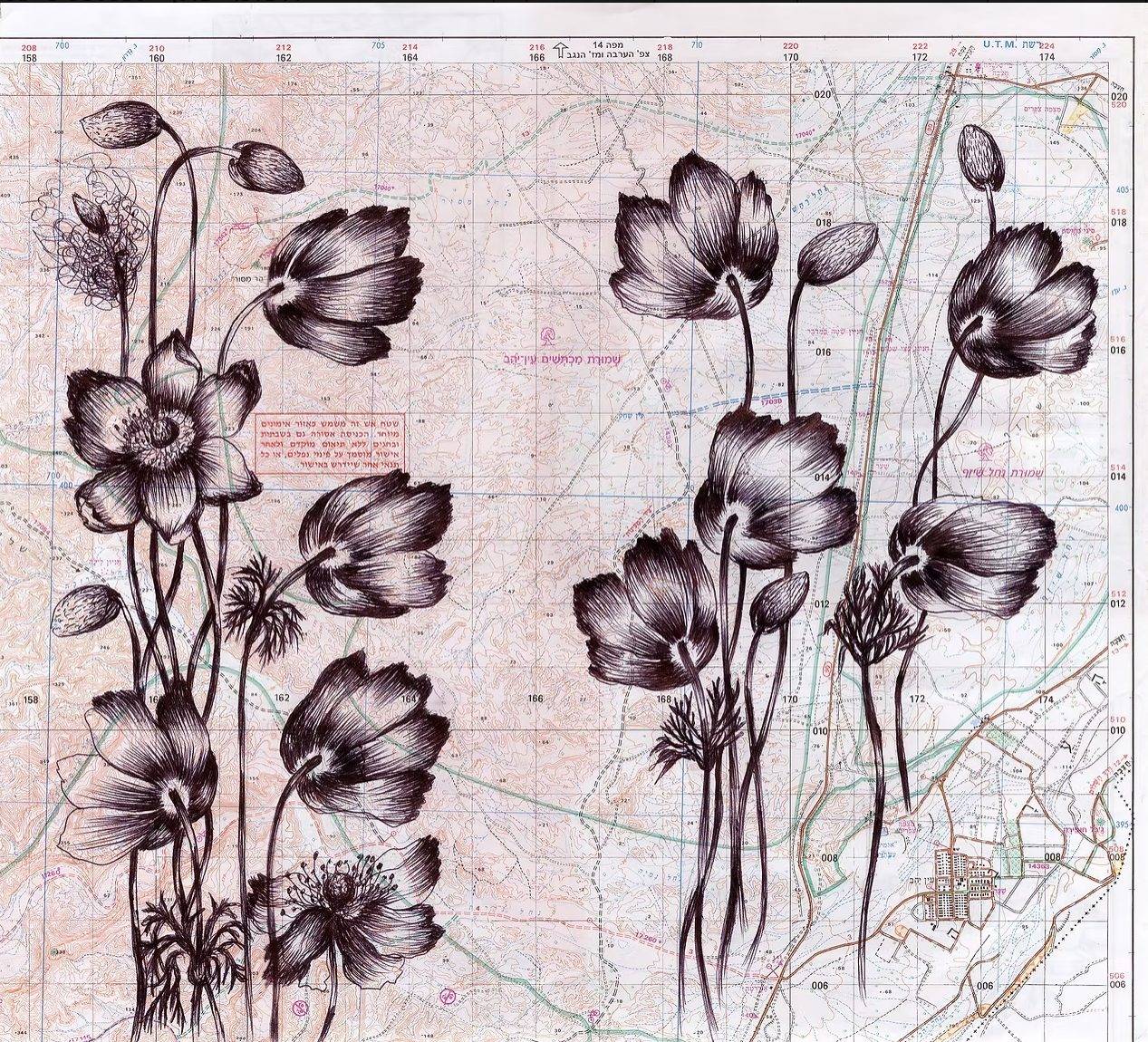
התחילו ממה שאתם אוהבים, לא מהכריות. העבודה לא צריכה להתאים לחלל: היא יכולה לחזור על צבע שכבר יש בו, מהעץ, מהשטיח או מהריפוד, או להביא צבע שחסר בו. עבדו עם הטמפרטורה של החלל, לא עם הבדים שלו: חלל קריר של טיח לבן ואבן אפורה יכול לקבל עבודה מלאה באדום חם. ערבבו מדיומים ברחבי החלל: ציור על הקיר המרכזי, תצלום או עבודה על נייר על קיר תומך, פסל על קונסולה. חלל שנתלה במדיום אחד ובגודל אחד נראה כמו אולם תצוגה. לבית כולו, מהתחושה שאתם רוצים ועד התקציב, ראו איך לבחור אמנות לבית שלכם.
תרשים 4ערבבו מדיומים ברחבי החלל, והשאירו קיר אחד שקט.
אם יש לחלל נוף חזק, האמנות צריכה לענות לו, לא להתחרות בו. בדירה עם נוף לים בהרצליה פיתוח, העבודה הראשונה שפוגשים היא ציור גדול של חלון ישן, סמוך לכניסה, כך שהחלון הראשון שרואים מצויר, והבאים אחריו אמיתיים ומלאים בים.
תרשים 5ענו לנוף חזק מקיר אחר, זה שפוגשים ראשון.
רעיונות לאמנות על הקיר שמחזיקים לאורך זמן
תרשים 6שישה סידורים שמחזיקים שנים, לא עונות.
עבודה גדולה אחת מעל הספה. האפשרות הרגועה ביותר, ובדרך כלל החזקה ביותר.
צילום גדול על הקיר המרכזי, שהופק בגודל הנכון לקיר ולא נקנה בגודל סטנדרטי.
עבודה ליד הטלוויזיה, לא מעליה. המסך כבר מחזיק את המקום הזה; אזנו אותו בעבודה לצידו או על הקיר הסמוך.
פסל עם עבודת קיר קטנה יותר, על קונסולה או על בסיס, שנותן לחלל עומק שעבודות ממוסגרות לבדן לא יכולות לתת.
מה שמחזיק לאורך זמן הוא לא טרנד. זה חלל שבו כל עבודה נבחרה בשביל הקיר שלה.
תאורה ליום וללילה
סלון משתנה בין הצהריים לערב יותר מרוב החדרים. אני בודקת כל מיקום בחלל עצמו, באור יום ותחת תאורת הערב, לפני שמשהו מופק. כוונו ספוטים או תאורת מסילה בזווית של כ-30 מעלות מהאנך. מרכז שימור המסמכים של צפון מזרח ארצות הברית ממליץ להרחיק תצלומים צבעוניים ממוסגרים וצבעי מים מאור שמש ישיר ומספוטים; לכל עבודה עם זכוכית שפונה לחלון, שאלו את הממסגר על זיגוג נגד השתקפות. המרחק מהקיר, הנורה וכמות האור לפי סוג העבודה מופיעים במדריך איך להאיר אמנות.
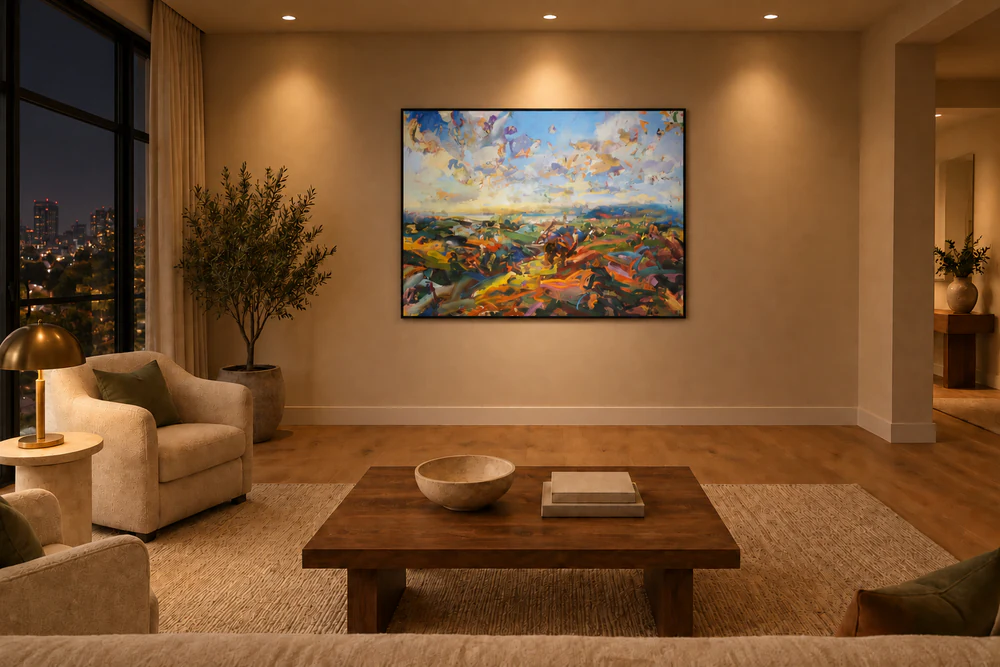
הצעה · הקיר המרכזי ביום ובלילה
הטעויות שאני רואה הכי הרבה
כל הקירות מקבלים יחס שווה, ולכן שום דבר לא מוביל.
עבודה קטנה מדי לקיר המרכזי.
אמנות שתלויה גבוה מדי.
אמנות שנבחרה כדי להתאים לריפוד, ועוזבת יחד עם הספה.
עבודה שנלחמת בנוף. עדיף לענות לו, כמו החלון המצויר בהרצליה פיתוח.
מתי כדאי לפנות לאוצרת?
אם הסלון הוא הלב של הבית, העבודה על הקיר המרכזי שלו ראויה לחיפוש של ממש. אני מתכננת חללי מגורים לבתים ויחד עם מעצבי פנים, ומטפלת במסגור ובהתקנה. אני אוצרת אמנות שפועלת מטנפליי, ניו ג'רזי, ועובדת ברחבי מחוז ברגן, ניו ג'רזי, העיר ניו יורק וקליפורניה, ואונליין עם לקוחות בכל מקום. ראו איך עבודה אחת נשאה חלל פתוח שלם בוילה בהוד השרון, או כתבו לי דרך דף יצירת הקשר.
A living room hung well works like a good dinner conversation: one voice leads, others answer, and someone stays quiet. It is the room guests see, the room you spend evenings in, and often the room with the most competition: windows, a view, a television, a fireplace. After more than 15 years in the art world, in museums, in a gallery and in homes, this is the order I work in.
Which wall should get the main work?
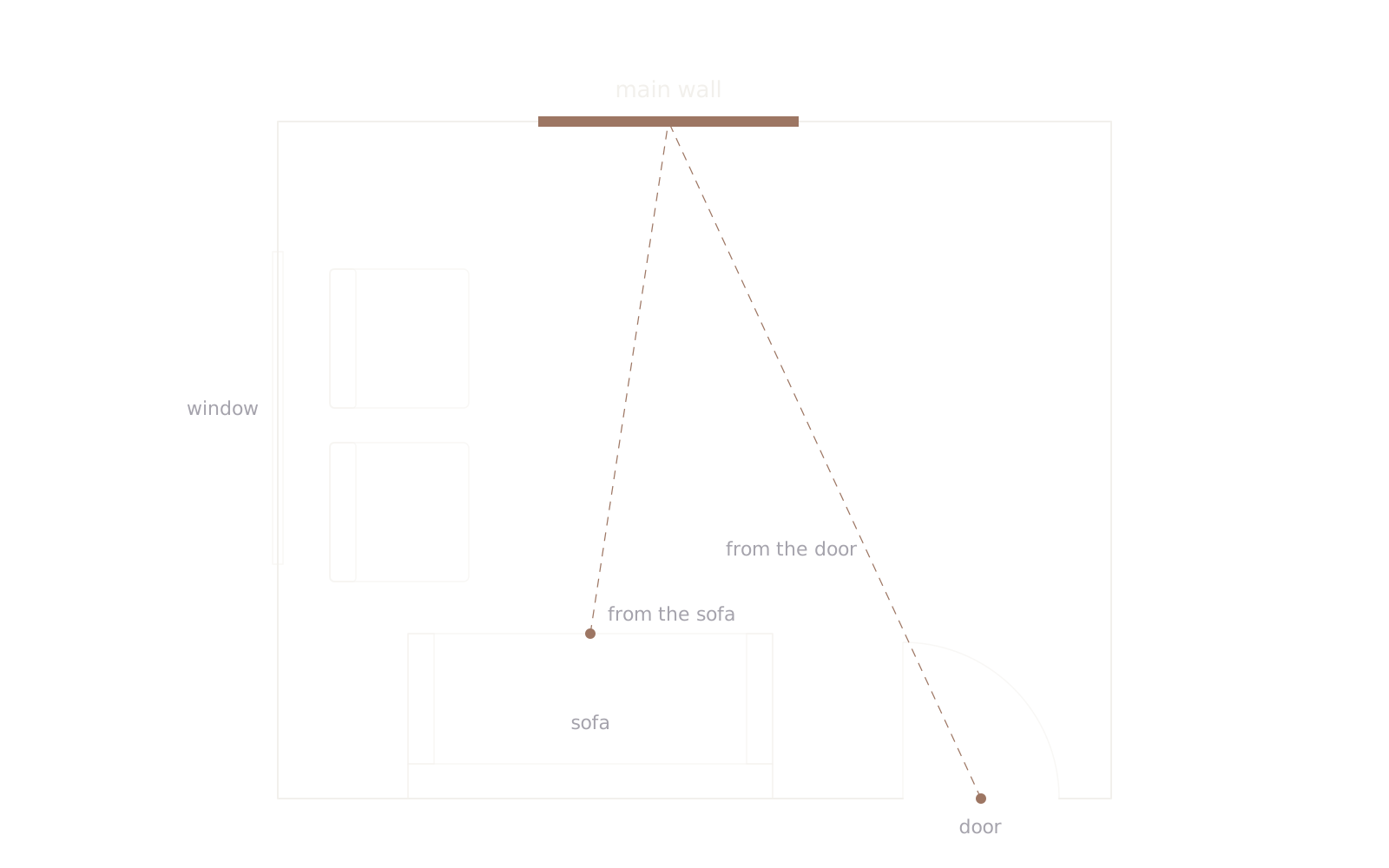
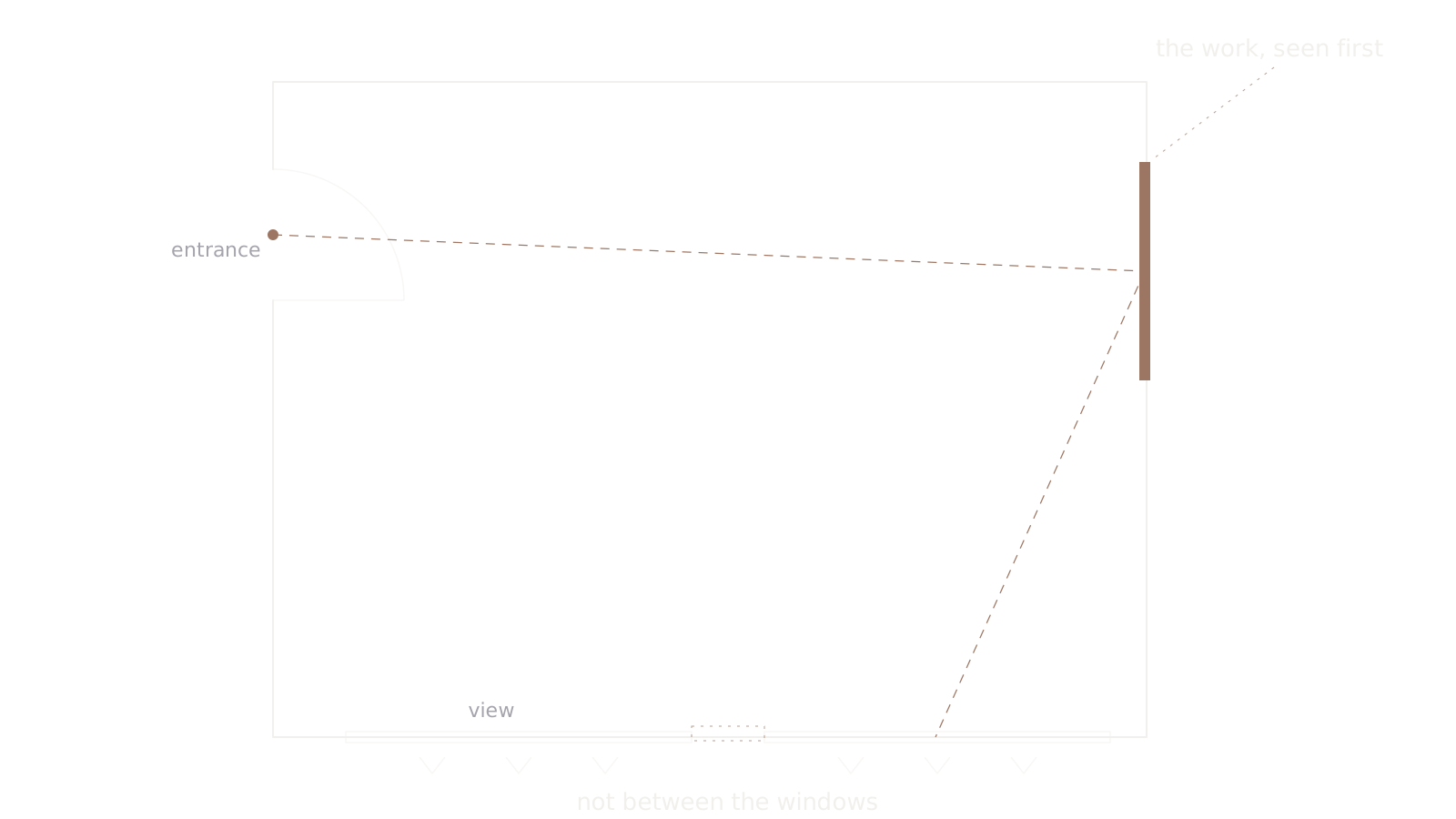
Every living room has one wall that the room already faces, and that wall gets the strongest work. Stand in the doorway, then sit in the seats you use most evenings: the wall those views land on is the main wall. It is often the wall above the sofa, which the doorway and the armchairs look at, but not always; from the sofa itself you see the wall opposite. In a home in Ramat Gan, it was the wall between two runs of oak cabinets at the center of the living space, and a large format photograph now sits there, with the oak shelf and terracotta vessels beneath it. In a villa in Hod Hasharon, it was the concrete wall beside the sofa, under the track lights.
Figure 1The main wall is where the sightlines from the door and the seating meet.
One center, then supporting walls
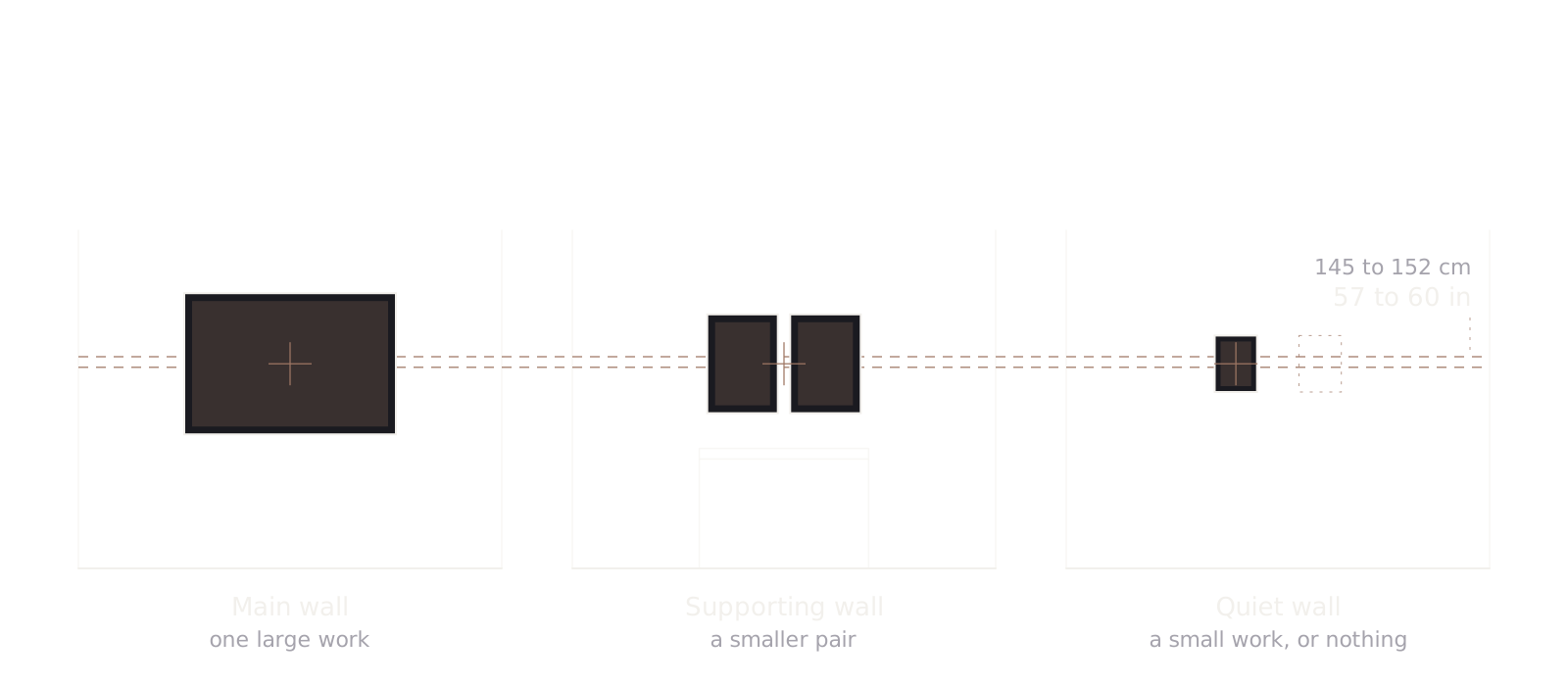
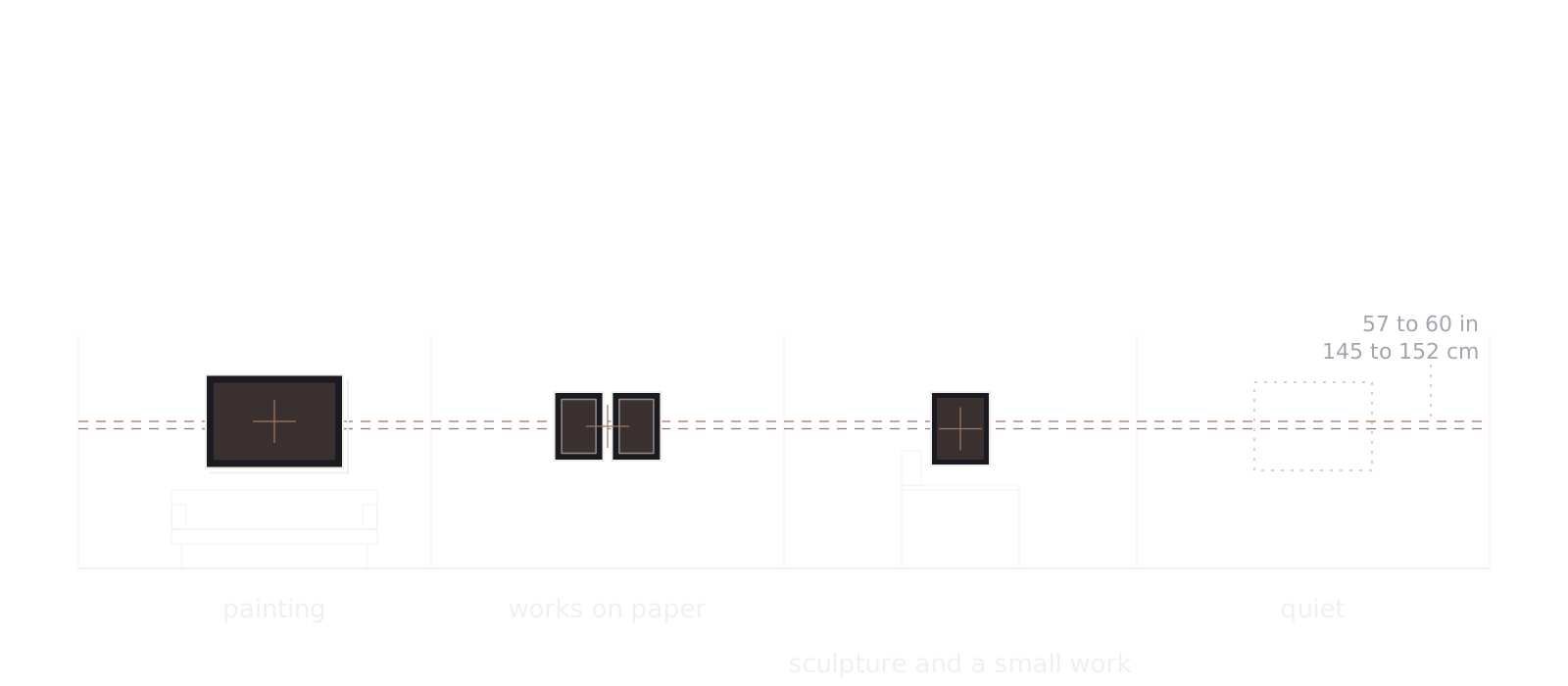
Figure 2One center, one or two supporting walls, and at least one quiet wall.
The most common mistake in a living room is treating every wall equally. I survey the space and its sightlines, and define the main wall from them; the other walls follow:
The main wall gets the strongest and usually the largest work.
One or two supporting walls get smaller works that answer it: a pair, a work on paper, a sculpture on a console.
At least one quiet wall gets very little, or nothing. The eye needs somewhere to rest.
That is also the answer to how much art a living room needs: one main work, one or two supporting walls, and one wall left quiet.
Table 1The walls of a living room and what each one gets
Wall
Role
Size
Height
Focal wall above the sofa
The main work
About two thirds of the sofa
8 to 10 in (20 to 25 cm) above the back
Above a fireplace mantel
Main or supporting
About two thirds of the mantel
6 to 10 in (15 to 25 cm) above the shelf; the mantel sets the height
Beside a television
Supporting
Sized to its own part of the wall
Center 57 to 60 in (145 to 152 cm), never above the screen
Side walls
Supporting
A smaller pair or a work on paper
Center 57 to 60 in
Corners and narrow walls
Quiet
A small work, or nothing
Center 57 to 60 in
What size to buy
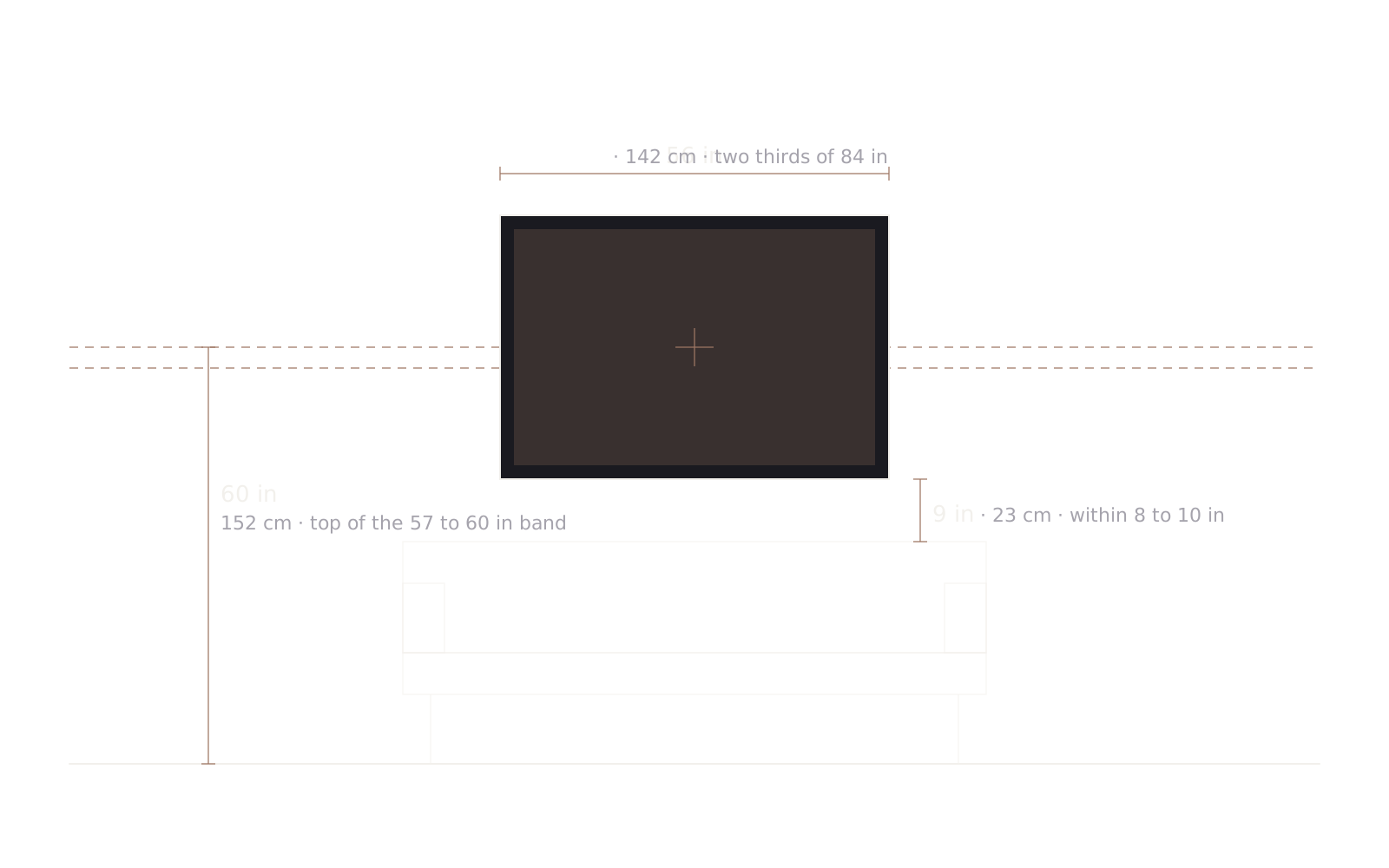
Above furniture, the work, or the group, should span about two thirds of the furniture's width: about 56 inches (142 cm) over an 84 inch (213 cm) sofa. The full sizing list is in art above a couch. On an open wall with no furniture, leave at least 12 inches (30 cm) of bare wall at each side.
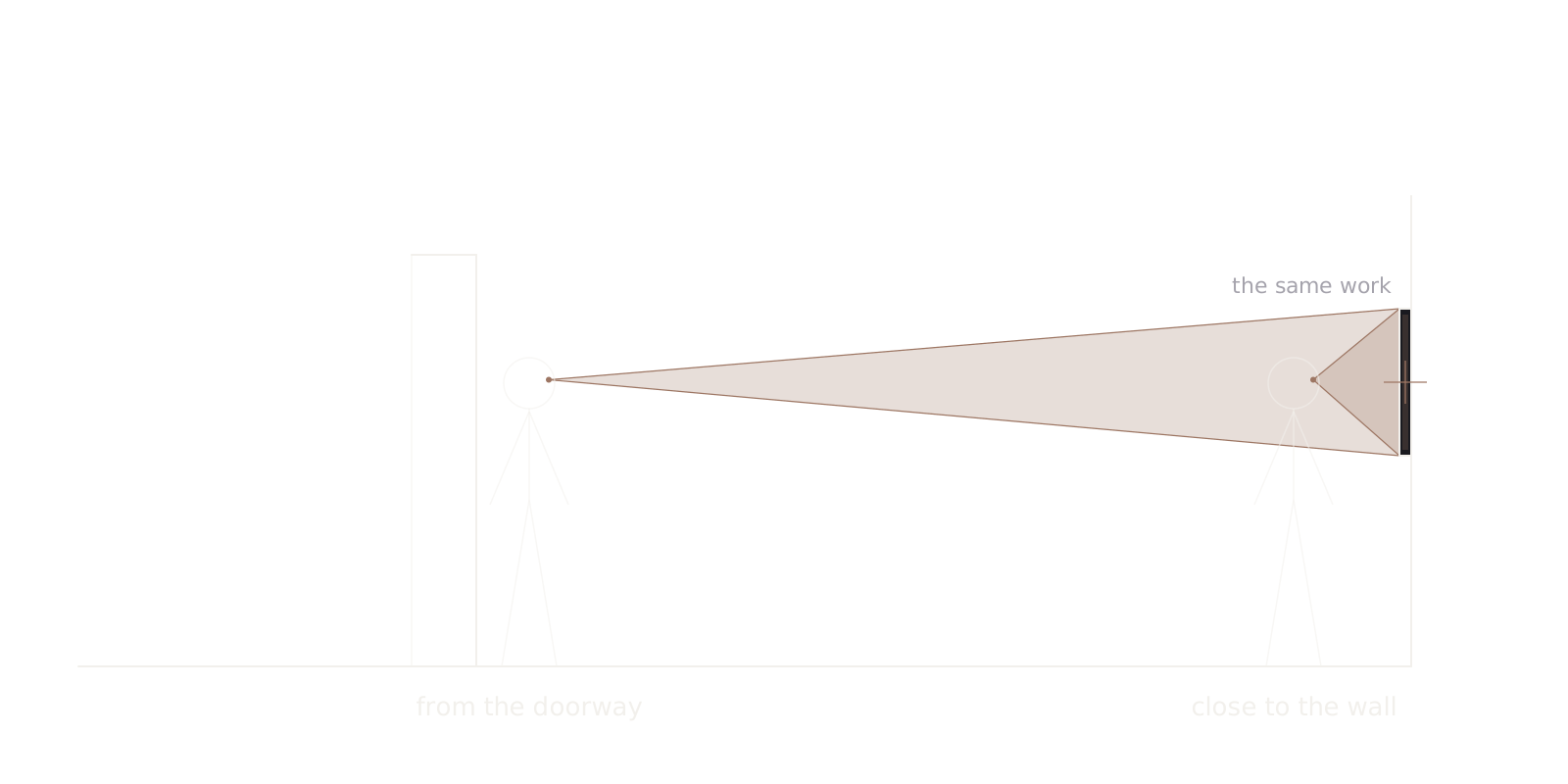
Almost everyone buys too small for a living room, because they judge size standing close to the wall, or on a screen. Tape the outline of the work on the wall and look at it from the doorway before you buy.
Figure 3From the doorway the same work fills far less of the view. Judge it from there.Proposal · the outline, judged from the doorway
How high to hang it
Center the work 57 to 60 inches (145 to 152 cm) from the floor. Above a sofa, leave 8 to 10 inches (20 to 25 cm) between the sofa back and the frame; above a mantel or console, 6 to 10 inches. Above a fireplace the mantel sets the height, so the center usually lands above 60 inches, and that is fine. Tall ceilings do not change the height, only the scale. The nail formula and the exceptions are in how to hang pictures.
Choosing the work itself
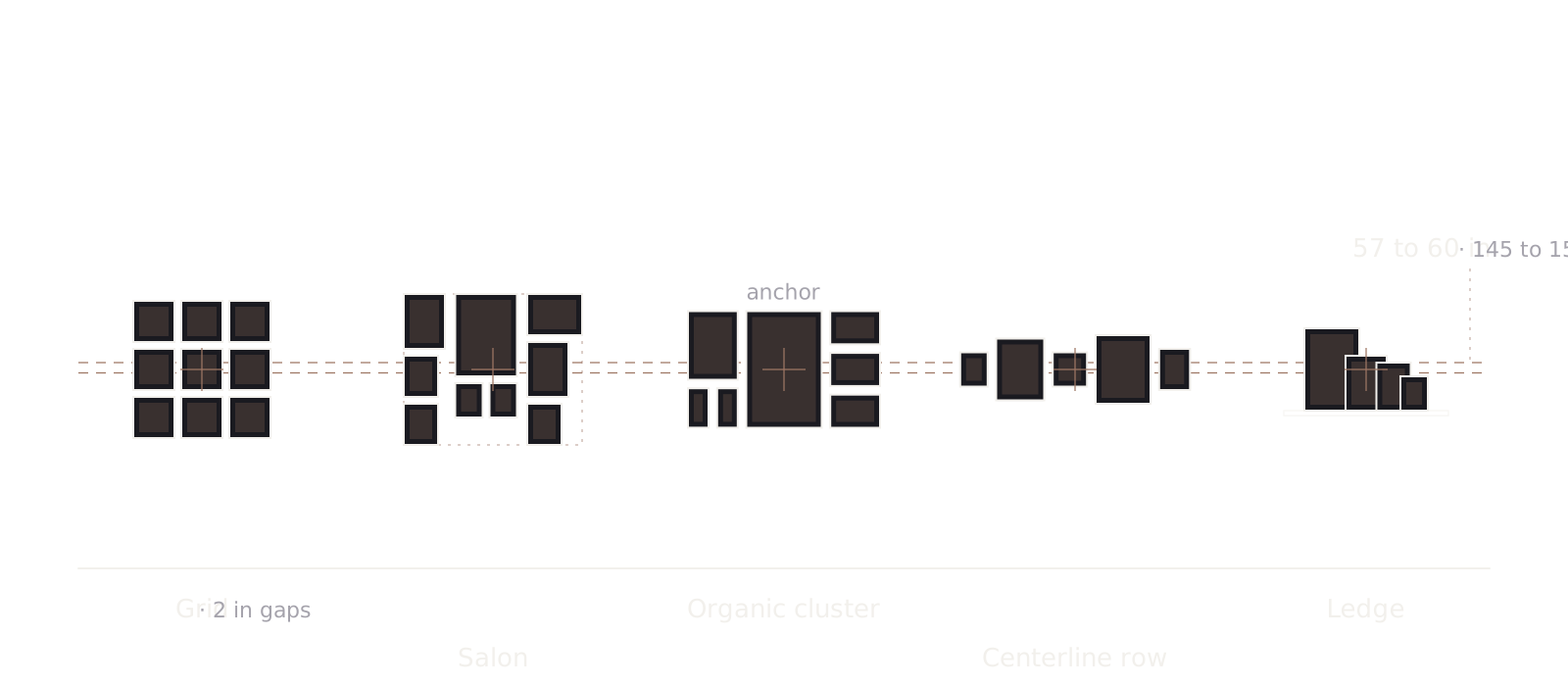
Start with what you love, not with the cushions. The work does not need to match the room: it can repeat a color the room already has, from the wood, the rug or the upholstery, or bring one it lacks. Work with the room's temperature, not its fabrics: a cool room of white plaster and grey stone can take a work full of warm red. Mix mediums across the room: a painting on the main wall, a photograph or a work on paper on a supporting wall, a sculpture on a console. A room hung with one medium in one size reads as a showroom. For the whole home, from the feeling you want to the budget, see how to choose art for your home.
Figure 4Mix mediums across the space, and leave one wall quiet.
If the room has a strong view, the art should answer it, not compete with it. In a seafront apartment in Herzliya Pituach, the first work you meet is a large painting of an aged window near the entrance, so the first window you see is painted and the next ones are real and full of sea.
Figure 5Answer a strong view from another wall, the one you meet first.
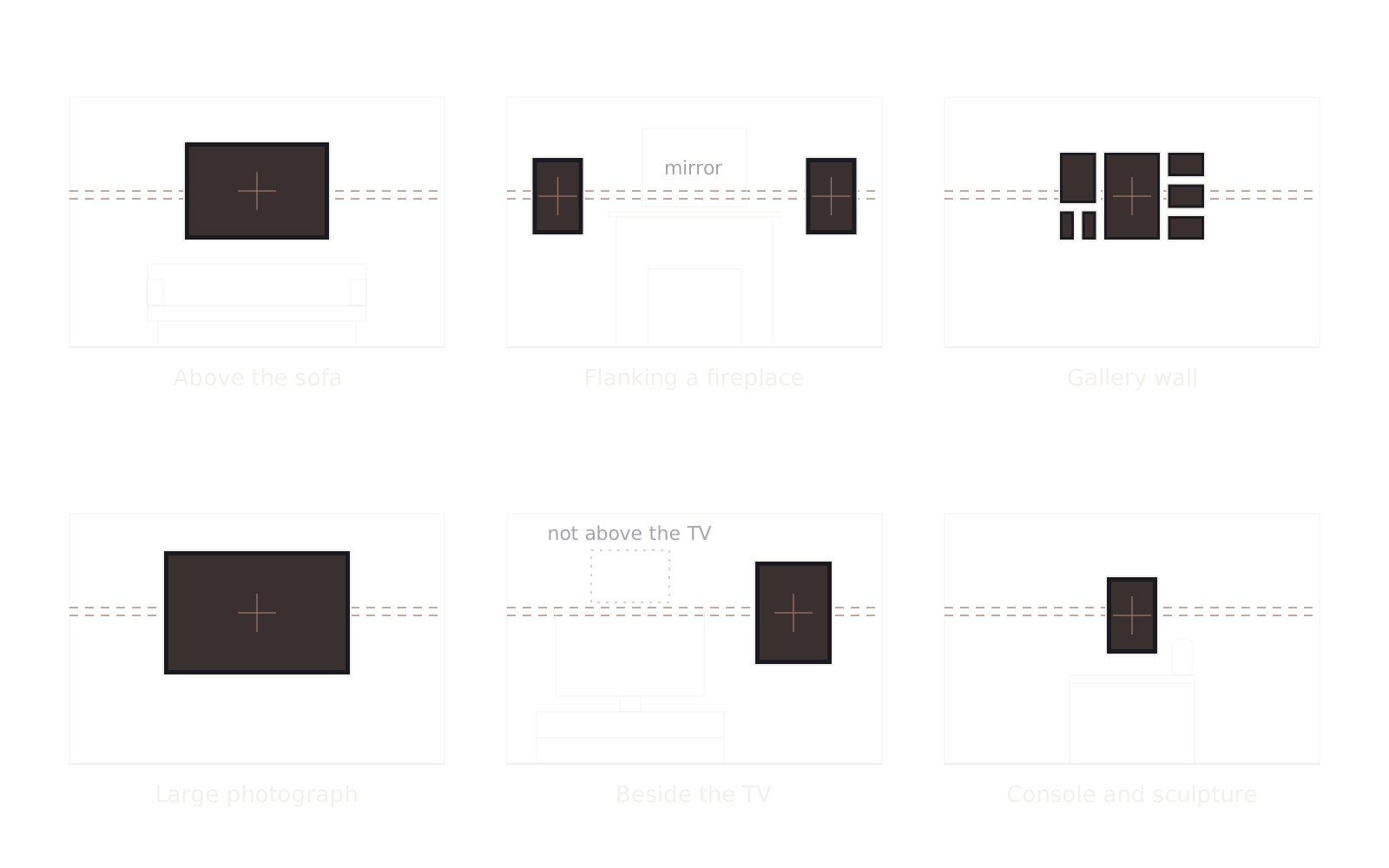
Wall art ideas that last
Figure 6Six arrangements that hold up for years, not seasons.
One large work above the sofa. The calmest option and usually the strongest.
A pair flanking a fireplace or a window, when the center of the wall is taken.
A gallery wall for a collection that keeps growing; see gallery wall ideas.
A large photograph on the main wall, produced at the right size for the wall rather than bought in a stock size.
A work beside the television, not above it. The screen already owns that spot; balance it with a work beside it or on the adjacent wall.
Sculpture with a smaller wall work, on a console or a plinth, which gives the room depth that framed works alone cannot.
What lasts is not a trend. It is a space where each work was chosen for its wall.
Light it for day and for night
A living room changes between noon and evening more than most. I check every placement in the room itself, in daylight and under the evening lighting, before anything is produced. Aim ceiling spots or track lights at about 30 degrees from vertical. The Northeast Document Conservation Center advises keeping framed color photographs and watercolors out of direct sun and spotlights; for any glazed work facing a window, ask your framer about anti-reflective glazing. The setback, the bulb and the light limits by medium are in how to light art.
Proposal · the main wall by day and by night
The mistakes I see most often
Every wall treated equally, so nothing leads.
A work too small for the main wall.
Art hung too high.
Art chosen to match the upholstery, which leaves with the sofa.
A work fighting the view. Answer it instead, as the painted window in Herzliya Pituach does.
What artwork should I put in my living room?איזו יצירת אמנות לשים בסלון?
The artwork for a living room should start with the work you love most, on the wall the space already faces, the one you see from the doorway and from your usual seat. Size it to the wall, then support it with smaller works on one or two other walls. Paintings, large photographs, works on paper and sculpture all belong in a living room.יצירת האמנות לסלון צריכה להתחיל בעבודה שאתם הכי אוהבים, על הקיר שהחלל כבר פונה אליו, זה שרואים מהפתח וממקום הישיבה הרגיל שלכם. התאימו את הגודל לקיר, ואז תמכו בה בעבודות קטנות יותר על קיר אחד או שניים אחרים. ציורים, צילומים גדולים, עבודות על נייר ופיסול שייכים כולם לסלון.
What size art should go in a living room?באיזה גודל צריכה להיות אמנות בסלון?
Living room art above furniture should be about two thirds of the furniture's width: roughly 56 inches over an 84 inch sofa. On an open wall, leave at least 12 inches of bare wall at each side. Most people buy too small, so tape the outline on the wall and look at it from the doorway before you buy.אמנות בסלון מעל רהיט צריכה להיות ברוחב של כשני שלישים מהרהיט: בערך 56 אינץ' מעל ספה של 84 אינץ'. על קיר פתוח, השאירו לפחות 12 אינץ' של קיר חשוף בכל צד. רוב האנשים קונים קטן מדי, אז סמנו את קו המתאר על הקיר והסתכלו עליו מהפתח לפני שאתם קונים.
Where should art go in a living room?איפה צריכה להיות אמנות בסלון?
Art in a living room goes first on the main wall, where the sightlines from the doorway and the seating meet, which is often but not always above the sofa. Then on one or two supporting walls, with smaller works that answer the main one. Leave at least one wall quiet so the room has somewhere to rest.אמנות בסלון הולכת קודם לקיר המרכזי, המקום שבו נפגשים קווי המבט מהפתח וממקומות הישיבה, שלעיתים קרובות, אבל לא תמיד, הוא הקיר שמעל הספה. אחר כך לקיר תומך אחד או שניים, עם עבודות קטנות יותר שעונות לעבודה המרכזית. השאירו לפחות קיר אחד שקט, כדי שלחלל יהיה מקום לנוח.
Should you hang art above a TV?כדאי לתלות אמנות מעל הטלוויזיה?
Art above a TV usually does not work. The television already occupies that part of the wall, and art above it pushes both too high and competes with the screen. Hang the work beside the television or on the adjacent wall, at normal eye level, so the wall reads as balanced rather than stacked.אמנות מעל טלוויזיה בדרך כלל לא עובדת. הטלוויזיה כבר תופסת את החלק הזה של הקיר, ואמנות מעליה דוחפת את שתיהן גבוה מדי ומתחרה במסך. תלו את העבודה ליד הטלוויזיה או על הקיר הסמוך, בגובה עיניים רגיל, כדי שהקיר ייקרא כמאוזן ולא כערימה.
Where can I find art for my living room?איפה אפשר למצוא אמנות לסלון?
Art for a living room comes from galleries, artists' studios, open studios and graduate shows for original works; editioned prints and photographs from galleries and publishers for signed, numbered works at lower prices; design shops for open prints. For a main wall, I recommend original or editioned work, because it is the piece you will look at most.אמנות לסלון מגיעה מגלריות, מסטודיו של אמנים, מסטודיו פתוח ומתערוכות בוגרים לעבודות מקוריות; מגלריות ומהוצאות לאור להדפסים ולתצלומים במהדורות, חתומים וממוספרים, במחירים נמוכים יותר; ומחנויות עיצוב להדפסים פתוחים. לקיר מרכזי, אני ממליצה על עבודה מקורית או במהדורה, כי זו היצירה שתסתכלו עליה הכי הרבה.
Send me one photo of the wall, and a line about the space. I will tell you what I see.שלחו לי תמונה אחת של הקיר ושורה על החלל. אספר לכם מה אני רואה.
This browser has no email app set up, so nothing opened. Copy the address, or open it in your webmail.בדפדפן הזה לא מוגדרת תוכנת דואר, ולכן לא נפתח כלום. העתיקו את הכתובת, או פתחו אותה בדואר האינטרנטי שלכם.
 Beforeלפני