There is a longing that comes only after you return.
After a summer in Israel, between the holidays, it arrives uninvited: a memory of dazzling midday light, the smell of the sea, a chance conversation in Hebrew at the neighborhood grocery, and the small memories of an Israeli childhood that are hard to explain to anyone who did not grow up inside them.
In his poem “Mizmor Shir LaYarok” (roughly, a psalm, a song for green), Nathan Zach asks us to see one spirit that passes through everything: the flower, the lawn, the tree, the sea and its waves, the fruit and the brush.
I connect deeply to these lines, because they hold an idea of unity: nature, emotion and art are not separate worlds. The same force that makes a tree and a flower grow can be heard in the sea, ripen in a fruit, and become color and image in an artist's hands.
So this time, instead of an exhibition recommendation, a small exhibition of my own: seven works by Israeli artists. Six open with a word from Zach's lines, and the seventh with a word I added myself. Not to answer the question of what Israeli art is, but to leave it open.
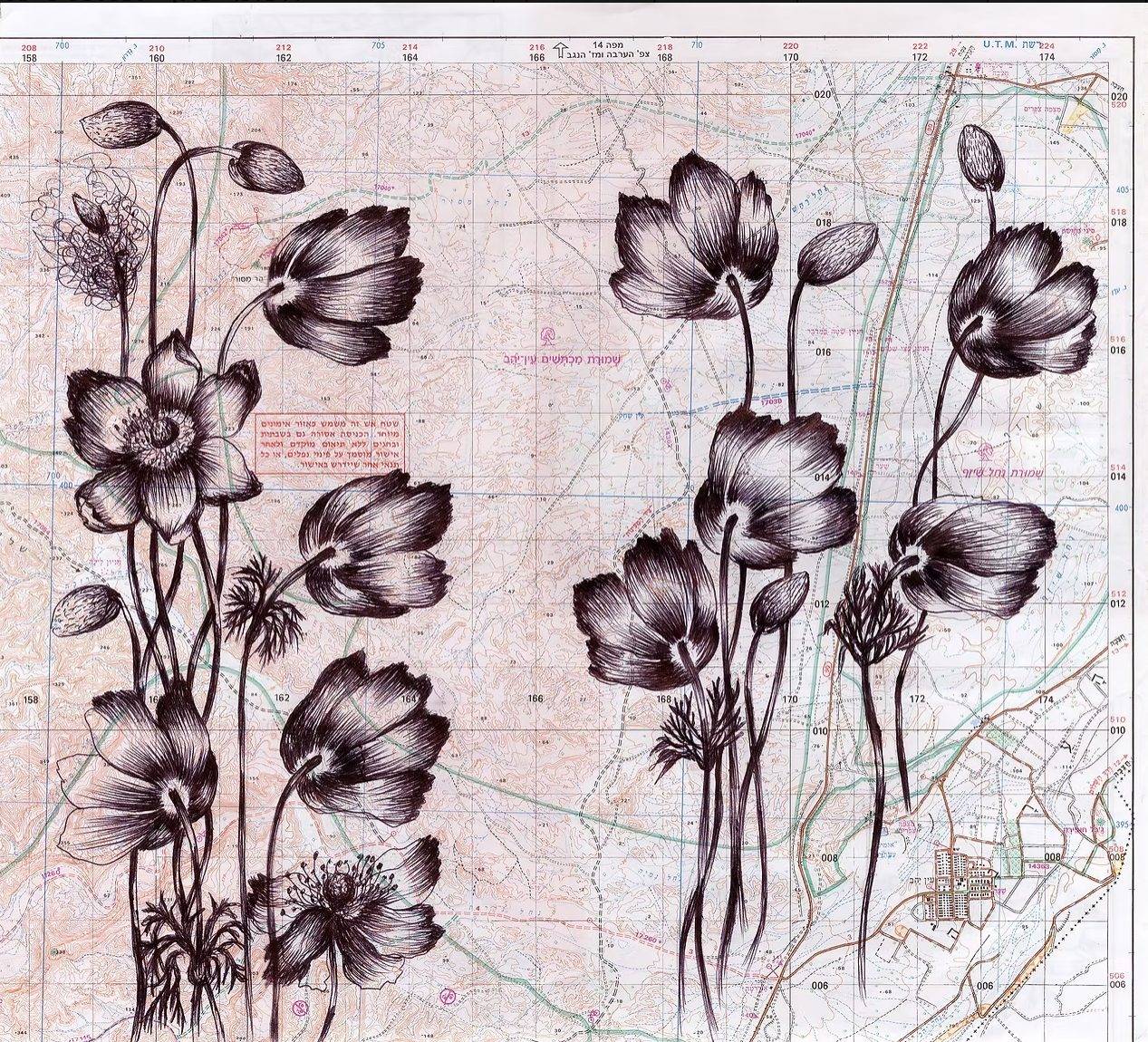
In the Flower | Esther Cohen
On old topographic maps of the Land of Israel, Esther Cohen draws wildflowers: narcissus, anemones, clover. The map measures, marks and bounds. The flower simply grows. A gap of time opens between them, because some of the places and borders on these maps have already changed or disappeared. What remains alive is what blooms.
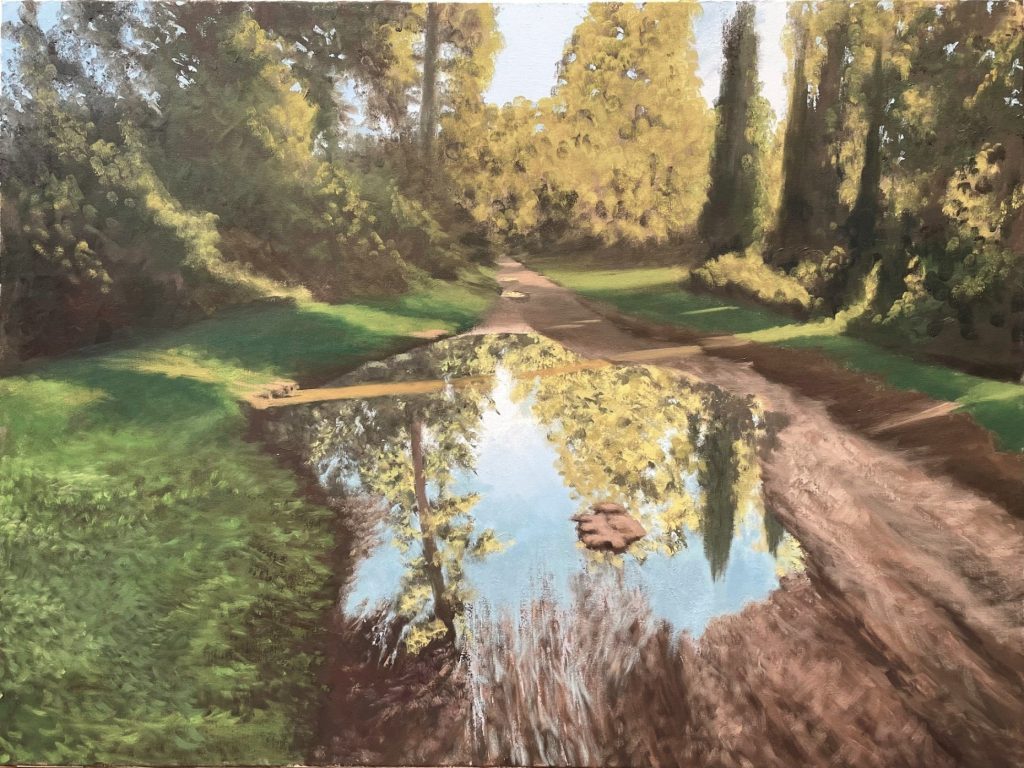
In the Lawn, in the Tree | Yehuda Armoni
Armoni paints facing the landscape, with the patience of someone willing to wait for the light. A path, a tree, a puddle after rain. In this work the landscape is reflected in the water and turned upside down, and the place, entirely real, becomes for a moment almost a dream. This is exactly what a memory looks like.
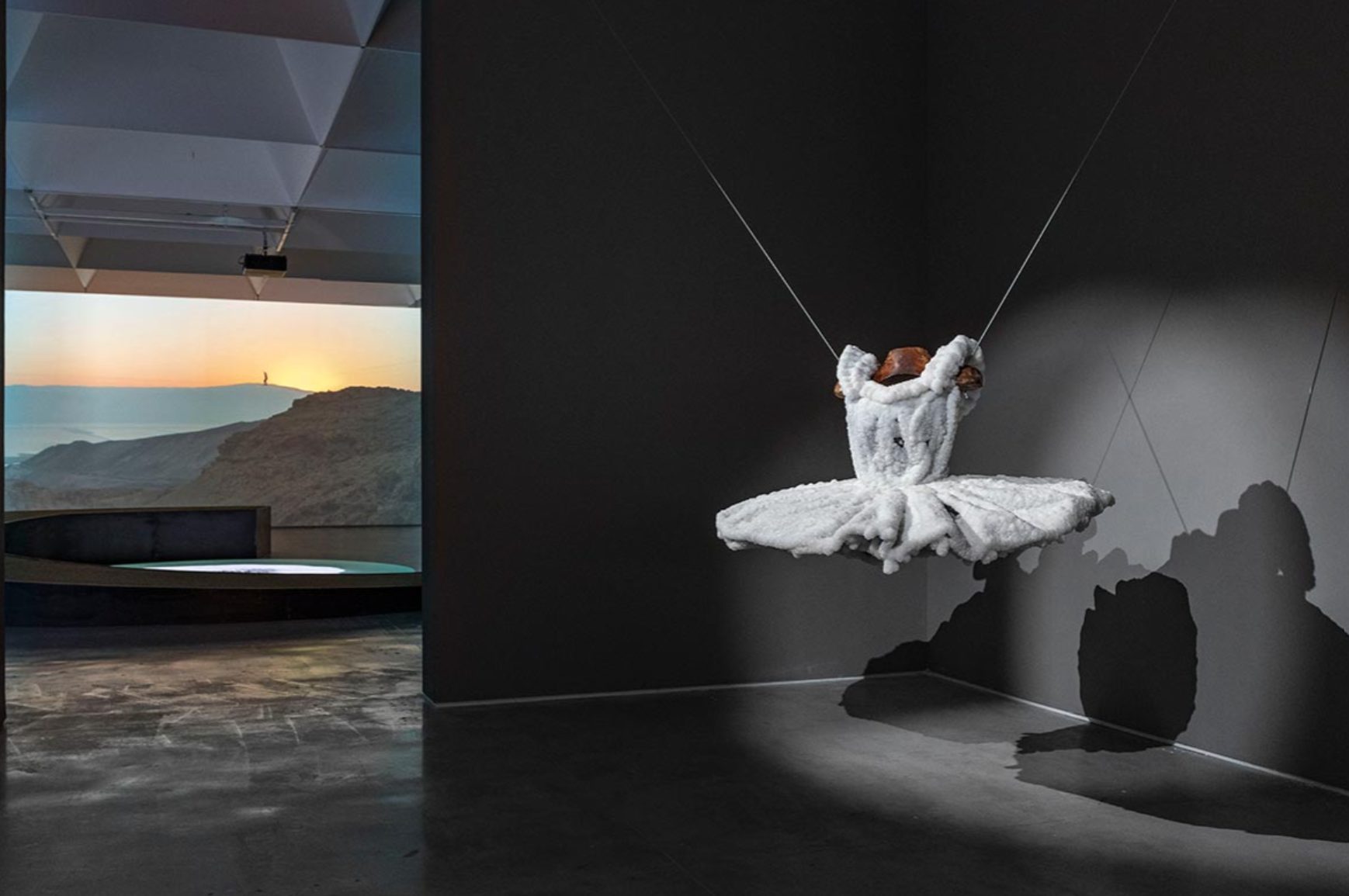
In the Foam of the Sea | Sigalit Landau
For Sigalit Landau the Dead Sea is not a landscape, it is a partner in the making. She submerges objects in the water, and the salt slowly crystallizes on them until they become white sculptures, beautiful and fragile. There is something very Israeli in this: fierce beauty, vulnerability, and time leaving its mark on everything.
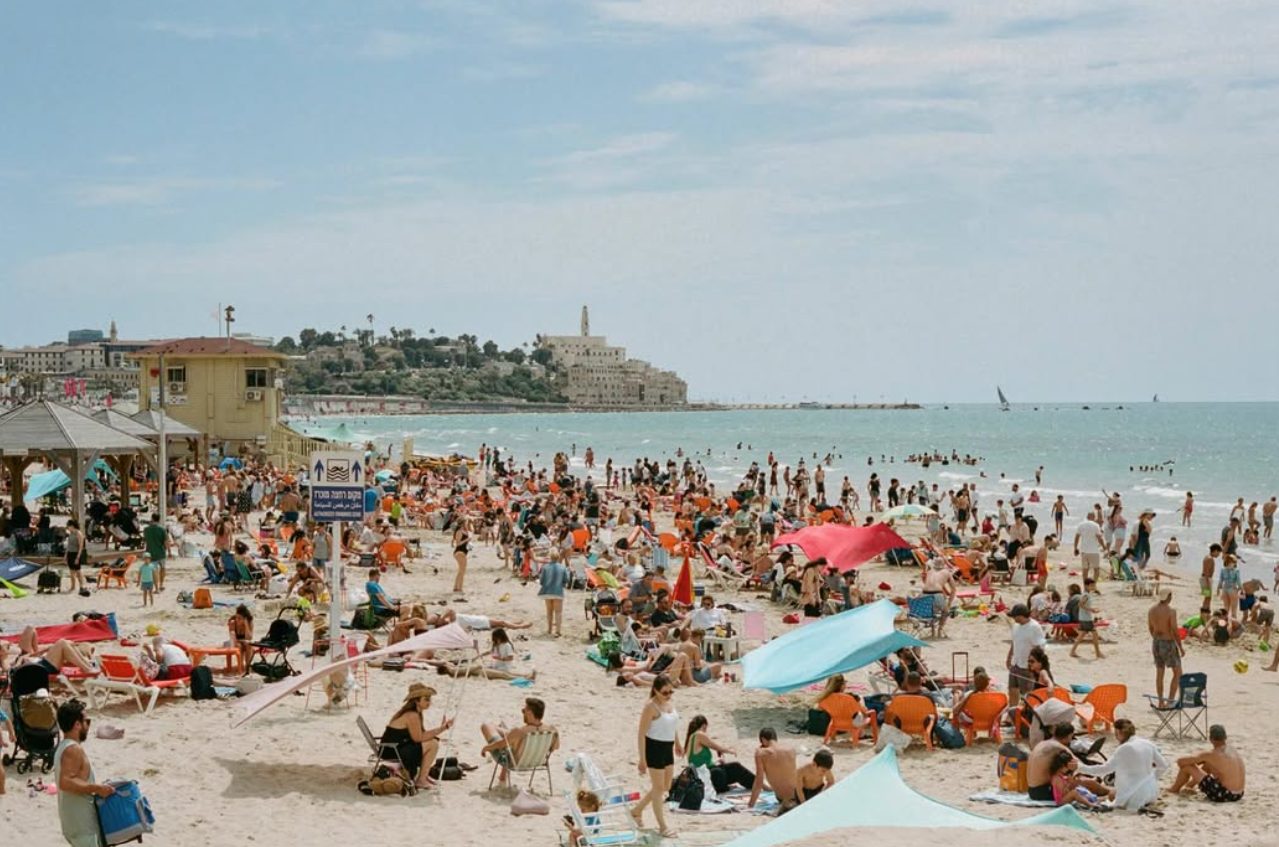
And in Its Waves | Alex Farfuri
From the salty sea to the sea we all know. Alex Farfuri goes out into Tel Aviv with an analog camera and photographs the promenade, the beach and the people who live the city without a filter: bellies, wrinkles, tans, laughter. There is humor and real warmth in her photographs, and also life itself, carrying on stubbornly inside a complicated reality.
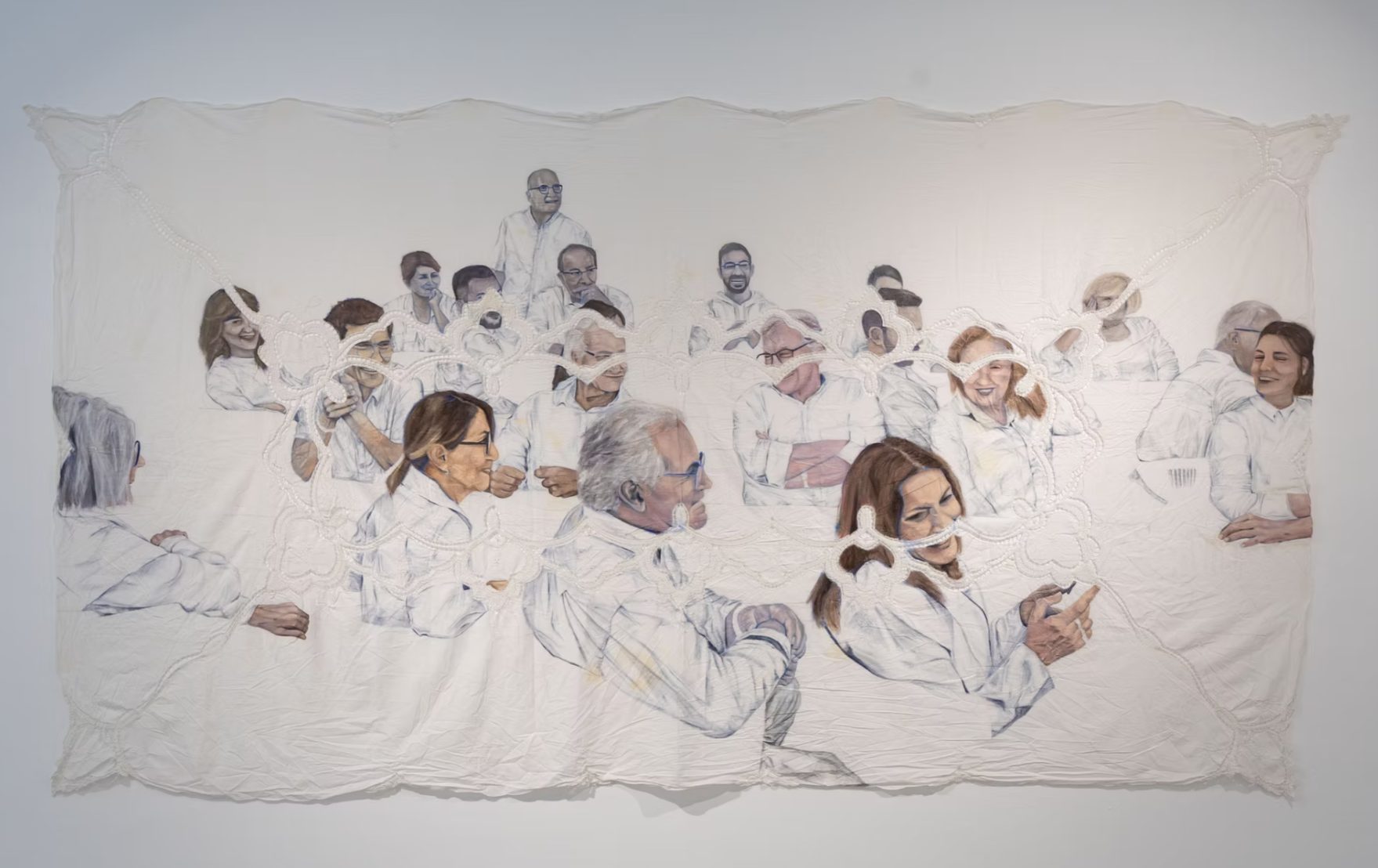
In the Fruit | Chen Hefetz
Chen Hefetz paints a family meal on a tablecloth. The family members sit together, look at one another and smile, but the painting also carries an absence: a longing for a family he never got to know, and for a story of migration that passed from Morocco through France to Israel. The tablecloth, which usually absorbs the stains and crumbs of the meal, becomes here a place where memory is kept. The fruit is what passes between generations, even when it is not said in words.
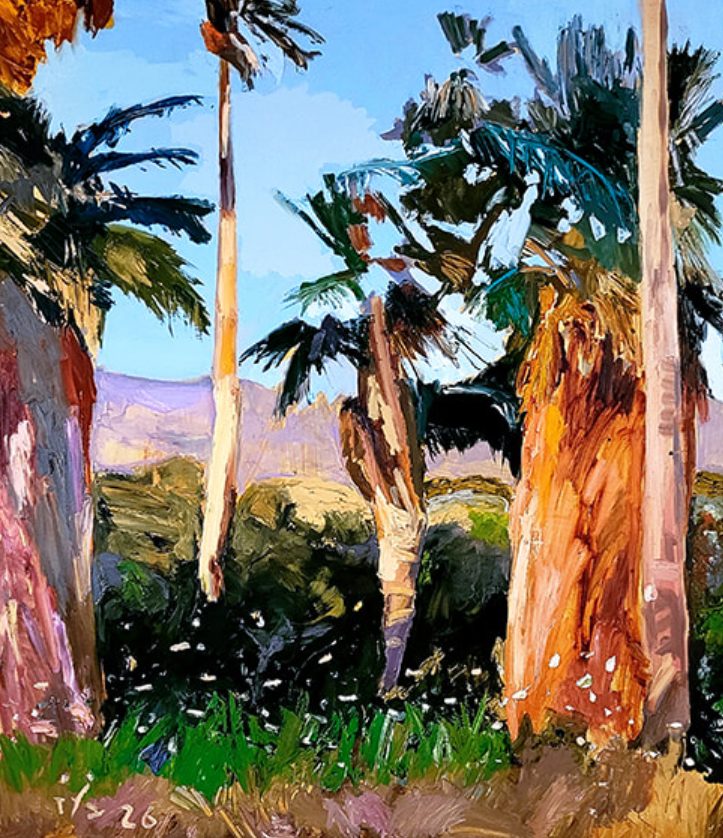
And in the Brush | Boaz Noy
And the end of the line: the brush. Boaz Noy paints Haifa and the Carmel with the closeness of someone who knows the city from the inside. His color does not only describe, it conveys warmth, air and movement. In “Mount Carmel” the gaze rises toward the mountain, and you can almost feel the vegetation and the wind. Here Zach's spirit reaches its last stop: the color, the picture, the wall.
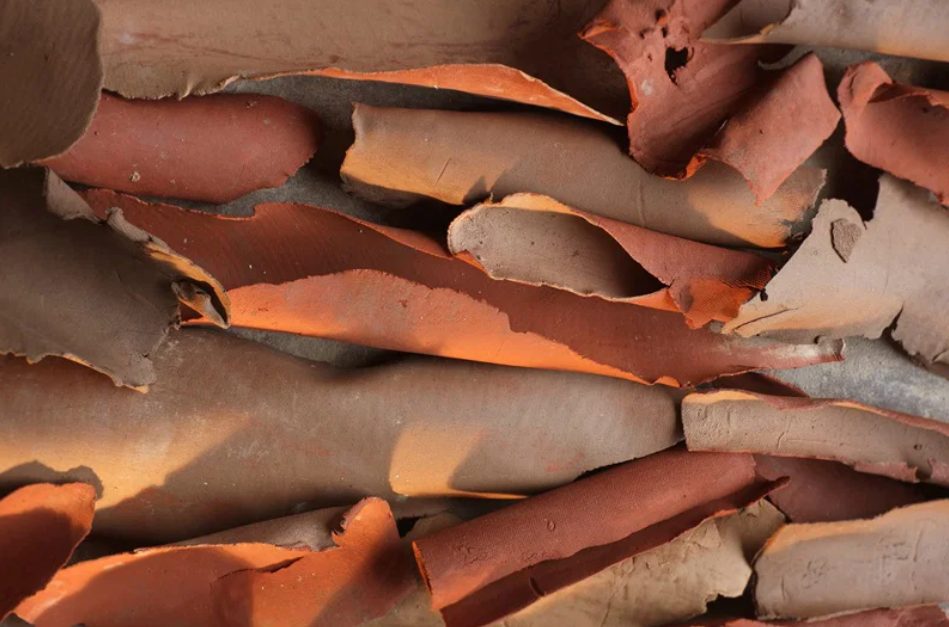
And in the Earth | Maya Dolinger
And one word that Zach did not write, but which lies beneath all his lines: the earth. Maya Dolinger recreates in clay the bark of eucalyptus, the layer the tree sheds and returns to the earth. With her hands she stops this moment of passage, from the living body to the dust, and gives lasting existence to what was meant to be temporary and fragile. Perhaps this is exactly what longing does.
Where does Israeli art catch you? Which image brings you home?
And if you would like this connection to live with you on the wall, and not only in memory, I would be happy to accompany you in finding the work that will truly touch you.