Carol Bove: A Retrospective at the Guggenheimקרול בובה: רטרוספקטיבה בגוגנהיים
כמה כוח יכול להיות במשהו שנראה כאילו עוד רגע הוא עומד לקרוס?
זו לא רק השאלה שמלווה את התערוכה שמוצגת עכשיו בגוגנהיים. זו גם התחושה הראשונה שהיא מצליחה לייצר אצל כל מי שנכנס אליה.
התערוכה החדשה של Carol Bove היא הרטרוספקטיבה המוזיאלית הראשונה של האמנית. היא ממלאת את כל הרוטונדה האייקונית של מוזיאון הגוגנהיים ומציגה עבודות שנוצרו לאורך יותר מ־25 שנות יצירה.
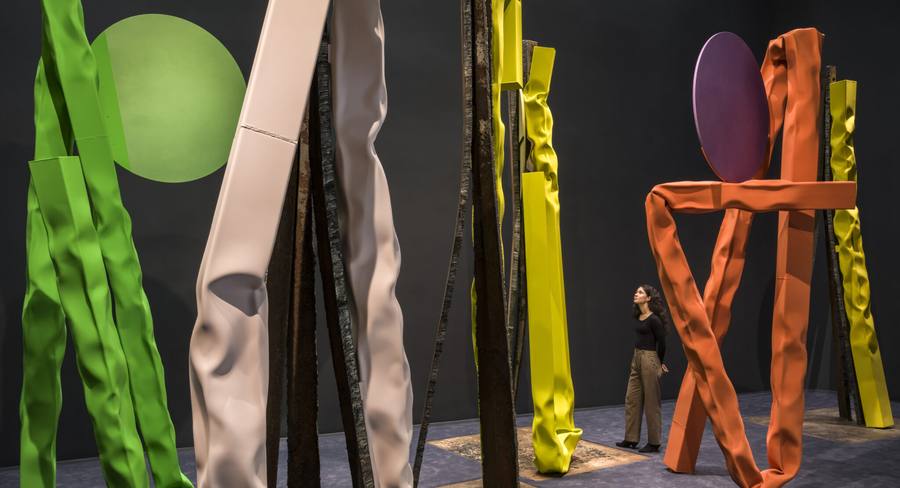
קרול בובה (ילידת 1971, ז'נבה; חיה ופועלת בניו יורק) מוכרת בעיקר בזכות פסלי המתכת הצבעוניים והעצומים שלה. היא לוקחת פלדה תעשייתית, מועכת, מקמטת, מותחת ומלפפת אותה עד שהיא נראית כמעט כמו בד, נייר או סרט רך המתנופף ברוח. פסלים אלה, שמתריסים כנגד הציפיות מהחומר, הפכו לסמל של עבודתה של בובה והביאו לה תשומת לב בינלאומית. הם נדמים קלילים, רכים ושבריריים, אבל כשמתקרבים מבינים שהם עשויים מטונות של פלדה. הם יוצרים איזון עדין ונראים כאילו הם מנצחים את כוח המשיכה.
Installation view, Carol Bove, Solomon R. Guggenheim Museum, 2026
וזו בדיוק התחושה שהתערוכה מייצרת כבר מהרגע הראשון.
עוד לפני שקוראים את הטקסט האוצרותי או מנסים להבין את הרעיונות שמאחורי העבודות, העין והגוף מגיבים. הפסלים נראים כאילו איבדו שיווי משקל, כאילו עוד רגע יקרסו, יתעקמו, יתפרקו או ייכנעו לכוח המשיכה. למרות הידיעה שמדובר במבני פלדה כבדים ויציבים לחלוטין, העין ממשיכה להתעקש שהם שבריריים. רק בהמשך, ככל שמטפסים במעלה הספירלה, מתחילים להבין שהתערוכה היא הרבה יותר ממפגן מרשים של חומר וצורה.
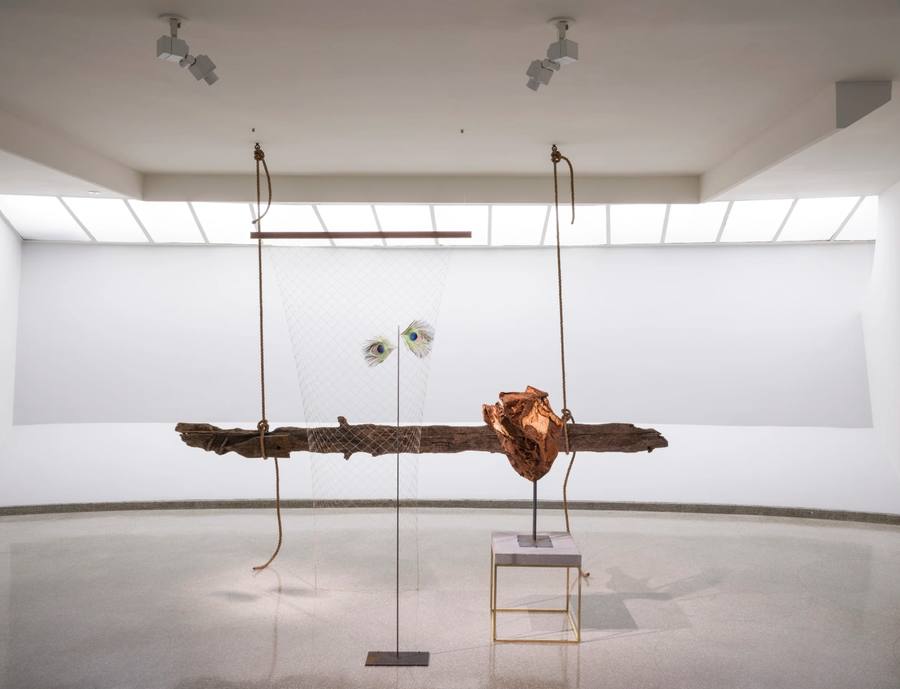
לצד פסלי הפלדה מופיעות עבודות מוקדמות שנראות כאילו נוצרו בידי אמן אחר לגמרי: מדפים פשוטים שעליהם מסודרים ספרי כיס משנות ה־60 וה־70, קולאז'ים אינטימיים על נייר, ועבודות מחומרים בלתי צפויים כמו נוצות טווס וקונכיות. לאורך כל הדרך משולבים גם לוחות אלומיניום צבעוניים, בצורות גיאומטריות ובגוונים עזים.
Carol Bove, an early assemblage of found materials, in the Guggenheim rotunda
מגוון השפות, החומרים והצורות כה רחב, שלרגע באמת אפשר לחשוב שמדובר בכמה אמנים שונים.
מעניינת במיוחד היא ההחלטה האוצרותית לסדר את התצוגה הפוך: העבודות החדשות בתחילת המסלול, וככל שמטפסים במעלה הספירלה חוזרים אחורה בזמן אל המוקדמות. כך רואים לא רק איך השפה שלה השתנתה לאורך השנים, אלא גם עד כמה היא מסרבת להיצמד לחומר אחד, לסגנון אחד או לדרך עבודה אחת.
ומעבר לכל השכבות, זו פשוט תערוכה צבעונית וכיפית, כזו שכיף להסתובב בתוכה וליהנות מהצבע, מהצורות ומהחלל.
אם אתם בניו יורק, כדאי להזדרז: התערוכה פתוחה עד 2 באוגוסט 2026.
ואם בא לכם לסיים את היום בסטייל, קפצו ל־Bemelmans Bar שבמלון The Carlyle, כ־15 דקות הליכה מהמוזיאון. אחד מברי הקוקטיילים האייקוניים של ניו יורק, עם אווירה קלאסית, פסנתר לייב כמעט בכל ערב וקוקטיילים מצוינים.
💡 טיפ: כניסה חינם לגוגנהיים עם כרטיס הספרייה.
📍 Solomon R. Guggenheim Museum, New York 📅 עד 2 באוגוסט 2026
How much power can there be in something that looks as if it is about to collapse at any moment?
That is not only the question that accompanies the exhibition currently on view at the Guggenheim. It is also the first sensation it produces in everyone who walks in.
The new exhibition by Carol Bove is the artist's first museum survey. It fills the entire iconic rotunda of the Guggenheim Museum and presents works made over more than 25 years.
Carol Bove (born 1971 in Geneva; lives and works in New York) is known above all for her large, colorful metal sculptures. She takes industrial steel and crushes, crumples, stretches and coils it until it looks almost like fabric, paper or a soft ribbon fluttering in the wind. These sculptures, which defy what you expect the material to do, have become emblematic of Bove's work and won her international attention. They seem light, soft and fragile, but as you come closer you realize they are made of tons of steel. They strike a delicate balance and look as if they are defeating gravity.
Installation view, Carol Bove, Solomon R. Guggenheim Museum, 2026
And that is exactly the sensation the exhibition creates from the very first moment.
Even before you read the curatorial text or try to grasp the ideas behind the works, the eye and the body respond. The sculptures look as if they have lost their balance, as if at any moment they will collapse, buckle, come apart or give in to gravity. Even knowing that these are heavy, completely stable steel structures, the eye keeps insisting that they are fragile. Only later, as you climb up the spiral, do you begin to understand that the exhibition is far more than an impressive display of material and form.
Alongside the steel sculptures are early works that look as if they were made by an entirely different artist: simple shelves arranged with paperback books from the 1960s and 1970s, intimate paper collages, and works made from unexpected materials such as peacock feathers and seashells. Throughout, colorful aluminum panels appear as well, in geometric shapes and vivid tones.
Carol Bove, an early assemblage of found materials, in the Guggenheim rotunda
The range of languages, materials and forms is so wide that for a moment you could genuinely think you are looking at several different artists.
Especially interesting is the curatorial decision to arrange the display in reverse: the newest works at the start of the route, and as you climb the spiral you move back in time toward the earliest ones. This way you see not only how her language changed over the years, but also how much she refuses to commit to a single material, a single style or a single way of working.
And beyond all these layers, this is simply a colorful and joyful exhibition, the kind you can wander through and enjoy for its color, its shapes and its space.
If you are in New York, it is worth hurrying: the exhibition is open through August 2, 2026.
And if you feel like ending the day in style, drop by Bemelmans Bar at The Carlyle, about a 15 minute walk from the museum. One of New York's iconic cocktail bars, with a classic atmosphere, live piano almost every evening and excellent cocktails.
💡 Tip: free entry to the Guggenheim with a library card.
📍 Solomon R. Guggenheim Museum, New York 📅 Through August 2, 2026
Working with Stavעבודה עם סתיו
Art curator and advisor in Tenafly, New Jersey, for New York, Bergen County and Tel Aviv.אוצרת ויועצת אמנות בטנפליי, ניו ג'רזי, לניו יורק, למחוז ברגן ולתל אביב.
This browser has no email app set up, so nothing opened. Copy the address, or open it in your webmail.בדפדפן הזה לא מוגדרת תוכנת דואר, ולכן לא נפתח כלום. העתיקו את הכתובת, או פתחו אותה בדואר האינטרנטי שלכם.