Giacometti at the Temple of Dendur, the Metג'קומטי במקדש דנדור, במטרופוליטן
לפני 60 שנה בדיוק הלך לעולמו הפסל השווייצרי אלברטו ג'קומטי. פסליו, שהפכו לאחד הסמלים המזוהים ביותר עם הפיסול המודרני, עיצבו מחדש את האופן שבו אנחנו חושבים על הדמות האנושית.
ג'קומטי היה אמן מצליח כבר בחייו, אך בעשור וחצי האחרון זינק ערכן של עבודותיו, וחלק מפסליו נמכרו ביותר מ-100 מיליון דולר. דמויותיו האנושיות - דקות, מאורכות ושבריריות - הפכו לסימן ההיכר שלו, אך עבורו הן מעולם לא היו רק סגנון. הן היו הדרך לחקור את אחת השאלות שהעסיקו אותו לאורך כל חייו: מהו ייצוג אנושי? עם זאת, לדמויות שלו לא ניתנו מאפיינים מזהים. הן אינן משויכות לגיל, למעמד חברתי או למוצא אתני. הן אוניברסליות, על-זמניות, ומצליחות לייצג את האדם באשר הוא.
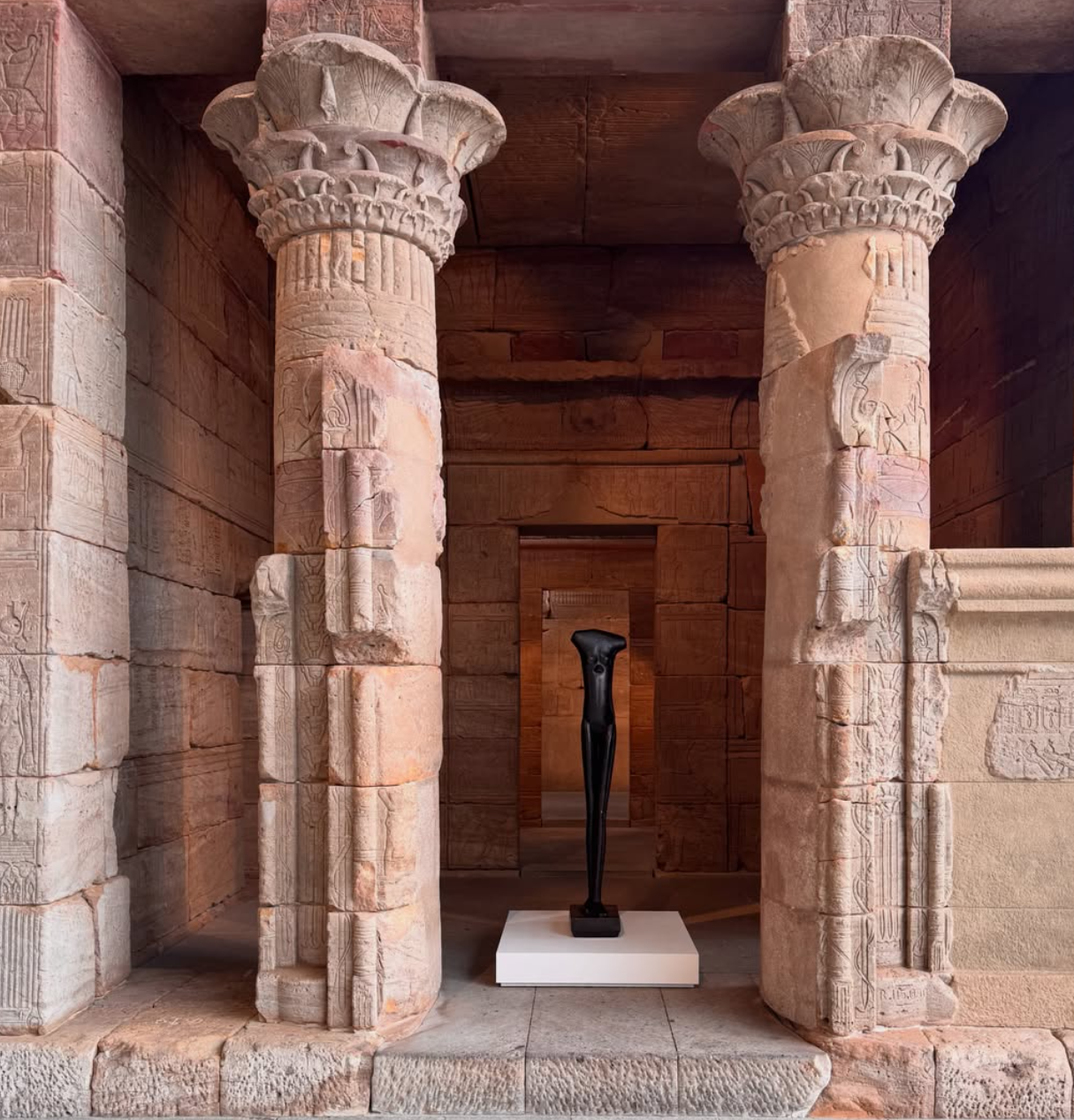
לפני כשבועיים נפתחה במוזיאון המטרופוליטן בניו יורק אחת התערוכות המסקרנות של הקיץ: 17 פסלים של ג'קומטי הוצבו בתוך ומסביב למקדש דנדור, אחד החללים המרשימים ביותר במוזיאון.
הבחירה אינה מקרית.
השפה הפיסולית של ג'קומטי נולדה, במידה רבה, מתוך היכרות עמוקה עם אמנות מצרים העתיקה. כשהגיע לפריז בשנות ה־20, הוא בילה שעות ארוכות בגלריות המצריות של מוזיאון הלובר. הרישומים והמחקרים שלו מאותה תקופה מעידים על עיסוק מתמשך באופן שבו המצרים תיארו את הגוף האנושי: דמויות מונומנטליות, סמליות, אך בו בזמן מלאות בנוכחות אנושית.
כעת, בתוך מקדש מצרי מהמאה הראשונה לפני הספירה, ניצבות 17 יצירות של ג'קומטי, ובהן Woman Walking (1932) ופסלים מסדרת Women of Venice (1956). הדמויות המאורכות שלו ניצבות מול הדמויות החקוקות באבן המקדש, ונוצר דיאלוג מרתק בין שני עולמות אמנותיים המרוחקים זה מזה אלפי שנים, אך עוסקים באותה שאלה בסיסית- כיצד מייצגים את האדם.
כפי שאמרה אוצרת קרן ג'קומטי בפריז: "האמנות המצרית הדהדה עם חיפושו המתמיד של ג'קומטי אחר מונומנטליות ואנושיות בו-זמנית."
זו אינה רק תערוכת פסלים. זו חוויה של חלל, אור וקנה מידה, שבה כל תנועה של המבקר משנה את מערכת היחסים בין העבודות לבין המקדש.
גם אם כבר ביקרתם במטרופוליטן בעבר, זו הזדמנות נדירה לראות את אחד החללים האייקוניים ביותר שלו מזווית חדשה.
📍 The Met Fifth Avenue, ניו יורק 📅 עד 8 בספטמבר, 2026
Alberto Giacometti, Walking Woman, inside the Temple of Dendur. The Metropolitan Museum of Art, New York.
Exactly 60 years ago, the Swiss sculptor Alberto Giacometti passed away. His sculptures, which became one of the most recognizable symbols of modern sculpture, reshaped the way we think about the human figure.
Giacometti was already a successful artist in his lifetime, but over the past decade and a half the value of his works has soared, and some of his sculptures have sold for more than $100 million. His human figures, thin, elongated, and fragile, became his signature, but for him they were never just a style. They were his way of exploring one of the questions that occupied him throughout his life: what is human representation? And yet his figures were given no identifying features. They belong to no age, social class, or ethnicity. They are universal, timeless, and manage to represent the human being as such.
About two weeks ago, one of the most intriguing exhibitions of the summer opened at the Metropolitan Museum in New York: 17 Giacometti sculptures installed inside and around the Temple of Dendur, one of the museum's most impressive spaces.
The choice is not accidental.
Giacometti's sculptural language was born, to a large extent, out of a deep familiarity with ancient Egyptian art. When he arrived in Paris in the 1920s, he spent long hours in the Egyptian galleries of the Louvre. His drawings and studies from that period show an ongoing engagement with the way the Egyptians depicted the human body: monumental, symbolic figures that are at the same time full of human presence.
Now, inside an Egyptian temple from the first century BCE, stand 17 of Giacometti's works, among them Woman Walking (1932) and sculptures from the Women of Venice series (1956). His elongated figures face the figures carved into the temple's stone, and a fascinating dialogue emerges between two artistic worlds thousands of years apart, both engaged with the same basic question: how do we represent the human being.
As the curator of the Giacometti Foundation in Paris put it: "Egyptian art resonated with Giacometti's constant search for monumentality and humanity at once."
This is not just an exhibition of sculptures. It is an experience of space, light, and scale, in which every movement of the visitor changes the relationship between the works and the temple.
Even if you have visited the Met before, this is a rare opportunity to see one of its most iconic spaces from a new angle.
📍 The Met Fifth Avenue, New York 📅 Through September 8, 2026
Alberto Giacometti, Walking Woman, inside the Temple of Dendur. The Metropolitan Museum of Art, New York.
Working with Stavעבודה עם סתיו
Art curator and advisor in Tenafly, New Jersey, for New York, Bergen County and Tel Aviv.אוצרת ויועצת אמנות בטנפליי, ניו ג'רזי, לניו יורק, למחוז ברגן ולתל אביב.
This browser has no email app set up, so nothing opened. Copy the address, or open it in your webmail.בדפדפן הזה לא מוגדרת תוכנת דואר, ולכן לא נפתח כלום. העתיקו את הכתובת, או פתחו אותה בדואר האינטרנטי שלכם.