Noa Wiegenfeld at the Bezalel Graduate Exhibitionנועה ויגנפלד בתערוכת הבוגרים של בצלאל
כאוצרת, אני מאמינה שאם רוצים לגלות את האמנים של המחר, צריך להתחיל בתערוכות הבוגרים. דווקא שם, הרבה לפני שהשמות הופכים למוכרים, אפשר לפגוש את האמנים שעתידים לעצב את השיח האמנותי בשנים הקרובות. השנה, בתערוכת הבוגרים של בצלאל, הייתה אמנית אחת שמשכה את תשומת ליבי במיוחד.
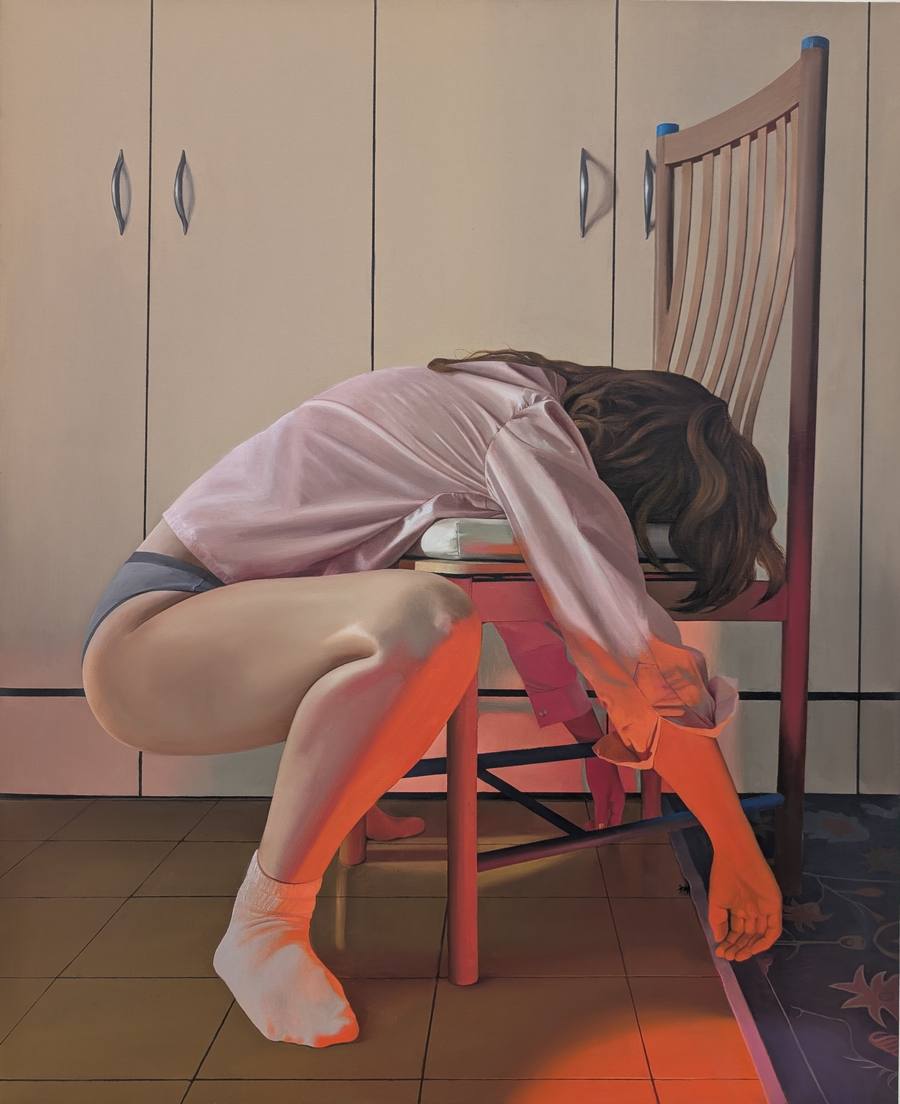
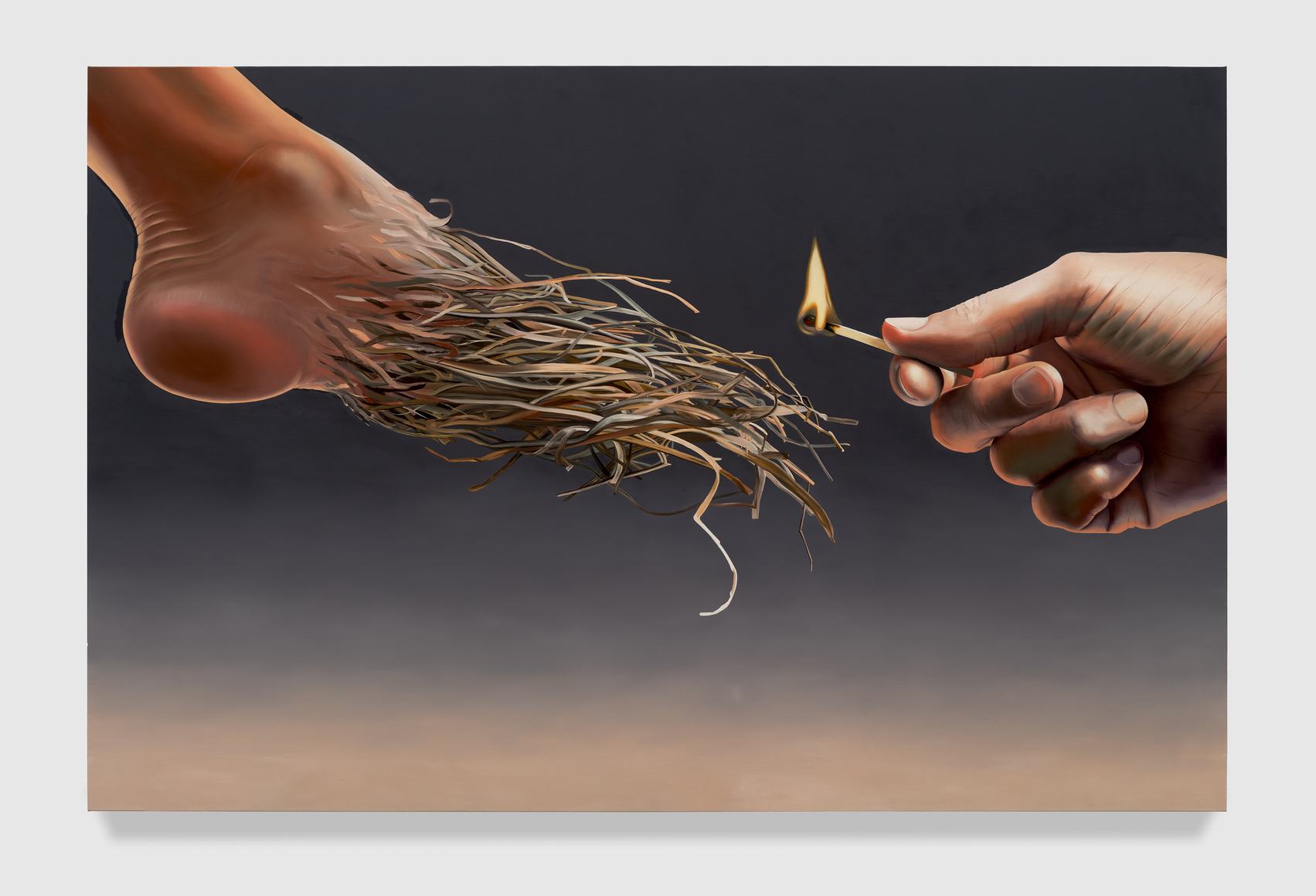
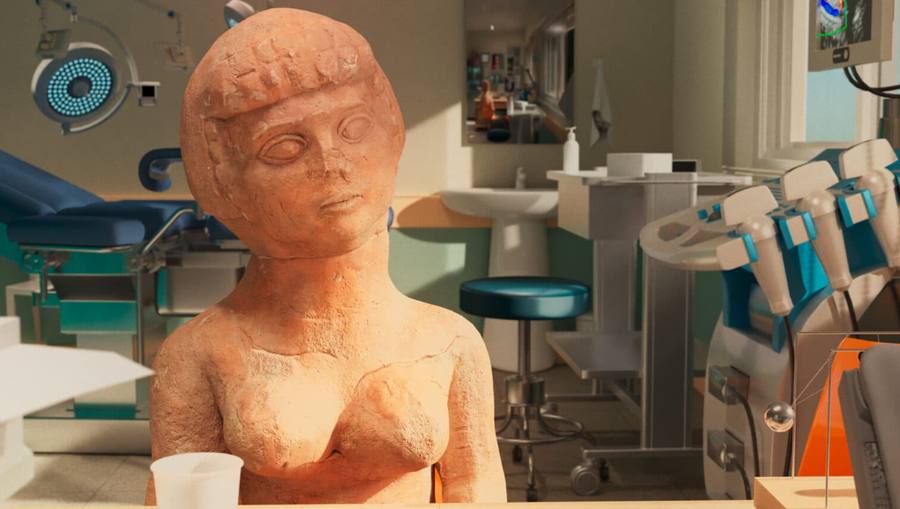
בציוריה של נעה ויגנפלד ניכרת איכות סינתטית ובימתית. הווירטואוזיות של המכחול פועלת כאן פעולה כפולה: במבט ראשון נדמה שאנו ניצבים מול דימוי דיגיטלי, מלוטש ומדויק מדי מכדי להיות צבוע ביד, ורק כשמתקרבים אל הבד מתגלות משיכות המכחול הצבעוניות ומחזירות את העבודה אל החומר.
הצבע עצמו נושא את המתח הזה. הכתום העז והבוהק אינו אור טבעי אלא זריקה מלאכותית שמציפה את הדמות ואת הרצפה מבלי שנדע מהיכן היא באה. למרות שהדימוי מציג רגע אינטימי של אישה או נערה בחדרה, ספוט האור, המוצב מעבר לגבולות המבט של הצופה, מתפקד כמו תאורת סט, ומחדד את הפער בין אינטימיות הסצנה לבין זרות המרחב והתחושה של רגע מבוים.
Noa Wiegenfeld, oil on canvas. Courtesy of the artist.
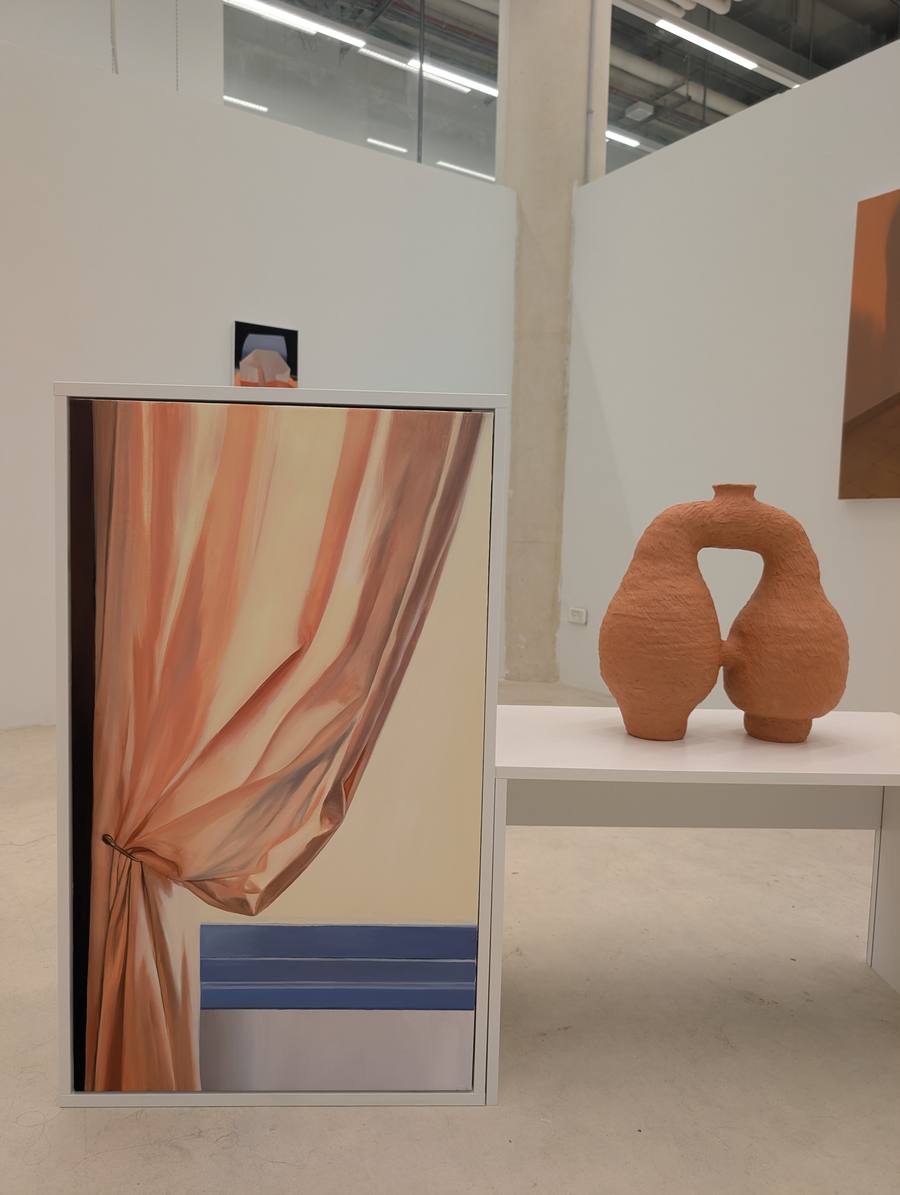
גם הווילון מרגיש סינתטי. אין זה וילון הקטיפה הכבד של הרנסנס והבארוק, שנועד להסתיר או להדר. בתולדות האמנות הווילון מזמין אותנו להציץ אל החלל שמאחוריו, אך אצל ויגנפלד הוא פועל הפוך: הרקע אינו נפתח לחלל ממשי עם עומק והתרחשות, אלא אל משטח צבע בוהק. הווילון אינו מכסה על דבר, הוא עצמו הדימוי.
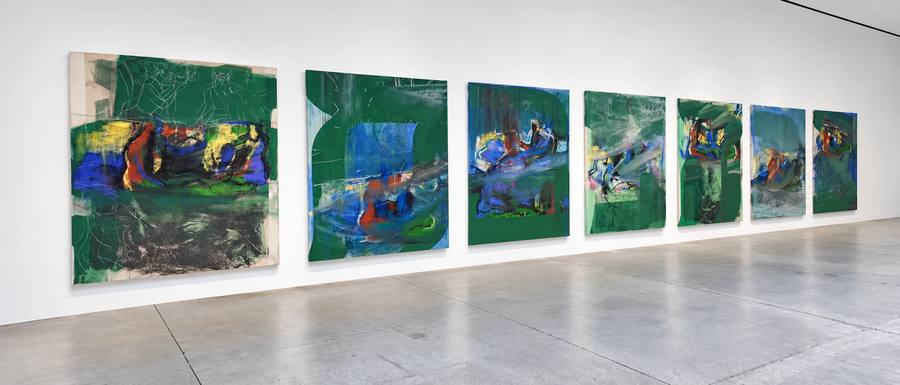
Installation view, Bezalel Graduate Exhibition, 2026. Photograph by Stav Theodor.
As a curator, I believe that if you want to discover the artists of tomorrow, you have to start at the graduate exhibitions. It is there, long before the names become familiar, that you can meet the artists who will shape the artistic conversation in the years to come. This year, at the Bezalel graduate exhibition, one artist caught my attention in particular.
Noa Wiegenfeld's paintings carry a synthetic, staged quality. The virtuosity of the brush works in two directions at once: at first glance you seem to stand before a digital image, too polished and precise to have been painted by hand, and only up close do the colored brushstrokes reveal themselves and return the work to matter.
The color itself holds this tension. The intense, glaring orange is not natural light but an artificial injection that floods the figure and the floor without our knowing where it comes from. Although the image shows an intimate moment, a woman or a girl in her room, the spotlight, positioned beyond the edge of the viewer's gaze, works like the lighting of a film set, and sharpens the gap between the intimacy of the scene and the strangeness of the space, the sense of a staged moment.
Noa Wiegenfeld, oil on canvas. Courtesy of the artist.
The curtain feels synthetic too. This is not the heavy velvet curtain of the Renaissance and the Baroque, meant to conceal or to glorify. Throughout art history the curtain invites us to glimpse the space behind it, but in Wiegenfeld's work it does the opposite: the background does not open onto any real space with depth and event, only onto a flat, glaring patch of color. The curtain conceals nothing. It is the image itself.
Installation view, Bezalel Graduate Exhibition, 2026. Photograph by Stav Theodor.
Working with Stavעבודה עם סתיו
Art curator and advisor in Tenafly, New Jersey, for New York, Bergen County and Tel Aviv.אוצרת ויועצת אמנות בטנפליי, ניו ג'רזי, לניו יורק, למחוז ברגן ולתל אביב.
This browser has no email app set up, so nothing opened. Copy the address, or open it in your webmail.בדפדפן הזה לא מוגדרת תוכנת דואר, ולכן לא נפתח כלום. העתיקו את הכתובת, או פתחו אותה בדואר האינטרנטי שלכם.