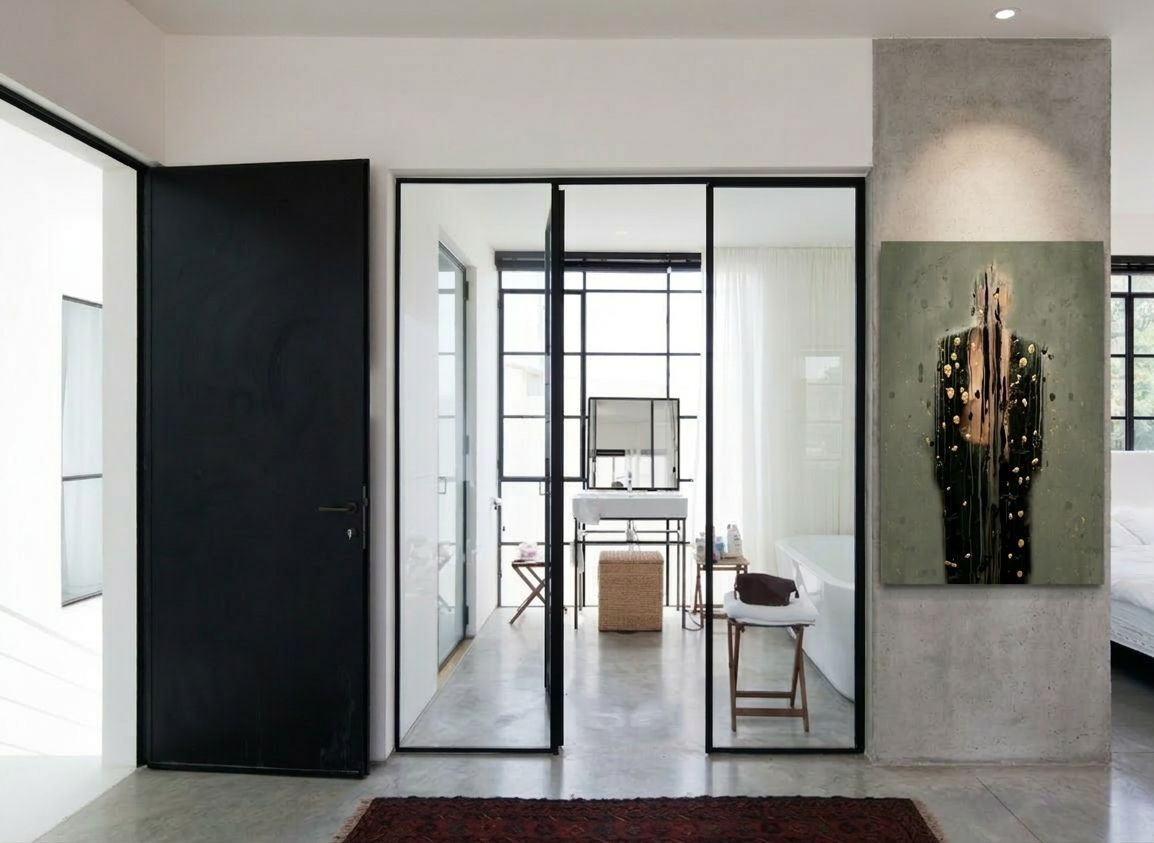
השיפוץ כבר עשה את העבודה הקשה: קווים נקיים, פלטה מאופקת, שום דבר על הקירות שלא חייב להיות שם. השאלה שנשאלתי היא השאלה שאני שומעת הכי הרבה מאנשים שגרים בבתים מינימליסטיים. איך מוסיפים אמנות בלי לפרק את השקט?
עבודה אחת, לא אוסף
בחדר מונוכרומטי, צבע ומרקם נושאים משקל גדול יותר מבכל מקום אחר. עבודה אחת שיש בה את שניהם הופכת לנקודת המוקד של החלל כולו. שתיים או שלוש היו מתחרות זו בזו ובארכיטקטורה. למלא את הקירות היה טעות. להשאיר אותם ריקים היה משאיר תחושה של בית לא גמור, ולא של בית מאופק. אז התשובה הייתה יצירה אחת, וכל המאמץ הושקע בבחירתה.
את הבחירה הזאת אני לא עושה במקום הלקוח אלא יחד איתו: רשימה קצרה, כל עבודה נבחנת מול הקיר הזה והאור הזה, עד שאחת נכונה בבירור. האחרות הן בדרך כלל עבודות טובות בחדר הלא נכון.
מה היצירה עושה כאן
- היא מכניסה צבע לפלטה שאין בה צבע אחר, כך שהחדר נקרא כבחירה ולא כמשהו שלא הושלם.
- היא מוסיפה מרקם, וזה חשוב בבית משופץ שבו רוב המשטחים חלקים וחדשים.
- היא נותנת לחלל מרכז. הריהוט והפתחים יושבים עכשיו ביחס אליה.
עם הארכיטקטורה, לא נגדה
לבית באוהאוס יש אופי חזק משלו, ושיפוץ שמכבד אותו כבר קיבל שורה של החלטות. אני עובדת לצד אדריכלים ומעצבי פנים, לא מסביבם, וכאן זה אומר עבודה אחת שמשלימה את החדר במקום לקשט אותו.
אמנות היא לא אביזר. היא נקודת מפגש בין אדם לחלל. בבית עם כל כך הרבה איפוק, נקודת המפגש הזאת חייבת להיות מדויקת.
אותה עיר, תשובה אחרת
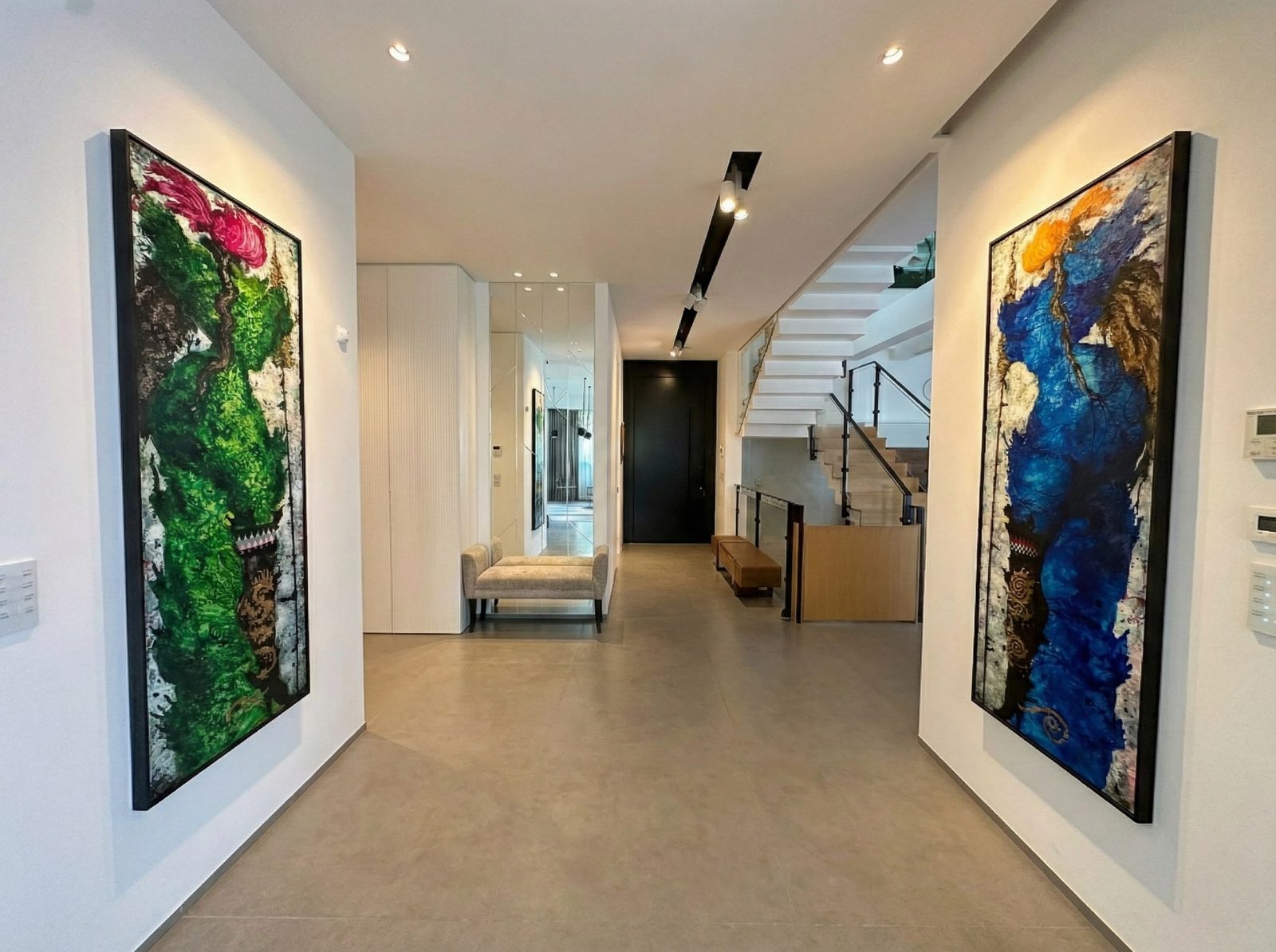
בית באוהאוס נוסף בתל אביב שאל את אותה שאלה וקיבל תשובה אחרת: עבודת היפר קולאז' דיגיטלית מודפסת על אקריליק מבריק נגד השתקפות. אותה שפה אדריכלית, שתי נקודות מוקד, כי האנשים היו שונים.
אם אתם גרים בבית מינימליסטי ולא בטוחים איך להוסיף אמנות בלי לשבור אותו, שלחו לי תמונה אחת של הקיר. על הדרך שבה אני עובדת, מהשיחה הראשונה ועד ההתקנה, קראו איך תהליך ייעוץ האמנות עובד. אם כבר מעורב מעצב, קראו עבודה עם מעצב הפנים שלכם על אמנות.
The renovation had already done the hard work: clean lines, a restrained palette, nothing on the walls that did not need to be there. The question I was asked is the one I hear most from people who live in minimalist homes. How do you add art without undoing the calm?
One work, not a collection
In a monochromatic room, color and texture carry more weight than anywhere else. One work that has both becomes the focal point of the whole space. Two or three would compete with each other and with the architecture. Filling the walls would have been a mistake. Leaving them empty would have made the home feel unfinished rather than restrained. So the answer was one artwork, and the work went into choosing it.
I do not make that choice for a client, I make it with them: a short list, each work considered against this wall and this light, until one is clearly right. The others are usually good works in the wrong room.
What the artwork does here
- It brings color into a palette that has none, so the room reads as chosen rather than unfinished.
- It adds texture, which matters in a renovated home where most surfaces are smooth and new.
- It gives the space a center. The furniture and the openings now sit in relation to it.
With the architecture, not against it
A Bauhaus home has a strong character of its own, and a renovation that respects it has already made a set of decisions. I work alongside architects and interior designers, not around them, and here that meant one work that completes the room instead of decorating it.
Art is not an accessory. It is a meeting point between a person and a space. In a home with this much restraint, that meeting point has to be exact.
Same city, different answer
Another Bauhaus residence in Tel Aviv asked the same question and got a different answer: a hyper collage digital work printed on glossy anti reflective acrylic. Same architectural language, two focal points, because the people were different.
If you live in a minimalist home and are not sure how to add art without breaking it, send me one photo of the wall. For how I work from the first conversation to installation, read how the art advisory process works. If a designer is already involved, read working with your interior designer on art.